Showing posts with label SG. Show all posts

Wednesday, January 18, 2017

Ugly Guitar Truth: Gibson S-Series


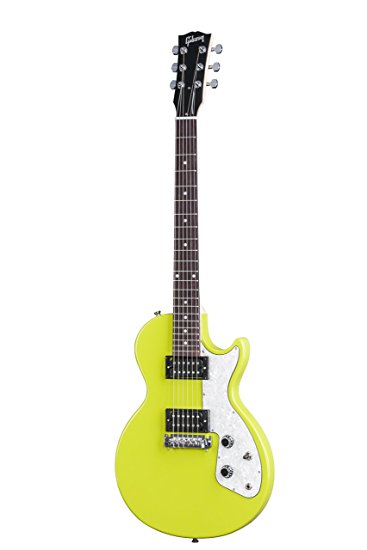
My relationship with Gibson guitars has always been one of admiration from afar. Back in old days, I would look of catalogs with pictures of pretty arch top electric guitars and just pine away. The prices of the Gibson guitars led me to believe that they were something beyond what I've experienced. As grew as a player, I've since played many Gibson guitars and found them to, be for the most part... a guitar. I even own a Les Paul and a 335. But that name on the headstock has always carried a weight to it, and I attributed that weight mostly to the high cost of admission into the 'club'. I was able to buy my first Fender for $300, but a Gibson (a proper Gibson) would be $1000+. But that looks to change with addition of Gibson's new S-Series guitar. Let's see what we know about them..

There are 5 models.


There is the M2: a flat top dual humbucker look-a-like to the Epiphone Les Paul Special II, The Firebird Zero: which looks to be a firebird's little brother, The SG: an SG, LP Special: very similar to the special but a little curvier, and the LP Studio: This one hasn't changed much, haven't the Les Paul Studios always started around $799? Anyways, They are all stripped down to just one volume and one tone knob. They have wrap around tail pieces, that is except the studio, which has a proper stop tail bridge. They look nice, and you can see the attention to detail in the released photos.


Are They proper Gibson Guitars?


Well, that's actually a tough question. take a look at the head stock and say, 'Yes, you idiot! It's right there!" and to that I'd reply, "Geez, name calling is really unnecessary." But back to the subject, those who likes their Gibsons know what feature are traditionally uses. This is mahogany with a maple cap for the body, and a mahogany neck and rosewood fretboard. However, Gibson went a little off-brand with some models giving them poplar bodies (except for the SG, it's still mahogany) and maple neck. It's clear that they were interested in keeping costs down. And to be honest, these aren't going to really appeal to the Gibson faithful anyways. Those who are looking at these are going to be first time Gibson buyers, maybe upgrading from their Epiphones.


Conclusion


I like the new line. Can't wait till I can get my hands on one and see how it feels. The poplar bodies and maple necks don't really bother me (I'm really a Fender guy so...). All these guitar are made in the USA and have a nitro finish, so it's a quality instrument. The Special reminds me a lot of the PRS Mira for some reason. This kind of blew my mind when I heard that Gibson was going to offer guitar starting at $399. We will see in the near future how these do.


Support the blog by shopping on Amazon by using my link!


There should be an ad below:


Saturday, January 9, 2016

The Ugly Truth About Turning A 'Trasher' Into a Treasure

A few years ago I was having trouble, trouble justifying my desire to buy more gear... I'll admit. I like to play new and exciting gear. The reason that I started writing about gear in the first place was to curb my intense desire to acquire. There is only so much to write about, so in search to find something worth while and budget friendly, I took to the internet to find a deal on some musical swag. What I found was a seemingly endless bevvy of options. Used gear was the most appealing. I could find something that I was familiar with and a fairly safe investment.

This week, I was digitally flipping through The Tone Report's online magazine, and found an article about buying or finding a junker guitar and turning it into a player. I love this idea. I have attempted to do this a number of times, to different degrees of success. The plan was always to work on the guitar until it was a top notch part of my collection. What often happened was amassing a large amount of replacement parts, spending almost as much as the initial investment, and ending up with a underwhelming result. This got me thinking about the process and the value of experience. What I found wasn't too pretty.

It's Expensive

You got into this because it was cheap, but now you see that it is adding up. $100 on a guitar, $50 on some pickups from ebay, $35 on some decent tuners, $25 on new pots and wires and jacks. You're out $200+ dollars on your junker, then you have to put it all together. If you are like me, you enjoy putting everything together. The process is the best part. Assembling and soldering, It is rewarding to put something together and having it work. I was working on a SG, installing new pickups, and for some reason the neck pickup would not work. I tried to find the problem. I scratched my head and traced wires, I rewire the pots and pickup... still nothing. I finally tested the pickup... it was dead. Which brings me to my second point.

Sometime the work is just work

I know that seems a little simple, but when you drool over the parts you are going to stick into your current project you seldom foresee the issues that you'll have. The job that take a couple of solder joints, take an hour and a half. You can add a half hour to a job by knocking you parts bin off the counter you're working on. Those screws can hide in surprising places. There are only so many times you can burn your fingers and still "enjoy" the work. Even at modest prices, replacing the common parts in a build like these would run you another $100. So we've breached $300. This brings up the conversation that...

You could have bought something new

There are some decent guitars under $300. There are some more than decent used guitars for that kind of money, and what you have made is only arguably better. Best case scenario is that you start with a body and neck you enjoy and change the sound of the guitar to match you liking while upgrading the hardware to make it reliable. Or you could forego this entire process and just find a guitar that has all of these attributes. I've found that a stock guitar is going to be more reliable and cleaner looking than one that I've modified. I've changed tuners and left holes from the stock ones. Tools slip while working and give the guitar "character marks". Some of the solder work might not be as pretty. The worst thing you can end up with after all that work is something you don't absolutely love. You have something you've put you time and money into, and yet you favor your 'tried and true' over your polished gem.

Conclusion

While the process can be cathartic, the outcome can also be underwhelming. I mention it being a safe investment. Sure, you can try to turn a dime on your guitar that you've worked on, but you are charged with convincing someone to buy your customized guitar. Forget trying to get paid for all that work. You'll be working upstream to convince them to pay more than the stock guitar that you bought. Sure, you can get your initial investment back, but you are more than likely going to be upside down in the end. Having said that, I enjoyed and haven't regretted working on any of the project that I have. I enjoyed the process. To me it was a way to learn more about the instrument that is, in some ways, a part of me.

Monday, June 29, 2015

The Ugly Truth About Being A Telecaster Guy That Plays A Les Paul

It was nearly twenty years ago that I (or my parents rather) bought my first Fender Telecaster. I played that thing everyday for years. I was actively involved in playing at my church. When I wasn't playing my acoustic, I was playing that Telecaster. It was my only electric for the longest time. I changed the pickups because I wanted to play metal. It was then I realized that, even though I liked the shape and feel of a Tele, I wanted different sounds than the standard Telecaster quack. I've since owned many other Teles that all have something in common, they aren't standard Teles. I have one with P-90s and a Deluxe with Split coils. I have come to appreciate the Standard Tele quack, but I haven't committed to actually owning one. (I can get some quack by playing with my pickup configuration. So yes, I do call upon the mighty quack when I need)


I've Never Really Liked The Les Paul Shape (until I did)

There is something that happens to a guitar when they acquire their first "real" guitar. There is a fondness and familiarity that forms that is hard to overcome. Also, I jump between acoustic and electric so much that a flat-top electric feels more familiar when switching. A fender type bridge and Tonepros type bridge is an adjustment. The first few times I played a Gibson Les Paul I understood that this instrument was a quality instrument, but it was uncomfortable to play. Heavy, bulky, curved. Nothing seemed comfortable. I've owned, for a time, other guitars like a SG and a Jackson SLS. These were also different and good in there own respects, but they all lost favor and didn't suit me as much as my Tele. They were "homebase".

It Can Come As A Surprise 

So I messing about like I do in a music store, and on a lark picked up a Les Paul (copy) and slowly realized I like it better than the other guitars that I had picked up that day. I was surprised, not only how much I liked it, but how comfortable it felt. I had owned a SG for a few years, so the bridge was a little less foreign and the neck was slimmer and more "Fender-ish" than others I had play before. The pickups were bright and hot. The neck was one of the better rosewood fretboards I've played. Most other things were passable. All in all, it was a solid guitar, the price was right, so it became mine. No one was more surprised than me.

Having Something New Can Spark Renewed Interest. 

Being an active musician mean playing a lot of music. I Play a set every week with a group. I also teach music to students during the week, so playing "just for me" is uncommon. I'm either preparing, studying, or writing. I don't play for the pure enjoyment of it (even though I enjoy playing during that other times). But when I sat down with this non-Telecaster I was transported back to when the guitar was new. Things worked a little different. Similar enough to feel familiar but different enough to give everything a since of discovery. This would be the first guitar that I've spent a lot of time that had a set-neck, and honestly I thing I'm smitten. There is a sustain that I think is due to the neck joint. I still love my Teles for all the reason that I loved them to begin with, but now there is something else in my collection that doesn't resemble the rest and adds a new element to the mix.

Sunday, April 19, 2015

5 Ugly Truths About Relic'ing Your Guitar


My relic'd SG


Lately I've been wanting a new guitar. I have a pitifully small budget, but I wanted something different. I trolled around for a pre-loved instrument on craigslist, but nothing quite hit the nail on the head. Mostly because nobody wanted to handover a guitar free of charge. I was reminded that I had some gear loaned out to someone that wanted to learn (and had lost all interest.) The gears where set in motion, and once again I was in possession of my Epiphone SG 310 (or something like that. I had picked it up. more or less, as a souvenir while traveling with my wife back when I had some disposable income. I never really fit in with my other guitar (all Telecasters) so it go sidelined a lot. Sitting down with one of my good friends and fellow gear-nut, we discussed relic'ing guitars. He has a Mexican Strat that he has reclic'd. As he described the process, I started to visualize going through the steps. It reminded me of when I went about refinishing my Telecaster back when I only had one. I then knew what I had to do. I was going to beat my SG until it and I had a mutual respect for one another. There are some things that I learned along the way that were somewhat surprising.


Photo by musiczoo.com


1. Your Guitar Will Never Be The Same

Let's start with the obvious. You are going to change your guitar in a way that will be very difficult to repair. In some cases, repairing a relic job would mean replacing so many parts that it would more new pieces than original. So you strip your guitar down to its bare parts and get ready to do the deed. When I began to distress my SG, I had no idea what it was going to look like. I stripped a Telecaster and repainted it. Over the years, the paint job I did wore in some spots. I wanted to replicate that effect on my SG. What I ended up with was something complete different. Many of the edges have "wear" marks and dings, but it was very difficult to cause that effect. Many of the bevels that are part of the SG shape have been rounded off in the "wearing" of the paint job. Even if I repainted the guitar it would still have a "distressed" shape. So think about that before you break out your "murder tools"

2. You Will Regret Almost Everything

I worked at a passionate rate. Every time I nicked, cut and ding my guitar I grew bolder. I wanted more of that effect. I wanted to go further. If one looked good then ten would be great. Only, as I work a noticed that this ding looked like that ding and those nicks look like someone did it on purpose (duh). I started thinking that I had made a huge mistake that I can't take back. Those marks don't look real. Why would there be dings like that over there! It was all falling apart just as fast as it had come together. So I put it down, went back inside, and had a good cry (a figurative cry). I came back with the mentality that it was the journey that matter, not so much the end result. I let my children bead on the body with a file. I stood on it. I laid it flat on a concrete floor and kicked it around. To Hell with the nitpicky. This is supposed to be fun!

3. It Will Always Look "Manufactured"

Indeed, the marks on my guitar may not fool the "expert" but like I explained above, it is something that I enjoyed. So lets talk about your guitar. No matter how well you think you did, it still going to look manufactured to the one person that matters, You. No matter how well you recreate those marks of instruments that have seen decades of heavy use you will know that your were caused by the tools in your garage. Each time you pick up your guitar, no matter how great you think it looks, you are living a lie. It may be an innocent little fib. Your instrument didn't really earn (or deserve) those marks of abuse. Many people will not even question how those got there, but you know that you did it. there is almost an aspect of exhibitionism. You know a dirty little secrete about your guitar and you parade that secrete in front of everyone just to see if anyone will call you on it.

4. You Won't Want To Stop

It is almost addictive when you wear through your finish and you see the wood underneath. You want more. You want more visible wood (that could be taken wrong). You want more battle scars. You rack you brain to think of where the wear should go. You think about wear the pick would scratch or wear the head would bump into something, or how missing the input jack might put a ding in the finish. You could add cigarette burns (man, visible wood and cigarette burn, this might put me on some sort of watch list) or yellow your finish. There is no limit. I guess you could keep going until your instrument is no longer playable. You could do some real damage if your not careful, but in all seriousness...

5. You Need To Stop

Why do we do this to our guitars. There is really no other group of musician that do the thing we do to there instruments. You don't see drummers spend time and energy into making their instrument look abused (it just happens naturally). Pianist take care in preserving their instruments, much like nearly every other musician. Symphonies take pride in the pristine way their instrument are cared for. Marching bands make their instrument shine before every performance. But a faction of guitarist think that they should degrade their instrument to the point (and past said point) of realism. There are guitar that make my heart sink when I see them. I know that someone has beaten it to the point that it looks like it was recovered from the wreckage of the Titanic. So please, if you are going to add "wear" to your guitar, know how far is too far.

Saturday, March 15, 2014

5 Guitars That Every Guitarist Should Own

There are a lot of guitars out there. If you've been playing for a while then you've no doubt found what you like. It take little more than a trip to the music store to see what you like and what works for you. For me it is the Fender Telecaster. There is something comfortable about the shape and weight. For others it might be a SG or something from Ibanez. There is nothing wrong with any of these, but sometimes we gravitate toward a particular shape and style. If you are the collector type, like myself, then one guitar is never enough, nor is one type. So, how do we go about being a well rounded guitar owner? Diversity.

5) The Pawn Shop Special

There is something about find a diamond in the rough. Sometimes you have call them like you see them. If the guitar is a dud, its a dud. Sometime you find a guitar that was made for about five minutes by a company that doesn't exist any more. Other times you find a guitar that has been loved a little too hard, but despite the looks, the guitar of a soulful tone machine still lives. The best part is that prices are usually pretty flexible. This is a great idea that for the collector with limited cash. It can also serve as a great platform for mods and experimenting.

4)The Classic

We are talking the big four. Strat, Tele, Les Paul, SG. Many of these are made and lots of people make clones. It is actually hard Not to own one of these guitars once your collection reaches a certain size. There is not a lot to say hear. There are some icons that should be experienced. If you do not already like one of these options then look into these guys. Many people like at their choice of guitar as a reflection of themselves, and to an extent it is, and getting one of these classics seems to cliche. There is a reason that these are so prolific.

3)The obscure

Just like owning a classic is important, owning a guitar that no one really knows or has ever thought about since the last one rolled off the production line. Often times these are terrible guitars, but every once in a while these surprise us and end up being fantastic guitars. The pawn shop is a great place to look, as is craigslist.

2)The "Out of your comfort zone"

Get weird. Get way out there. BC Rich is a great place to start. Maybe a flying V or Explorer for the more timid. A seven or eight string guitar will challenge you in many ways. Perhaps it as simple as losing the low E string and tuning a guitar to and open tuning. You should also consider extended range guitars such as a baritone. Resonator or slide guitar could be your "walk on the wild side". Everyone has their own comfort zone, try to find something that is definitively not typical for you.

1))The Fixer-upper

With a little luck and a few tools, you can take a guitar that others would pass up and make it into an absolute player. Maybe this a low-end model that could use some new guts, or a used unit that needs a nice set up. In any case, there is nothing that connects you to your instrument like putting honest work into bringing it back to life. This is a great experience for any guitarist. Working on a guitar and improving its status is good practice for when your main ax develops a hiccup. Skills like soldering and wiring take practice to perfect, so working on a guitar that isn't already an important part of your emotional well-being might be preferable.