Showing posts with label guitar effect reviews. Show all posts

Thursday, January 26, 2017

Ugly Guitar Truth: Digitech CabDryVR

Can I start off by saying how much I don't like the name of this pedal. The CabDryVR. No spaces. That's the way it is on the official Digitech site. It drives me crazy. I assumed it was pronounced 'Cab Driver', but really was unsure until I heard the Digitech rep at name say the name. I absolutely hate the way it is spelled. Saying that, I do, kind of, like the pun and color scheme of the pedal. This is one pedal you will not confuse with many others. On to the next bit...


It's A Thing

When I saw this pedal, the first thing I thought is that it is a turd. Just DOA. This pedal won't sell because no one is going to buy a pedal that is basically a blanket for your tone. They don't want a pedal to make their amp sound like it is run through a cab. And then I remembered my experience with the Marshall CODE and how it's cab sim really worked. Then I though about the stage applications of have a 4X12 sound come from a 1X12 Blues Jr...

Conclusion

The very first cab sim I ever encountered was a Digitech RP100. It sounded terrible, but there is hope yet. I've heard a cab sim do rather incredible things, so here's hoping that this little pedal has bottled the magic. Also, let me give a shout out to all those pedal running ampless rigs. Plugging straight into the mix creates some unique challenges and this pedal is probably a god sent to them.


Support the blog by shopping on Amazon by using my link!


There should be an ad below:


Friday, April 8, 2016

Ugly Truth: Digitech Dirty Robot Synthesizer Emulation Pedal

It is undeniable that in the last few years, electronic music has grown from an odd niche to something that has permeated its way into nearly every genre of music. EDM artist are among the highest paid artist and it has never been easier to join the ranks of DJs and artist creating new and more progressive sounds. So it has been for guitarist. Recently there has been a surge in tools to make your guitar not sound like a guitar. We emulate organs, keyboard, and rainbow... We delay, loop and shimmer to make pads and swells. We've come a long way from 'Cranking It Up To 11'... Recently we got news from Digitech about a new pedal to give us yet another tool to make crazy noises with.

It's A Filter

Yes, another filter. BOSS just gave us a Vocorder and EHX released the Cocked Wah. Auto-wah pedals have been around a long time. Talk Boxes are nearly a relic of the past now. So now we have a vocal filter that seems a little late to the game. What makes this relevant now? Most notably, the controls are expressive and functional. Turn any of the 7 knobs and change to sound dramatically. Mix, Mod, Start, Stop, Sens, Time, and Drift (not to mention the toggle to change the voice) help you wrangle your desired sound out of this box. Yes, it is another filter, but one of the best I've seen shoved into a compact pedal. This pedal easily fits in with the Polara, and Obscrua. In that it is pretty and shiny, but compared to its sister pedals, this one seems to be the first one on the scene.

It's Late

This pedal seems to be in a series of pedal that Digitech have been developing. It seemed that they are rebooting some of their core effects (delay, reverb), but this pedal is something that would fit it with more edgy builders. The sounds are unique and controllable. The pedal seems we developed. This almost excuses the wide gap in time that it took for Digitech to come to market with this pedal. The Polara and Obscrua both seem like they had to keep up with other pedal manufactures putting out similar pedals, but the Dirty Robot is a offering that doesn't seem 'directly influenced' by another pedal. This is a good thing.

It's Familiar

Guess what!? I've heard this effect before. It was in a very unlikely place. An RP series pedal. The Robot Voice effect has been around for a while. While this effect seems to be refined and very usable, this pedal has history in the pedal series that occupy the bargain bin of nearly every music store. It might have been wrong timing, or maybe the fact that they stuck it a pedal that next to useless, but it's not Digitech first attempt to make some weird robot noises.

Conclusion

This pedal is a breath of freash air. I actually like it a lot, despite the fact that I think it would basically useless for me personally. It expected more form the Delay and Reverb in this series, but they have average features, decent sound quality, but nothing groundbreaking. This pedal however exceeds expectations. So it took three tries, but Digitech did it...


Thursday, April 7, 2016

Ugly Truth: MXR Reverb

Can you believe that MXR has been making pedal for a million years and they've never put out a reverb? Ok, So maybe not a million years, but for a company that has been around as long as I've been buy pedals, its a wonder that they haven't made some type of Reverb just so that they have an option for the MXR loyal. Now they have, what do we think about it?


It's Limited

With features like 6 different types of reverb (with 2 shimmers!) you might not call it limited right off the bat, but look a little closer and you realize that when you compare it to the BOSS RV-6. It comes up wanting. This pedal is not stereo (unless it has a stereo input... which it does! So disregard) and there is no expression input(Edit: there is one! JK everybody.). Yep, looks like the RV-6 mops the floor with this pedal. Looking online and the only price I can find is $199. Seems like a bit much for a pedal that comes up lacking compared to the $150 RV-6 (or, you know, covers its bases compare it it...)

Other Things

Look, I like MXR. They have provided us with some great pedals, but sometimes you feel like some things are left overlooked. The power jack typically found on the top of most pedals are found of the side of most of MXR's (and not always the same side) The selection of the reverb type is done by pressing a button. This isn't a major make-it-or-break-it thing, but it is out of the ordinary. It's not like you can't fit six modes on a rotary switch (BOSS has 8!). So, what gives? Don't want to stray away from the three-knob motif established by the Carbon Copy? I mean, I dig motifs as much as the next guy, but this just doesn't make sense to me.

Conclusion.

I dig it. I want to hear these shimmer settings. They might be the only thing that saves this pedal from being too little too late. Reverb pedals are always exciting to try out. A subtle setting is important, but just as important is the limits of these pedals. Most any reverb will give a little verb, but they distinguish these pedals. The EHX Holy Grail adds a bizarre metallic sound when full tilt. The RV-6 by BOSS will drone and swell. Let's wait and see what this pedal will do when pushed.

Edit: I did here these two shimmers (pad and epic) They sound amazing... is it worth an extra $50... pretty darn close...


Support the blog by shopping on Amazon by using my link!


There should be an ad below:


Monday, March 14, 2016

Ugly Truth: Jet City Buffered Line Driver

I picked up a pedal a while back because I was temped by the price. For less than $40 I picked up a Jet City Buffered Line Driver. I've always been interest by Jet City's offerings. The designs are pretty impressive and the costs are rather low, so of coarse they are interesting. Jet City doesn't seem to design very much. What they seem to do is take a licensed circuit and lower the manufacturing costs by taking to the far east. This seems like a rock solid plan to sell gear to cash strapped musicians. However, few guitarist are using their stuff. Why is that?

The Line Driver Is Designed By Non-Other Than JHS

Yes, no matter how you feel about them, there are tons of people pay top dollar for JHS pedals. The average price of any pedal is about $200, some go for more than $300 and yet a $40 pedal design by the same minds that brought you the Color Box (one of the most heralded pedals of the recent past) gets overlooked. The JHS buffer sells for over $70. Considering that the Jet City pedal is a buffer, boost, and A/B, it seemed to be a whole lot more pedal for your money. JHS designed both of them. They may even share the same buffer circuit.

The Boost Is Clean...ish

Yes, it is a very simple boost. One knob is all it takes. No tone control, which puts you at the mercy of the circuit. This one is voiced a little fat. It's very transparent but it tames the highs. When using pedals like the Klon and other treble heavy pedals, a boost can send your tone into 'ice pick' territory very quickly. A single knob makes it foot-friendly. I paired this pedal with an AC15 with a Top Boost channel. It was practically the only thing you'd needed to have a load tones at your disposal. The A/B switches channels and the boost hit the pre-amp to add some overdrive. The fact that it's buffered lets you travel far from the amp without worry about your cable's impedance

Conclusion:

This pedal plays nice with a pedal board and all by it's self. It's a useful tool and one that has found a steady place on my board. With the popularity of true bypass pedals, buffers are becoming something people are starting to consider. Before, Boss and Ibanez pedals provided the buffers. Now, people get very particular about where and what kind of buffer they use. There is nothing wrong with that. In fact,. it's good that people are taking control over their tone. It's important to under just what happens to your signal as it passes through all those feet of cable. I can't speak for everything that Jet City makes, but this pedal is solid choice.


Support the blog by shopping on Amazon by using my link!


There should be an ad below:


Monday, February 22, 2016

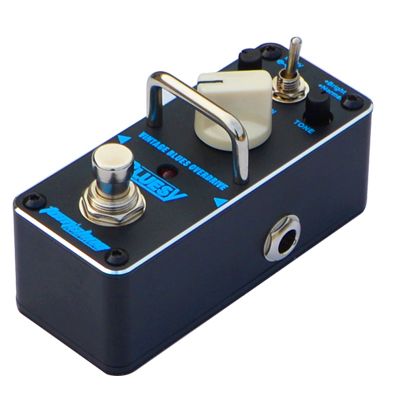
Ugly Truth: Tom's Line Engineering Bluesy Vintage Overdrive

Weeks ago, I decided to splurge on some music gear. I've always seen the cheap pedals from china, but I hate buying something and waiting weeks for it to show up (if it shows up at all). Not to mention the poor customer service and quality control. I decided to roll the dice on these guys, I was able to put together an order for four pedals, all drives (go figure...) When they showed up, they were in a box very similar to the Outlaw Effect's. Included was a somewhat helpful foldout user manual and a piece of Velcro. Overall, it was polished and professional looking. So the packaging exceeded my expectations...(woopty-doo). We don't care about boxes, (unless you're like me and keep all the boxes your pedals come in) what does it sound like?

Using a P-90 equipped Telecaster, I put this pedal through a Vox Pathfinder 10 combo. My bedroom setup is modest, but it sounds great for it's size. Putting this pedal inline was a joy. I really liked the sounds that this pedal put out. There isn't a ton of gain in this pedal, but that should not be a surprise since it's described as a blues overdrive. There is a range of tones that please just about anyone (looking for a light overdrive). After testing out this pedal, I was able to run it into a Vox AC15 with both a Standard Tele and Deluxe Telecaster. These combos resulted in please sounds. The 'normal' and 'bright' settings came in handy, One to tame the spanky single coils and the other to brighten the split-coils in the deluxe. Whether you are finding a bluesy voice for you solid state amp or your looking for something to boost your tube amp into sweet breakup, this pedal can serve up some nice sounds. Listen to Shnobel:

But were aren't here to talk about the pretty things, Let's get ugly:

Let's Get The Obvious Out Of The Way

It's Chinese, It's Cheap, It's Tiny. All these things are scary. The last time I ordered a pedal from China, it was DOA. Thankfully, all these pedal came in working condition. The price I paid is not my concern. In fact, I thought that the price I paid was great. But it's the fact that I was able to buy a pedal for so little that makes me wonder about the quality of the guts. Ignorant of the insides, I do like the sounds. However, I hate tiny pedals. Why did I buy so many of them... They're cheap, that's why. I will say, it was smart to put the bar to protect the knobs. I've always thought they were in danger from people with heavy feet.

And That's It

I know this seems very favorable, but I really can't come up with anything more to complain about. It's a light overdrive that is flexible. It's cheap enough to bought with the change from your couch. It's not the fanciest pedal. It's a simple pedal that could fit on nearly any pedal board. If you watch that video above and scroll down so that you can't see the pedal and just listen, then you might just fool yourself into digging the tones that Mr. Shnobel is putting out.

Conclusion

Having said all those nice things, I probably won't be putting this on my board. My dislike for this tiny pedals and the wide range of low-medium gain pedal that I already have make it hard to find use for yet another. What I might do is put together a small 'travel size' pedal board. It could be fun to go through these little cheap pedals and put the good ones together on a board. Then putting that board against my main board. Not so much to see which one is 'better', but if you can put together tiny pedal to do most of the job of a typical-size board fill with 'full-sized' pedals.

Wednesday, December 30, 2015

Boss Blues Driver VS Digitech Screamin' Blues

Earlier this year I was hanging out in guitar forums, go figure and I saw a thread about the Boss Blues Driver. There was some people discussing its merits and if they should buy one. A trusted source that reads schematics like children's books insisted that the Blues Drive and Digitech's Screamin' Blues overdrive was a direct copy of the BD-2. He even mentioned that some of the mods made famous by some, have been made mote by the addition of a Bass knob. This made Digitech's pedal look rather attractive. So, later, when I saw that MF had a Stupid Deal Of The Day where they sold the pedal for $30, I bought it. I do have a modded BD-2 so is the Screamin' Blues really its superior?

Boss BD-2 Blues Driver

The first time I ran across this pedal, I didn't like it. It seemed to make everything sound static-y. Running the tone past noon seemed to just make things thin. Running into a AC15, I couldn't get the two to jive. After chasing tone for a while, I came back around to the BD-2. I wanted to give it another go. Its application is legitimate. I do like it in some situations. I have a unit that is modded pretty heavily, mostly to increase the bass. Now the unit has a large, tight low-end. The pedal is a little bit of a sleeper, but usable.

The Digitech Screamin' Blues

Back to back these pedals sound very similar. When A/Bed The Digitech can match the stock BD-2 at every turn. With the more flexible tone section, the Screamin' Blues gets into other territories. It will get a little fatter sounds, and for the most part does a good just as adding bass without getting muddy. Is it the best sound Blues Drive pedal? No. It is flexible and usable. Unlike The BD-2, this pedal is usable out of the box. However, this pedal falls flat when you consider that it is difficult to mod and change if you wanted to. It also looks and feels cheaper. Digitech pedals don't hold up as well as Boss pedals do. Plus, they are a little wider, so make some room on your board.

Conclusion

Both of these pedals will give some nice tones. If you know how to tweak you tone, then I'm sure you'll find some setting that is pleasing. However, the best pedal just make you start changing your amp tone, but allow you to shape the pedals sound to compliment your amp. Stock, out of the box, I'd have to give the edge to the Digitech. However, I don't trust it. On the other hand, You can buy two for the price of one Blues Driver...

Monday, November 23, 2015

Top 5 EHX Crayon Rumors

There has been a lot said about this pedal since it was teased by EHX a few days ago. Forums and blogs have been abuzz about how it shares it's name with a JHS pedal. Personally I am excited to check this pedal out for myself. There is a lot of speculation about what this pedal might have in common with other pedals. In other word: What kind of clone is this pedal. As exciting as it would be to have a inexpensive pedal to do the job of a pedal that might be financially out of reach of some player, other look at copy-cat pedals as rip-offs that are just attempts to make money off of other peoples work. No matter wear you fall on the issues of clones, new pedals are exciting. Lets look at what is being said about The Eletro Harmonix Crayon

It's a JHS Color Box Clone

Yep, this one is a little on the nose. JHS has not only put out a pedal of the same name, but they are similar in function as well. Some have mentioned the differences in the two, such as the toggle that is missing from EHX's pedal. Although they have added internal switches that match other clones. The Soul Food pedal has internal buffer switching. Maybe this is a little surprise they are waiting to expose closer to it's commercial release. EHX hasn't really been this spot on with a name before. The TS clone is almost entirely green, but it was named East River Drive. The Klon Centar gives clones lot opportunity to riff on the name, my favorite being the Tumnus from Wampler, but EHX went with Soul Food. Still don't really 'get it', but hey...

Mike as he hints that the Crayon is a Fulltone clone...

It's a Timmy Clone

This is a little more simple to unpack. The Crayon has four knobs. The Timmy has four knobs. The Timmy is a popular pedal. EHX has a habit of copying popular pedals. This one isn't as much reserch driven theory as it is process of elimination. Whats the most popular four knob, light-to-medium gain pedal on the market... That must be it. The Timmy is based on the Tube Screamer with more control over the EQ. It's a great pedal. It might, in fact, bear more than a passing resemblance to the Crayon. What I've heard so far doesn't really lead me to think that, but I'm wrong a lot.

It's an RC Booster

This one is a little bit of a stretch. The circuit could share some similarities, but the reasons the comparison has been made in the first place is just mind-blowing. So, people other than my self have stated that the link between these pedals are the names. Crayon begins with the letters C and R. Turn those around and you get RC. There you have it. Rock solid proof that the Crayon is a RC Booster. The RC is a popular four-knob pedal, so there is that as well. But like I said before, word play is not one of EHX's strong suits. Nor naming things in general. Muff, Cock Fight, Glove... eh, I guess we'll buy anything that we think sounds good.

It's a Soul Food With a JHS Type Mod

Jeez, I hope so. I would buy two if this was the case. The only thing is, this would be utterly stupid for EHX to do. Why put out a pedal so closely related to your other pedal, but better. The Bass Soul Food is just that, a four knob Soul Food, although the fourth knob with a signal mix. The pedal went form transparent overdrive to just transparent to the point you can't tell if it is on. But you'll notice that the extra feature came with extra cost. Again we have extra features with the bass knob, but no added cost this time. It looks like they are able to assemble these pedals for no more that the other affordable clones they've been putting out.  What makes this hold a little bit of water is the fact that they are marketing this 180 degrees from the Soul Food. The Soul Food is a "transparent overdrive" where as this is meant to "color" your tone. Now they can sale you two pedals to do the job that normally one pedal has done. Sneaky...

It's a Robert Cray pedal

This is fun, Robert Cray is a blue musician. I have him playing it the background as a write this right now. Fun fact, it been said that Mr. Cray doesn't use pedals. Although I hear delay on his guitar right now... anyhow. I have not been able to confirm and use of drive pedals in the video of the live set that I am playing currently. He does have a Fender and Matchless amp among other accessories (none of which are pedals) on stage to shape his tone. Why would he. He is employing overdriven amps to make his overdrive. Why use a pedal that emulates an amp when you can just use a cranked amp. Robert Cray's tone is awesome and I would buy just about any pedal that could make me sound like that. Why have people said that this is true? The name, and the fact that his tone is mostly clean, much like the Crayon. Cray...Crayon... just too close to not be mentioned...

What do I think about all this... well, in a few days it won't even matter. We will have all the answers. But it's fun to speculate in the meantime.

Monday, October 19, 2015

Ugly Truth: Raygun Effects

Among my internet viewing, I found a company out of the UK that sell effects. I know right, the UK thinks it can make effects...? Well hold a second because these guy might surprise you.

Boutique gear is expensive. Don't let anyone tell you any different. If someone put their hands on it to build, then you are paying twice what a sane person would. But it all for not because it's just a pretty clone of something someone made a hundred years ago... blah blah blah. Now that that is out of the way, Raygun Effects doesn't seem like your typical boutique pedal builder.


The Prices

Don't let the exchange rate fool you, those are actually decent prices for a handmade piece of gear. Yes, they are heavy on the fuzz pedals, but they also have range of other pedals. This marks one of the only times I've thought that one of the small operations that make awesome sounding/looking pedals to have down to earth prices. Plus they are just too cool. Their boost is just over $60 USD.

The Looks

Did I mention that they look so dang cool. The boost comes with an old school skirted amp knob (so you know it sounds good) and everything else has been given loads of detail to set it apart from the normal, powder coated, metal flake, boxes that we see. Good job to the guys at Raygun for finding that look that suits them and sets them apart.

Bass Effects

These guys know what they're doing. They are taking care of the bass player. The guy that doesn't geek out about his gear so hard it make everyone nauseous, needs a little love too. Again Raygun has features that set them apart from anyone else. These pedals respectable in every way.

Wednesday, October 14, 2015

GMF Bullseye Pedals

GMF amps is a little company that mostly produces an acoustic DI. This DI has been featured by Guitar Player magazine, but for most of the guitarist community, they are an unknown. A visit to their webpage will only bring you information about the DI and a small line of effects that are now in development. In fact, this company relies on Kickstarter campaigns the fund the production of its effects. This actually makes a lot of sense and seems to limit the cost of the units. In stead of taking a gamble on mass production, or charging a mint for small batch pedals, GMF will know exactly how many unit they need to sell. This could change the way small effect developers create and distribute their products.

A Closer Look

Lets start with the Distortion.
GMF Touts "Proprietary circuits" for each of their designs. This is somewhat of a good sign considering how many cases of effect companies cloning each others circuits (I'm looking at you, EHX) However, there is something that look a little suspicious. Maybe it's the model name "DS-1" that has has been everyone's first distortion pedal ever (the Boss DS-1). I'm not say that it is a DS-1 clone... MXR has that down, but that could have called it anything else and it would be better.

There is a Chorus
 So this is the Bullseye Chorus. Organic and lush, this chorus is a reminder of more classic effects. The pedal is warm, like a CE-2 with the added benefit of a level knob. Fans of the old school will probably appreciate this pedal for it's subtle qualities. However, dramatic 'warble' sounds are possible with this unit as well. This really is an expressive unit. GMF's description states that you can use this unit with a varity of instruments, and I believe that claim.

And a Delay

The DL-1 is a simple analog delay that seems to fit in with the rest of the lot. Warm, analog repeats are present. The delay time might be limited, but super long delays are for the digital units. If you are looking for a warm, vintage sounding delay, then this might be a option for you.

The Reverb
Those looking for the Fender verb in a can may see themselves picking up one of these units. The Two knobs make this pedal very simple, however limited. The unit emulate a spring reverb, and calls to mind the spacious sounds made by a clean Fender amp. There isn't much you can do to improve on that.

Conclusion

These pedals may not be game changing in them selves, but the space saving design (they are about the size of two 'micro' pedals side by side, and top-oriented jacks make them pedal board savvy. The option to power them with a 9-volt or a power adapter is nice to see in small pedals. These pedals are what the big effect companies try to be, relevant.

Friday, August 21, 2015

A Hands-On Review Of The Line6 M5 Stompbox Modeler


I Wrote, not to long ago, a glowing review about the M5 Stompbox Modeler. Looking into the M5 made me realize that It would fill a lot of hole in my pedalboard. So, I got one. I like the pedal, but getting to know the pedal has taken some time. Here is what I learned:

It Does Most of What It Claims To Do.

Unlike many effect that promises the moon and deliver less than that, The M5 is pretty solid. It make the sounds that we've come to expect from Line6. The Delays are all useful and flexible. The filters are fun and creative. The reverbs sound good, and the mods are ones that I can see my self using. I wanted something that made weird sounds and I got that, plus a ton of other things.

It Doesn't Try To Do Everything

Yes it is a multi-effect processor, but it doesn't try to do everything. The best thing is that it doesn't try to emulate an amp or cab. This is good, because I am of the opinion that they just can't recreate good amp tone in a digital processor. It knows that It's a part of a larger thing and it plays its part. That's an important distinction for something like this to make.

It's Not Perfect

There are work-a-rounds, but the effect selecting process is a little contrived. You have to double-tap the switches, select the preset, and then double-tap again. Not a big deal but it does not lend its self to live play. Between songs is doable, but switching within a song is practically out of the question. The work-a-round being that it has midi capabilities.

In Conclusion

I like it. It has a home on my pedal board. It will have a home there until I can find something that does everything that it does and better. I would go as far as to say I'd trade in my pedals for the M9 or M13 boards, but this make a great addition to what I have.

Friday, August 14, 2015

Ugly Truth About Polara Reverb by DigiTech

I may or may not have told you before, but I'm not a great fan/user of reverb. I usually use a little bit of reverb, but just. I like to hear my guitar loud and clear, and too much reverb can make things mushy. So, when spending time at my local music store, my helpful pedal pusher set me up with two pedals. One was the Obscrua Altered Delay, and the Polara Reverb. I was looking for weird but useful sounds. He was sure that this combo would fit the bill. The Obscrua is reviewed here, now we are going to look at the Polara Reverb.
It's a Reverb

Generally considered a good thing, reverb is a very useful effect that many guitarist use in a "always on" type manor. I use a little bit of verb all the time. I own serval amps that all have analog reverb, so for me a pedal unit should create something special. I spend a considerable amount of time with this pedal. What I found was a really good reverb. That was about it. This pedal look psychedelic in the best way. It feels super solid and everything is really smooth. Besides a little bit of pedalboard candy, this pedal offers little more than the average reverb pedal.
There Are Better Options

In September Boss will release a updated version of their Digital Reverb. This update adds a lot of functionality and a few new features, which is more than I can say the the Polara. Digitech want to break into the boutique market, but there is one problem: they're Digitech. They have produced pedals on a mass scale for years. Just because you release a fancy looking pedal and charge a premium price for it doesn't mean it's boutique, and it doesn't mean that people will be willing to buy it.
Conclusion

If you have $150 to spend on a reverb and you have to maintain a certain atheistic on your pedalboard that doesn't include Boss pedals, buy you also want more functions than basic boutique stuff, then you might be the prime candidate for a Polara Reverb. I've seen tons of Demos and have had a lot of hands on time with this pedal and still looking forward to the Boss RV-6. If this pedal has an Expression input and 100% wet setting, then the looks would put it over the top, but considering that this will be topped next month, I'm waiting.

Tuesday, June 9, 2015

The Ugly Truth About The Hardwire DL-8 Delay Looper


In search of a possible alternative to my trusty DD-20 Delay from Boss, I sat down with the Hardwire DL-8 Delay/Looper. In many repects the Hardwire pedal is the equal to any from the boss line. Offering a load of useful features, that you can read in full detail elsewhere, The DL-8 closely aligns its self to the Boss DD-7. It outshines it with more delay time and a few extra settings, such a Lo-Fi and Slapback that allows you to really scrutinize the delay time of your slap. Lo-Fi is an intresting setting. It allow the trails to get covered by the guitar's dry signal allowing you tone to remain unmuddied by delay trails in busier parts of the song. All in all its a solid little pedal. But its not all so pretty...


Its Awkwardly Sized


This pedal was thought through. The packaging is definitely a step above the rest. It comes with pre-cut velcro and a cover to keep your knobs from turning. I like that they have thought about these things. It makes it easier for those that run pedalboards and need to secure their settings. The wide footprint, however,  is evidence that these pedal were designed before the "micro" fad really hit its stride. EHX and Line6 both had large delay boxes that were doing very well, so when this had come out it was considered middle of the road. I like the sturdy feel, but  I also have a small pedalboard. I don't know if they needed the extra room due to pedal design, but it is a little bit of an odd shape for a single button pedal. Maybe they couldn't fit all that delay into a "standard" size box.


It's True Bypass-ish


 There is a hidden switch they've included. Which I'm sure does something. However, knowing what I know, I can feel pretty sure saying that the switch does little in the way of bypassing the entire pedal. Like most of the pedals built in the "Boss" style, it has a momentary switch and that corresponds with a flip flop circuit and that by nature is not "true" bypass. I believe that it might bypass the buffer, or even the whole delay circuit, but that pedal wont switch without running though that flip flop. But the option to have a truer bypass is nice. I wish Boss would follow suit. This is a great feature and out of the box thinking, but before we praise them too much for their features, there is one feature that is such an oversight that Homer Simpson called them to tell them they were idiots.


There Is No External Tap Tempo Out


Sweet mercy! This is this the mother of blunders! To their credit, The Hardwire series that Digitech designed was put out just before everyone went crazy about tapping their tempos. Some of the bigger boxes like the Line6 DL4 and Boss DD-20 had either a disignated tap tempo button or jack for an external pedal. The DD-7, the most comparable pedal to this one, has nearly every feature plus the external tap tempo for the same money and less space on the pedalboard. However these pedals were most like designed at the same time by different people, so it is not like that had something to compare themselves to. Actually when you compare this pedal to the Boss DD-6, the Hardwire DL-8 beats it on all fronts. The DD-6 has less delay time and no external tap temp out. Too bad Boss upped the ante with the DD-7 and supplied a feature that was actually in demand.


Looper Might Be A Bit Of An Exaggeration.


To be honest I bought this pedal for a delay, but the Looper feature was surprisingly useful. I'm not a particularly enthusiastic fan of loops, but they can be useful. I use a Digitech JamMan for a band that was the only guitar player for. The looping feature is similar to the Sound On Sound feature found on most Boss delays. In fact, Boss could call all of their delay pedals delay/looper if Hardwire can call this pedal a looper. If you are looking for a delay and don't have great need of a superlative looping pedal, then this works for you. The best feature of the loop setting is that it is triggered by the input, making the beginning of the loop easier to start than timing the perfect stomp. This works at a great practice tool, but I wouldn't buy this pedal for the Looper portion of it name.


In Conclusion


Buy a Boss DD-7. I find it very hard to use delays much longer than a few seconds, so the difference, to me, in the max delay time means little. The setting are almost exactly the same and an external tap temp option means a lot. Hardwire might be going the way of the Dodo so there are chances to get these pedals at closeout prices. Digitech, the makers of Hardwire, played their hand wrong. Everything about the pedal says "quality" but its just a little too underdeveloped. Its not a bad pedal, but it can't compete with the other options in its bracket.

Wednesday, April 22, 2015

5 Ugly Truths About Fenders Micro Effects Pedals


They are sigh inducing

From the colors to the, to the actually types of pedals that are served up, Fender has created the least inspiring line of effect since... their last line of effects. Way to go guys! But seriously, Fender has a terrible track record of effects. The last time that Fender had a dog in the effects game was in the dark ages when they put out the "Tone Bender", and that was only because they were one of the few putting stock in the stuff back then. It has been copied, but it is almost unanimously believed that the design has been improved on in every conceivable way. The first experience with a Fender pedal was with their tuner they put out year ago. I bought it because it was half the price of the Boss TU-2. It also worked half as well. I've stayed away for the most part since then. Everything from the design to the colors to the names of Fenders pedals have been lack luster for as long as I can remember. These pedals are no exception.

They are copies of copies

In the new line up we have a compressor, EQ, DI, and an A/B/Y pedal. The comp is in the same vein as many others from Donner/Mooer/Monoprice and the like. Whether or not they are the same on the inside is a little harder to ascertain. The EQ is seen in many other places. The Graphic sliders function in the same way as the Boss GE-7 or MXR's graphic EQ pedal. The closest resemblance is that to the Mooer pedal. They are just slightly different shades of blue. The DI and A/B/Y are tried and true designs in a compact little pedal. Fender is not fooling anyone here. These are, at best, clones and at worst they are exact copies of other pedals. I don't think that there is anything necessarily wrong with that. Depending on who owns what, Fender might not even be dipping into anyone else "bag of tricks". What it is, is a lazy way to push product out. Fender looks like they said, "This is popular, let's slap our name on it and sell it to Fender fans.", and called it a day.

They are Fender effects

If you have ever tried Fender effects, then you probably have been disappointed. To call them lack luster what be an understatement. In the last 10-15 years Fender has made attempts and failed to bring to market, anything that might be considered successful. Not to say that what they put out was blatantly bad. That accomplishment belongs to Behringer. But finder has found a way to miss the mark every time. Which make me assume that they are either hopelessly out of touch of the pedal/effects market, or they are so conservative that they can't explore and find a niche that is well suited for them. either way it leaves the consumer with a bad taste in our collective mouths.

They might have got everything right

Having said that, allow me to directly contradict myself. For the keen observer, you may have noticed that Fender's line-up of micro pedals is a little thin. For the longest time, I haven't been able to put my finger on what was missing. There is not a single overdrive, distortion or filter among them. At first I thought that they add more pedal to this line later. As of the writing of this post, they haven't. What they do have is a list of pedals that don't take a lot of scrutiny. Their comp and EQ are arguably designed by someone else, tested and liked. Their DI and A/B/Y boxes are so simple a monkey could design those. Not only that, but personally I don't like switching the tiny pedals on and off. They don't feel sturdy. They save space, but that is the only reason to have one of these pedals. So why not have your "Set-it and forget-it" pedals (ones that you don't switch on and off often) as space saving micro. This, my friends is the best move that I've seen Fender make regarding effects. That is...

They probably haven't

If they have screwed it all up. Lets face it. This is the company that could produce a $15 analog, needle style tuner that worked beautifully. (I wish I still had that thing) But fail in the highest order when it came to a $50 pedal that performed the same task. Fender has fumbled the ball in the clutch play before and it would not surprise me if they do it again. The easiest of tasks seem like the hardest to accomplish. I don't know why a huge company like Fender has so much trouble making simple things that people put together in their garage all the time. Not like they need to make anything other than the same guitars they have been making for that last three quarters of a century. All this coming from a Fender fanboy. If anyone from Fender is reading this: please, when it comes to making pedals do it right, or don't do it at all.

Thursday, April 16, 2015

The Ugly Truth About The Electro Harmonix Nano Holy Grail

The Holy Grail is another pedal by Electro Harmonix that takes one of their classic pedals and puts it is a smaller box. It retails all of the original features of the old Holy Grail. It has Three settings: spring, hall, and flerb. The last one being the addition of flang to the reverb trails. The one knob is a simple interface like the one on an amp with reverb built in. It is simple and straight forward. The pedal in EHX's standard aluminum box with a simple decal. The pedal is true bypass with a solid click when thrown. All in all, this is a pretty pleasing pedal to look at.

The Sounds.

I've played many amps with analog reverb units. Fender, Vox, and even some boutique jobs. I am not exactly the biggest fan of reverb. I will often run my amps reverb pegged at zero. I get my "big" sounds from adding delay, but I've played enough to know what a decent sounding reverb sounds like. I can also tell you that a good spring unit is a pretty sweet thing to have available to you. The spring setting on this pedal is very usable. I could see having this on my board if I needed to fatten up a section of a song. The Hall setting is also a usable sound that creates a different "space". The Flerb is interesting. I think that there are applications for this effect, but as I am not huge user of this effect, I can think of any off the top of my head. The Holy Grail has been around for a long time, and might have even pioneered the use of modulation on reverb. Many other makers have copied this in there reverbs, so there is something to be said for that.

The Ugly Truth

This pedal is rather iconic. If you forced a guitar player to list reverb pedals, this would be one of the ones that he/she might mention. Its popularity is not contested, but that doesn't mean that it is the best choice. There are lots of solid options for under $100. The VHT Melo-Verb is a solid choice and comes with a separate tremolo channel. Not to mention, that the VHT has Dwell, Tone, and Mix to control the reverb sound. Digitech Probably has the most solid option for verb under $100. Then there is the standard Boss RV-5 Digital Reverb. It is more expencive than the EHX but offers many more sounds.

Conclusion

The pedal makes some really nice sounds. It is synonyms with reverb, but the price tag on this unit might be its down fall. Although it has nice features and interesting settings, it doesn't offer a great deal more than some other pedals that are close enough in price to consider. There are even options that cost less and do more. This pedal has some unique sounds that might make it special enough to warrant the purchase, but if all you are looking for is a solid reverb pedal, then make sure to check all your options before deciding.

Saturday, April 4, 2015

The Ugly Truth About MXR Super Badass Distortion


Recently I was able to sit down with a pedal that has had a lot of attention lately, The MXR Super Badass Distortion. The most notable feature that is present on this pedal is the Mid knob. Most pedals have a Tone knob. We are very familiar with a singular Tone knob, or even having  Low and High knobs, but having a three band Eq is surprising on a compact, sub-$100 pedal. This pedal has lots of knobs. This is great for those of us that love to tweak pedals. The controls are very amp-like. We have Level and Distortion that do exactly what you think they do. Then, you get your Low, Mid, and High knobs that do what they sound like they do as well. I am not the expert on MXR. I've played through most of their distortion boxes. I can't say that I'm super impressed with many of them. My local shop is a pretty big dealer of Dunlop (MXR's parent company) so when sitting down with my friendly, neighborhood, pedal-pusher he lined up a bunch of them and ran through them with me. I was unimpressed with most of the offering of the MXR line. This was rather underwhelming because I like the looks and features of most of the modern line. True Bypass and a rugged compact case are important to me. The Distortion+ was too fizzy and didn't offer enough range. It felt like I was playing around the pedal and not setting the pedal to how I wanted to play. The Classic distortion/ Distortion III was warmer and more usable than any of the other pedals. The one that stands above the rest is the Super BadAss Distortion

The Complete Spectrum of Distortion

If you believe what the manufacture description states about this pedal, then this distortion pedal does everything from clean boost to scooped metal tones. Let's start as the beginning, the clean boost is fair. This pedal probably cleans up better than nearly every other distortion I've played. Most pedals will just die when the distortion knob goes to zero. I guess in a pinch this pedal will work as a boost, but I don't think it will replace my GE-7 (modded to take care of the hiss that is associated with this pedal). Of course the most likely use of this pedal is going to include using gain. At 9 O'clock the pedal give nice soft clipping saturation. I'd describe this as, "Just beyond breakup". Straight up noon on the gain will give you large amounts of gain. This is about where the line is between rock and heavy rock. Past this point and you'll be flirting with metal tones. At 3 O'clock it's over saturated, heavy rock/metal. Scoop the mids and you'll find some lush nu-metal sounds that satisfy that niche. This is all pretty impressive, that this pedal can clean up all the way to "clean" boost. There is a down side to all that versatility. Cranking that gain will definitely give you more distortion, but it also comes with a little extra white noise. This is not much of a concern util after 9 O'clock, but pegging the gain is going to come with a cost. Also the pedal comes with a fair amount of compression. Many metal distortions will compress your signal, but as your increase the gain you start to notice that everything is getting squished. The whole range of gain on the pedal is accompanied by some compression, but it is the most noticeable at full tilt.

Does It Really Do Everything?

In a word: no. It is my opinion that no one pedal can do everything for you. Even if it peg every gain stage that you want to play at, you'd have to change your settings to get to more than one of them. Then there is matter of stacking pedals. You can push your pedals just like the front of your amp. If you were setting up a pedal board and had $100 to spend on your gain section, I'd recommend getting two of the lower cost options that cover that range instead of trying to get a single pedal that does "everything". The way your can combined and mix these pedals are going to be a lot more satisfying then trying to find one setting that works for anything. At the end of the day, one pedal can only make one sound at a time. $50 isn't a lot of cash to spend on a new pedal, but there are a lot of good options out there. Most of the Outlaw pedals are just under $50. Of course you can get the orange and yellow boxes from Boss, but if you like the MXR line then you might want things like True Bypass and such. You could get as many as 4 pedals for your $100 From Behringer. However, if you are typically a low gain player that needs to add flexibility to you board, but you don't want to buy a ton of new gear to make different sounds, or have little space to spare on you board, then the Super BadAss might be a great fit for you.

Thursday, March 19, 2015

The Ugly Truth About Joyo Pipebomb Compressor Pedal

If you've looked at any music gear website, or have been inside an actual music store within the last few years, you have probably noticed that pedals are getting smaller. Even the larger pedals that we see coming out are compact. Pedals like the Fuzz Face and Big Muff Pi are considered huge and bulky next to most of Boss' line, next to this new wave of ultra small effects, pedals like those are mammoth. Joyo has put out a line that is no longer than my thumb and not much wider. A pedal with a footprint that small is crazy. When looking for a compressor pedal for my already cramped board, I found these and thought that I'd give it a try. Comp isn't an effect that I use a lot, but is something I want on hand for when I do. I've had several compressors, but none of them have really filled that specific niche in my sound I'm looking for. The Visual Sound Rout 66 was a great OD slapped together with an OK comp. At least, the comp was just not what I was looking for. I've played the Boss CS-3 and found a vintage CS-2 that really didn't fit the bill. So I wanted something with a knob to blend wet and dry signal like some of the high dollar jobs, and I wanted it to have a small footprint to squeeze onto my board. So the Joyo fit the bill, as long as it did it's job in a manor of my liking. So here's what I found out:

Joyo has thought this through.

If you read about these pedals or watch videos on YouTube about pedals, then you might have seen that these pedals come in a nice box with some extra stuff. There is no rubber on the bottom of the pedal and the screws that hold the bottom plate on are countersunk so that the bottom is completely flat. In the box is a standard "anti-slip" 3M rubber mat and a precisely cut piece of Velcro. To me this means that Joyo totally gets that these pedal are meant to live on a board. If you lay all your pedals on the floor then you really don't need tiny pedals. The whole floor is your board! The knobs have a interesting cover to protect them from when your foot hits the switch. This is a nice touch considering the knobs are no larger around than a pencil. The stems on the pots must not be much larger than the lead of a pencil. I've seen regular pots get snapped off, so a wayward foot could probably do some damage.

The sounds are familiar.

To sum up this pedal you need two words: subtle and transparent. With the comp all the way up you notice the effect, but it's not really "in your face". In fact, that is one of my favorite positions. Although, I play with compression like it's an effect that is supposed to do something special instead of using it to "shape" my tone. For the most part, it is hard to tell when the pedal is on, but in a kind of good way. It doesn't color your sound or dampen your high-end. The pedal can be dialed in to let your clean signal in along side the compressed signal. This is a subtle pedal when its set to 100% wet signal. When you dial that back, it gets difficult to hear the effect at all. I know that I'm not an expert at compression pedals, but it seems like you should be able to tell when it is on.

It starts to get ugly.

So the pedal does what it says. Although, sometimes I find myself wanting to turn the knobs past their stopping points. That is until I start hearing the hiss that comes from this pedal. I put this pedal on my board for a set with the group I play with. I was excited to hear this pedal in the mix with a whole band. Everything was fine until someone said, "What's that hiss?". I was running through a Fender Blues Junior at stage levels. The hiss was more than a little annoying. I don't normally run into this problem so I don't have a noise gate on my board. That meant that the compressor had to either be dialed back, or turned off. The whole thing left me a little underwhelmed. I dialed the levels back and continued use until something developed a hum. It only stopped when I turned that Pipebomb off. That is the way it stayed until I had time to address the issue. The problem might have been something knocking the power jack around. It is located on the side of the pedal instead of the top of the pedal like most other pedals. Another black mark on the pedal is how it clips when in the signal path of a guitar with hot pickups. I played at many different levels and amps while trying to attribute the clipping to something else, but the only consistent thing was when running through a hot humbucker, this pedal acts like an OD. The sounds are not terrible. Actually it was a nice soft clip, but I couldn't get the signal to clean up. I turned the volume down, but it had to go way down to clean up. This was the biggest bummer of the entire review. I only got this effect when running a very hot humbucker. Other guitars did just fine. Strats with your average single coils really benefit from a little compression and had none of the clipping from my hotrodded Tele. This might be a common thing with compression in general, but it is a little underwhelming.

Is it worth it?

Joyo is an imported brand that has a reputation of copying other pedals and selling them at a value price. This doesn't seem to be the case with this pedal. Even if this is a copy of another compression pedal, the price isn't necessarily rock bottom. At nearly $70, its a sizable investment for a pedal with the reputation of being a budget brand. There are things that this pedal gets very right, and other things that miss the mark. Packaging and design are the selling points here, but the very subtle effect, odd placement of the power input, higher than average price tag, along with the downside of these ultra-compact pedal inherently have, the price might warrant looking elsewhere for a similar unit.

Sunday, February 22, 2015

5 Ugly Truths About Effect Pedals

If you take a look at some of the other posts here, you can tell that I am quite a fan of effects. I have more posts about guitar effects pedals than anything else. That might not be your bag, in fact there are many people who don't share my passion for these little boxes of joy. Ok, that's fine, but why not? Let's look at why effects aren't the end-all be-all that I feel deep down inside they are...if I have to.

1. They don't help

Yes, they do, but not the way you think. A chain is only as strong as its weakest link. If you have a pedal in your chain, then you may be adding something you didn't intend on adding. First, the pedal you are adding may have a buffer that your signal passes through even when the pedal is off. These buffers are added to increase your signal strength so you won't have signal loss over long stretches of cable. Sounds great, right? Well, not all buffers are equal. Some can change your sound. Most are minimally intrusive, but others can really color your sound. What if your chain is all true-bypass? Running a total of thirty feet of cable is enough to take a toll on your sound. Most rigs will run close to thirty even if there aren't many pedals on your board. Now add all those patch cables and you're probably at or over 30 feet.

2. They change your tone

You might be thinking that the point of a pedal is to change your tone, but not in all cases. Volume, boost, comp, noise gate shouldn't change the overall tone of your sound. In many cases this is true to some extent. Think about it. What kind of electronic wizardry do you have to employ to change your sound without actually changing the tone? When you run your signal through a chain, you always effect your tone. Whether it is true-bypass or buffered, there is always an unwanted effect even when the pedal is off. When the effect is on, that's another matter. Many noise gates will clip even some of the wanted signal. Comps and boosts can add noise. Volume pedals can be scratchy. There is always a give and take when running pedals.

3. They over promise

I'm looking at you Digital Effects. My very first guitar effect was a Digitech RP100 Multi-effects unit. I used that thing all the time. It made lots of different sounds. Many effects I didn't use, but I learned how to use overdrives and delays. I also learned how to turn knobs and push buttons till it wasn't fun anymore. The idea was that these were the answer to all of your problems. Every type of effect could be dialed in and stored in a huge bank of presets. It was a great idea. However, the sounds that actually came out of the unit were not the best. Actually, my little Crate practice amp made so much better sounds that even a novice, like I was, could tell right away. I know that not every Digital Effect is like this, but if it seems to good to be true, it probably is.

4. ... and under deliver

In the same way that some effects can promise the world and end up underwhelming, some effects make claims that seem reasonable, but still seem to be lacking. In the case of the Joyo green fuzz box (I forget what its really called), it combines fuzz and octave. This sounds like a great combination, but in practice the effect was not as well conceived as one would like. For one, the octave was only available when the fuzz was on. There was no way to control how present the octave was. Another pedal that tried to do a little too much was the Rout 66 from Visual Sound. The OD and Compressor were both available independently, but the controls seemed to be a little lacking. Given the price of these pedals, it might have served better to buy two separate pedals.

5. They're expensive

If you are anything like me, you've taken a look at your gear and added up the cost of all the things you've collected over your career. I've had thousands of dollars of gear just on my board. While its easy to point to guitars as being the real expense, pedals and other gear can easily cost just as much, if not more than the guitar you use. I've purchased more than one pedal in the last month, but I haven't bought a guitar in years. I'm a little hesitant to add up all the money that I've spent on pedals, partly because it might take awhile and partly because my wife reads my blogs. (I love you, wifey!)

There are many reasons to use pedals. Some sounds are impossible to get without them. I've made my position clear on how I feel about them, but they aren't completely great. There are intended and unintended effects with these pedals. Just be aware of these things when the thought that adding that one pedal will make everything better.