I've written about multi-effects on here before, But there has been a lot of time in between now and then so here we are. What do I think about multi-effects? Well, I use to hate them. I had a pretty bad experience with them. I owned a few Digitech units. These were early 2000's and early on in my guitar playing. So I thought they would a good way to have lots of effects without going broke. And it was, what it wasn't was passable for live performance which is what I would later try to make it do. I would later attempt to use multi-effects with Marshall's line of amps before their current CODE line. Again, these left a lot to be desired. I blame these two experiences with the poor impression of multi-effects. It has been a long time since I have tried seriously use multi-effects. So let's take a look.
Line6 did a lot to turn the tide of multi-effects. The POD had a lot of serious users, but I never bought into it. It was too soon for me. I just had a bad taste in my mouth from Digitech. Also, it wasn't a pedal, so it wasn't cool enough. Then came the M series. The M series probably turned the tide on multi-effects. The large unit, M-13, could be your entire pedal board. It could also be a part of our pedal board. The M-13 probably pushed the limit in many respects. It was really expensive compared to other units. Despite that fact, the M-13 was extremely popular. There had been other "high-end" multi-effects" but the M-13 did so well that it renewed interest in premium multi-effects. Yes, Line6 ushered in the new era of multi-effect. Eventide and Strymon probably would be as successful if Line6 didn't help so many of us find faith in their ability again.
Today, multi-effects are again surging in popularity. Line6 have again pushed the boundaries. The Helix series has filled in a gap in the market. With the rise in popularity of high-end,multi-effects, all-in-one boxes, Line6 took what they do well and married it to super-detailed, high-fidelity effects processing. Headrush and Positive Grid both have products that compete with the Helix. Both of these companies have great products that basically changed the multi-effect game practically overnight. But what Line6 has done is married their experience with pedal making (love it or hate it) and the full weight of their multi-effect engineering. The product of all this was Helix.
Is the Line6 Helix the end-all-be-all of guitar effects? I don't know. I not trying to tell you that you need to buy a Helix. In fact, I not trying to say that the Helix is better than making a pedal board of all sorts of different pedals. But, these effects are doing so much more than they used to. Entire digital rigs that act more like their physical analogs than ever before. It all depends on what you want from your rig and how you use it. A guitarist that use a DAW could possibly replace their entire rig and silently record and still have a great product. Some will always love running through an amp and analog effects. There are less and less differences between the actual product, so what you use will depend on what you want from your effects. At the end of the day, Digital improving so much and so fast that soon it will be hard not include these effects.
Showing posts with label Line6. Show all posts
Thursday, November 1, 2018
Tuesday, January 30, 2018
NAMM 2018
NAMM 2018 is finished and there is ton of new stuff that is out there. There is still a load of stuff that is yet to be released. Digitech was a big hold out this year. They didn't show us anything new, but they have promised much more stuff later this year. Several other companies showed some pretty exciting working prototypes, so we still have a lot to look forward to in 2018.
There is so much stuff out there that I can't wait to dive into. Milkman came out with a pedal based amp as did Victory. Vox expanded their MV series to include a 150 watt head. Line6 gave the HX multi effect pedal. There are more new guitars from major bands than I know what to do with. Marshall showed us the Origin series. I'm really looking forward to taking a much closer look at a lot of the stuff that has been announced as well as the stuff the I just mentioned.
NAMM is a super busy time, and I've been trying to cover most of the stuff that I've found interesting, but if there is something that you've seen from NAMM and I haven't mentioned it, then let me know in the comments. I'll try to check it out and be sure to let you know what I think.
There is so much stuff out there that I can't wait to dive into. Milkman came out with a pedal based amp as did Victory. Vox expanded their MV series to include a 150 watt head. Line6 gave the HX multi effect pedal. There are more new guitars from major bands than I know what to do with. Marshall showed us the Origin series. I'm really looking forward to taking a much closer look at a lot of the stuff that has been announced as well as the stuff the I just mentioned.
NAMM is a super busy time, and I've been trying to cover most of the stuff that I've found interesting, but if there is something that you've seen from NAMM and I haven't mentioned it, then let me know in the comments. I'll try to check it out and be sure to let you know what I think.
Tuesday, September 26, 2017
Hands On Review Of Behringer EM-600 Echo Machine
If you are familiar with the Behringer line of guitar effect pedals, then you know that they are mostly BOSS clones. They are basically plastic versions of our favorite BOSS pedals. So what BOSS pedal is the EM-600 Echo Machine? It's actually a facsimile of a Line6 Echo Park. You may have know that. Actually, If you are reading a review for the EM-600 then you probably already knew that. So, is the EM-600 a decent replica of a Echo Park? Let's see...
Old School
Where's It At?
There Is A Problem
Conclusion
Old School
So, just like all the other pedals in this line. It is very similar to the size and shape and function of the BOSS format. However, that format is old. If you look at the pedals of twenty years ago, you'll see that a lot of companies made pedals just like that. DOD, Digitech, Ibanez, and others made pedals just like that. However, form and formats have changed over time. BOSS is huge and doesn't have to change, but inexpensive pedals attracts younger players and younger players follow trends. Those that want trendy pedalboards will have to weigh economy against style.
Where's It At?
Just in the past few weeks, this pedal has become hard to find. Most of the main online retailers have gone from 'item backordered' to 'no longer available'. You can still find this pedal on the used market, but there are few to be had and people are already asking more than street price. It may be easier to get a hold of an actual Echo Park.
The Sounds
So, this has been a pretty solid Ugly Truth post, but we have to talk about how the pedal actually sounds. This pedal have a ton of modes, but the ones that matter to me are the Taps, (quarters, eighths, and dotted eighths) Swell, Multi 1, Multi 2, and Reverse. The taps are super basic. I'm just stoked to have a tap tempo on a $50 delay pedal. Swell is a key feature of the Echo Park. It was a big deal when the pedal came out and its still cool to play with. The Multi (pattern delay) setting are really cool. I wish they were a little more flexible. Reverse is a pretty standard feature, but when you add all the feature together, then you have a deep mode selection for minimum cash. If that wasn't enough, you have a Analog and Tape filter. And you have Mod control. There is just a stupid amount of feature packed into this pedal. I wouldn't say that all the sounds are 100% convincing, but just the fact that they are there is impressive. It's close enough to fake it in a pinch.
There is always a problem. There problem with this pedal (other than the plastic construction, old format, an unoriginal design) is that with the mix knob is at 100% the bypass signal can completely drop out. I noticed this on the Swell setting. On the swell setting the mix knob works like a mix know rather than a effects level, so when it is at 100% then you have 0% dry signal. However, even when the pedal is in bypass mode the signal is lost. So, if you are using the Swell feature, then you can kill your entire guitar signal. Unless... you turn the tails to off. So, there is a work around. But in that particular circumstance, it is a little annoying.
I've tried out a few delays lately. This is the only one that I've thought about adding to my board. It does some things that I can't do with my current delay (swell) and I'd like to have a number 2. If I did add it to my board it will probably be a place holder until I get one of those uber delays, then move my number 1 into my number 2 slot. That all said, this is a solid delay. I might even recommend it higher than a DD-6. When its half the price of any pedal that objectively beats it, and it can compete with any delay under a hundred dollars its hard to put it down. Check one out, if you can.
Labels:
Analog,
Behringer,
Delay,
Echo Machine,
Echo Park,
Effects pedal,
EM-600,
Guitar pedal review,
Line6,
New Gear,
Reverse,
review,
Swell,
Tap,
Tape
Thursday, May 18, 2017
The Ugly Truth About The Fender Mustang GT Amp
If you've been living under a rock for the last week or so, then you may not have heard that Fender has finally released there entry into the current gen of digital modeling amps. Of course, we have all become familiar with the Marshal CODE, BOSS Katana, and Line6 Spider V, but Fender has thrown its hat into the ring with the new Mustang GT. So what is the story here? Do we need to run out and buy the latest addition to the Mustang line? Let's aggregate all the information we know about the GT and try to understand whats new, whats good, and what needs to change.
(Before we go anything further and we are on the same page, this is a "reactions" post. A hands-on review is in the works)
There Is A Lot Right
Many if not most of the features that are present in other current-gen modeling amps are present here. Most notably is the connectivity. The Marshal CODE and Line6 SpiderV both let you connect and control the amp via mobile app. What Fender did right, besides their iconic cleans, was to allow the mobile device connect via Bluetooth and the amp to connect via Wifi to your network. Finally a fully wireless amp (well, except for the power cable). The design is nice and clean, which puts it above the SpiderV right out of the gate. Other improvement: high quality interface, 60 second looper, Celestion speakers, more power (200 watts). Fender has put a lot of thought into the this amp. It is the last one to market with their modeling amp, so they'd better have learned from mistakes made by the other guys. So, does that mean that Fender got everything right? Well...
They Got A Lot Wrong Too
As you can imagine, this amps are popular with cover bands and session artist. Those that need to play many styles in the same set, and portability is important. So these amp tick a lot of boxes. Also high up on the list is reliability. You'd think that would be in the bag, what with it being solid state and all, but users have reported issues with one of the key features: the bluetooth connection. First, the connection is lost when your phone goes to sleep, also, the app and amp have a few glitches to work out. Selections on the app have a slight chance to select the wrong option on the amp. Fortunately, there this is only a seldom annoyance, but reliability is paramount in every piece of a rig. Another misstep was to take away some functionality of the previous models. Everything is editable on the manual controls, but the on-the-fly on/off of effects is only available via the $100 footswitch that is only included on the flag ship $600 200 watt version. Not to mention, it is a four button switch with three different modes... I guess it need to do a lot since you aren't going to be running many effects into this amp.
Conclusion
I want to like this amp. I am, admittedly, a Fender fanboy. But I can't endorse this amp souly on the brand on the front of the amp. This amp delivers a multitude of options and effects. There are tons of presets and everything is customizability. There is a community build around the Mustang line that, no doubt, will provide endless possibilities for that looking to nail tones with little to no button mashing. There are some issue with this amp, just like there are with many others, The main feature of any amp though is what it sounds like. I've only really experience the presets and the fender cleans are legit. The dirtier (less-fender) the model, the weaker the sound. Will this be improved in the future? Can it be improved? I don't know. It is a solid, if not overdue, update to the Mustang line. Fans of the Mustang amps will enjoy the long awaited update to current spec. If you are on the fence about buying this amp, I'd suggest putting it next to the Marshal CODE and close your eyes. Pick the one that makes you feel the fuzziest.
Support the blog by shopping on Amazon by using my link!
There should be an ad below:
(Before we go anything further and we are on the same page, this is a "reactions" post. A hands-on review is in the works)
There Is A Lot Right
Many if not most of the features that are present in other current-gen modeling amps are present here. Most notably is the connectivity. The Marshal CODE and Line6 SpiderV both let you connect and control the amp via mobile app. What Fender did right, besides their iconic cleans, was to allow the mobile device connect via Bluetooth and the amp to connect via Wifi to your network. Finally a fully wireless amp (well, except for the power cable). The design is nice and clean, which puts it above the SpiderV right out of the gate. Other improvement: high quality interface, 60 second looper, Celestion speakers, more power (200 watts). Fender has put a lot of thought into the this amp. It is the last one to market with their modeling amp, so they'd better have learned from mistakes made by the other guys. So, does that mean that Fender got everything right? Well...
They Got A Lot Wrong Too
As you can imagine, this amps are popular with cover bands and session artist. Those that need to play many styles in the same set, and portability is important. So these amp tick a lot of boxes. Also high up on the list is reliability. You'd think that would be in the bag, what with it being solid state and all, but users have reported issues with one of the key features: the bluetooth connection. First, the connection is lost when your phone goes to sleep, also, the app and amp have a few glitches to work out. Selections on the app have a slight chance to select the wrong option on the amp. Fortunately, there this is only a seldom annoyance, but reliability is paramount in every piece of a rig. Another misstep was to take away some functionality of the previous models. Everything is editable on the manual controls, but the on-the-fly on/off of effects is only available via the $100 footswitch that is only included on the flag ship $600 200 watt version. Not to mention, it is a four button switch with three different modes... I guess it need to do a lot since you aren't going to be running many effects into this amp.
Conclusion
I want to like this amp. I am, admittedly, a Fender fanboy. But I can't endorse this amp souly on the brand on the front of the amp. This amp delivers a multitude of options and effects. There are tons of presets and everything is customizability. There is a community build around the Mustang line that, no doubt, will provide endless possibilities for that looking to nail tones with little to no button mashing. There are some issue with this amp, just like there are with many others, The main feature of any amp though is what it sounds like. I've only really experience the presets and the fender cleans are legit. The dirtier (less-fender) the model, the weaker the sound. Will this be improved in the future? Can it be improved? I don't know. It is a solid, if not overdue, update to the Mustang line. Fans of the Mustang amps will enjoy the long awaited update to current spec. If you are on the fence about buying this amp, I'd suggest putting it next to the Marshal CODE and close your eyes. Pick the one that makes you feel the fuzziest.
Support the blog by shopping on Amazon by using my link!
There should be an ad below:
Labels:
Blackstar,
Bluetooth,
Boss,
Combo Amp,
Fender,
ID Core,
Katana,
Line6,
modeling amp,
Mustang GT,
Solid State,
Spider V,
Wifi
Thursday, December 22, 2016
Ugly Guitar Truth: Marshall CODE Digital Modeling Amps
Marshall is one of the biggest name in guitar amplifiers. They are preferred by professional around the world. JCM 800 is so iconic among guitarist that without it, we wouldn't have the same music that we enjoy today. Punk and grunge music almost exclusively used these amps, so its no wonder that the Marshall name has garnered a lot of weight with the guitar playing public. Almost as strong as Marshall's legacy of tone is the disdain that guitarist have for modeling digital amps. It is not a secret that guitarist love there old school gear. The more vintage something is, the more a guitarist wants it. Guitars from the 50's and 60's are some of the most coveted pieces of kit one could want. And yet, every time a new product comes out, we get excited to see if it stands up to the standards we have set. Does the Marshall CODE line of amps uphold the standards set by its tubey-big brothers? It's about to get ugly...
It's Expansive
So, the first thing you notice about these amps is that the list of features is long. 14 preamp models, 4 power amps, 8 speaker cab models, 24 fx (5 at-a-time), Bluetooth integration and USB connectivity top the list. Looking at the list of models, it looks like a list of classic Marshall amps. Plexi, Silver Jubilee, JCM800 make it seem worth it alone. Not to mention you can have your pick of 8 speaker sims to craft your model. So there are options. If that sounds like a lot, it's because it is. But don't worry, connecting a mobile device with help sort through the huge list of options and help visualize your settings. That's really what is setting this new generation of modeling amp apart. The fact that you can connect your tablet or phone with your amp and make real time changes is a game changer. Of course your have to make good sounds with those settings...
The Hardware Is Getting Overlooked
With an overwhelming list of features and a whole lot of new tech under the hood, the CODE amps come a long way from the dark ages of modeling amplifiers. Or have they? There is just some things that you can't do with your fancy 1s and 0s. The speakers and amps in these type amps have to be flexible. The have to sound like dark, deep amp one second and then a bright, middy amp the next. There is a classic problem with this that gets crowded out by all these features. You are physically limited by the hardware (speaker, amp, enclosure). You can simulate the affect that a 4x12 has on a sound wave, but you can make a single speaker sound like a 4x12 cab. If you could produce a solid state amp that replicated a Silver Jubilee faithfully, then you can retire and enjoy all of the money that guitarist will throw at you, but you are limited. Has Marshall stunted their amp with sub performing hardware? No, but they asking a great deal from their hardware. No doubt Marshall chose the amp/speaker combo to best suit their need, but lets be real. The best digital model is only as good as the analog parts it's put through.
Just Look At It
So, if I'm being honest. This is, in my opinion, the best looking modeling amp. Classic black on black with the Marshall script logo is super solid. I would be proud to have this on stage behind me on looks alone. The controls have a classic Marshall look as well. There is one aspect of this amp that is a bit of an eyesore though. The app and not the easiest to navigate and easily the weakest link in it's chain. Line6 probably saw the CODE app and then poured a lot more assets into the app design.
Conclusion
The CODE line was actually one of the earliest lines to include Bluetooth and app integration and control. Marshall was on the forefront of the next generation of modeling amplifiers. For being the front runners, Marshall got a lot thing right. Others have been playing catch up (*cough Line6 cough*) and others have put out very comparable offerings (Black Star and BOSS). We readily await other entries into the next generation of modeling amps (VOX and Fender). There is a lot to praise on these amp such as price, size, features, and power. But it's important to remember that, despite the fact that is both new and shiny (two things that excite all guitarist), it has limits. Yes, we can push a button that says PLEXI, but what we receive is a digital approximation of what that sounds like. We will get close, and that's about it.
Support the blog by shopping on Amazon by using my link!
There should be an ad below:
Labels:
Black Star,
Bluetooth,
Cab sim,
CODE,
Combo amp. Amp Head,
Digital Modeling,
Fender,
FX,
Line6,
Marshall,
Modeling,
Power amp,
Pre amp,
Vox
Wednesday, December 21, 2016
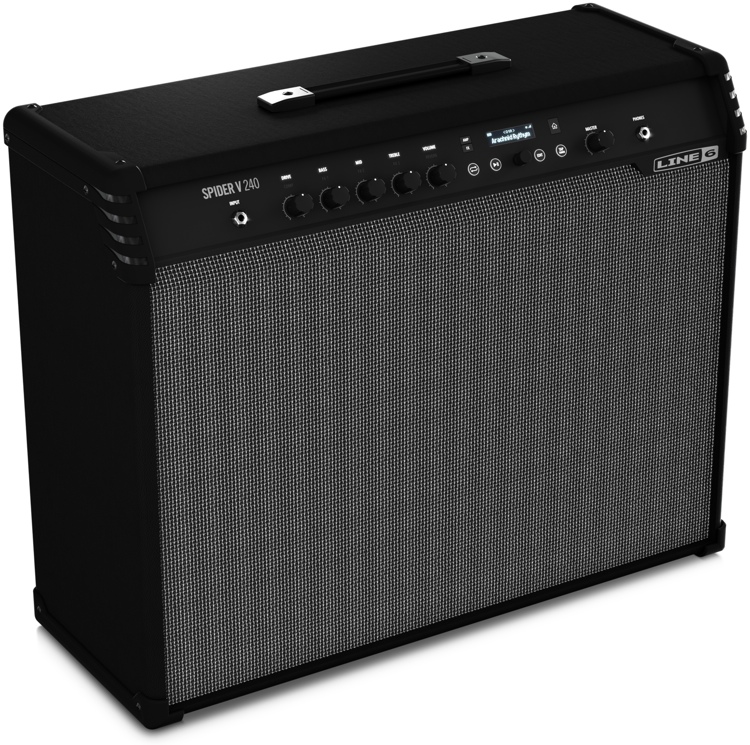
Ugly Truth: Line6 Spider V Amps
Alright so here's the thing, there is a palpable hate toward this entire range of amplifiers. Nearly every guitar player has played through one of these amps, or at least have heard one played. The Spider line has taken more hits than Louisville-Slugger, and has served as the whipping post for anyone putting digital modeling amps on blast. Line6 has doubled down on the Spider name. They have released the fifth generation of the Spider despite any of the negative feedback. Perhaps they've listened to the criticism and produced a better product. It is clear that the stigma still lingers over the Spider name. Do these amp deserve this kind of hate? Well, here is truth:
They Are Well Equipped
Yeah, even compared to the other offerings in this range, the Line6 Spider V is pricey. Coming in at the higher end of the watt/dollar range, these amp command a hefty sum for what seems like a checkered legacy. That's before you start looking at the optional foot control pedal. (that will set you back another $250) and wireless adapters. It's hard see why the Sider V has to be head and shoulders above in price, when they are competing directly with unit that costs (in some cases) hundreds less. Marshal, Black Star, Boss and Vox all have recently updated their line of make-all-the-sounds boxes and appear to be an attractive value in comparison. And while we're talking about being attractive...
They're Ugly
Yeah, they look like cosmetics were not even considered. I'm not sure if they were going for a modern look, but they failed. I'm not the biggest fan of new gear trying to cop a vintage vibe, but it appears that the Spider V is just phoning it in. It is minimalism and sleek-ish, but it's not winning any beauty contest. Objectively, function trumps form in most cases, but when deciding what amp will set the stage (literally) for your overall vibe aesthetics have to be considered.
Conclusion
While I will concede that this amp often get blamed for a multitude of undeserved sins, some of the blame is well earned. Many guitarist start their musical journey with one of the Spider amps. The popularity of these amp is undeniable. When starting out, these amps promise an feature-laden do-it-all machine. However, after acquiring experience many user discover areas where these amps suffer. The truth is, that these amps are fantastic for a beginner looking to experience a multitude of sounds without have to invest thousands into a collection of gear that would ultimately go underutilized. Just like every other product out there, these amps have a undying following as well as detractors. While features and connectivity are growing and becoming more user friendly, these amps will probably never ascend to their aspired heights. What we need to do is to realize that there is no magic bullet, and if there were, it would extremely expensive. These amp have a place, but they are probably not the only amp you'll ever need. More specifically, the Spider V is not even my top choice of modeling amplifier. If you are looking for a amp with a solid reputation, check out the Vox Valvetronix line. If you want something more innovative and inexpensive, look at the BOSS Katana. The Spider line IMHO is a chronic underperformer.
Support the blog by shopping on Amazon by using my link!
There should be an ad below:
They Are Well Equipped
The features on the Line6 Spider V amps are actually one of the most interesting things about them. Sure, there are a lot of different sounds on board, as there are with all the amps in this range. The addition of control via mobile device is robust and intuitive. It feels like there was a lot of time spent on interface of the app. Probably the biggest feature that gets overlooked on these amps is its ability to function as an acoustic amp. Equipped with a tweeter, this combo can do more than model electric amps and effects. This alone makes it a little more than meets the eye. In addition, there is actually an integrated wireless receiver with their Relay Go System (In the bigger units). This makes them wireless ready right out of the box. Also, these amp are compatible with the FBV control pedal. Making them very easy customize and switch between settings. The third gen FBV control pedal actually barrows from the Helix motif, color coding the each footswitch according to the effect that it t triggers. Again this is only available on the larger units. And they (the Relay Go and FBV) aren't "features" as much as they are options, as in optional, as in they don't come with it, but you can buy them... making this sizable purchase into a more sizable purchase... causing the whole thing to become rather...
...Expensive
They're Ugly
Yeah, they look like cosmetics were not even considered. I'm not sure if they were going for a modern look, but they failed. I'm not the biggest fan of new gear trying to cop a vintage vibe, but it appears that the Spider V is just phoning it in. It is minimalism and sleek-ish, but it's not winning any beauty contest. Objectively, function trumps form in most cases, but when deciding what amp will set the stage (literally) for your overall vibe aesthetics have to be considered.
Conclusion
While I will concede that this amp often get blamed for a multitude of undeserved sins, some of the blame is well earned. Many guitarist start their musical journey with one of the Spider amps. The popularity of these amp is undeniable. When starting out, these amps promise an feature-laden do-it-all machine. However, after acquiring experience many user discover areas where these amps suffer. The truth is, that these amps are fantastic for a beginner looking to experience a multitude of sounds without have to invest thousands into a collection of gear that would ultimately go underutilized. Just like every other product out there, these amps have a undying following as well as detractors. While features and connectivity are growing and becoming more user friendly, these amps will probably never ascend to their aspired heights. What we need to do is to realize that there is no magic bullet, and if there were, it would extremely expensive. These amp have a place, but they are probably not the only amp you'll ever need. More specifically, the Spider V is not even my top choice of modeling amplifier. If you are looking for a amp with a solid reputation, check out the Vox Valvetronix line. If you want something more innovative and inexpensive, look at the BOSS Katana. The Spider line IMHO is a chronic underperformer.
Support the blog by shopping on Amazon by using my link!
There should be an ad below:
Labels:
Boss,
Digital Mseling,
Footswitch,
Katana,
Line6,
Modeling,
Spider V,
tone,
Ugly Truth,
valvetronix,
Vox,
Wireless
Tuesday, December 29, 2015
Ugly Truth About Mission Engineering Expression Pedal
A few months ago I picked up a Line6 M5 stomp box modeler. I have been openly critical about multi effects units here on this blog, but the M5 has impressed me. The entire M serious is impressive, but the M5 fits into your already established pedal board. I bought mine because I wanted a Slow Gear, Whammy, and Seek Wah. I didn't have a thousand dollars so I looked for a alternative. The M5 comes up all aces. There are a ton of bonuses. But this isn't a review of the M5, this is.
The main problem with this pedal is that there are so many things that are only unlocked when you add an expression pedal. This leads you on a journey in and of its self. Line6 offers an expression pedal. It is $50 and made of plastic. There are several places on the internet that document the unreliability of this pedal. I avoided this pedal and sought an alternative. The first expression pedal that I bought was a Boss FV-50. It was large and metal and an utter failure. It was on a list of compatible pedal that I found on Line6's support forum. I might have gotten my hands on a dud, so I returned. A little while later I was able to find a used Mission Engineering EP1-L6. For half the price of a new one and less than the Boss 'no go', I found my replacement.
It Works
So, Line6 typically doesn't function with most expression pedals. Basically, an expression pedal is just a pot wired between two jack. But there a tiny little fairies that have to bless each pedal that enables it to work with a particular type of pedal... or something like that. It actually has to do with the value of the pot and how it's wired up. It's simple, but also a little more complected than it seems. This pedal takes all the thinking out it. It even has the Line6 logo on it. It's a metal case with the right guts. So that seem pretty solid. What could be wrong with it?
It's Expensive
Like I previously said, It is a metal case, a pot and jacks. The parts make up $25 of cost, so that's about a 500% markup. True, Line6 probably makes their expression pedal for pennies, but for much less you can buy an actual Wah pedal that includes everything and an actual effect. I won't bash a business for making money, but when it comes to my dollars, I need a little more bang per buck. That's why I only bought this pedal when I found it used.
It's Roamy
The nice thing about Wah pedals is that they are spacious on the inside. Why is this a good thing? Well here is an idea. Imagine you are using you expression pedal to control a wah sound on your M5. How would you turn the effect on? By tapping the on/off button on the M5. But that's not how a wah works. You put the toe down and press, right? Why can't we do that with our expression pedal? The enclosure is already drilled for an input, output and switch. So wire in a looping circuit and you can engage your M5 when you stomp on it like a wah.
Conclusion
I can't really recommend buying this pedal outright. You could probably build one for way less... But this pedal works very well and is super solid. If you can can find it used, then it become much more reasonable. If you like to tinker, then you have a lot of options as for what to do with all that space. You can put a buffer or boost in there, or just a looper and status LED like I plan to...
The main problem with this pedal is that there are so many things that are only unlocked when you add an expression pedal. This leads you on a journey in and of its self. Line6 offers an expression pedal. It is $50 and made of plastic. There are several places on the internet that document the unreliability of this pedal. I avoided this pedal and sought an alternative. The first expression pedal that I bought was a Boss FV-50. It was large and metal and an utter failure. It was on a list of compatible pedal that I found on Line6's support forum. I might have gotten my hands on a dud, so I returned. A little while later I was able to find a used Mission Engineering EP1-L6. For half the price of a new one and less than the Boss 'no go', I found my replacement.
It Works
So, Line6 typically doesn't function with most expression pedals. Basically, an expression pedal is just a pot wired between two jack. But there a tiny little fairies that have to bless each pedal that enables it to work with a particular type of pedal... or something like that. It actually has to do with the value of the pot and how it's wired up. It's simple, but also a little more complected than it seems. This pedal takes all the thinking out it. It even has the Line6 logo on it. It's a metal case with the right guts. So that seem pretty solid. What could be wrong with it?
It's Expensive
Like I previously said, It is a metal case, a pot and jacks. The parts make up $25 of cost, so that's about a 500% markup. True, Line6 probably makes their expression pedal for pennies, but for much less you can buy an actual Wah pedal that includes everything and an actual effect. I won't bash a business for making money, but when it comes to my dollars, I need a little more bang per buck. That's why I only bought this pedal when I found it used.
It's Roamy
The nice thing about Wah pedals is that they are spacious on the inside. Why is this a good thing? Well here is an idea. Imagine you are using you expression pedal to control a wah sound on your M5. How would you turn the effect on? By tapping the on/off button on the M5. But that's not how a wah works. You put the toe down and press, right? Why can't we do that with our expression pedal? The enclosure is already drilled for an input, output and switch. So wire in a looping circuit and you can engage your M5 when you stomp on it like a wah.
Conclusion
I can't really recommend buying this pedal outright. You could probably build one for way less... But this pedal works very well and is super solid. If you can can find it used, then it become much more reasonable. If you like to tinker, then you have a lot of options as for what to do with all that space. You can put a buffer or boost in there, or just a looper and status LED like I plan to...
Thursday, October 15, 2015
5 Questions To Ask Yourself Before Buying A New Pedal
Lately I've run into a problem. My pedal board is full of great pedals. I know. That is a horrible problem to have, but hear me out. I may or may not have GAS (Gear Acquisition Syndrome). I like to buy and try new gear, a lot. So when I see something shiny, or new, or cheap, I feel like I have to buy it. However, I just can't seem to figure out why. I love the way my rig sounds. Would it get better if I had the new/shiny/cheap pedal that has caught my fancy? Most likely not. But I still want it. For a while this would cause me to buy the gear and then ultimately regret it and sell it. Is this just part of pedal board evolution or is it the symptom of a great issue. Either way, I've devised a list of question to aid in determining whether your gear purchase is warranted. (Disclaimer: this is only a guide. This works for me, but ultimately you gotta do you and make your own decisions)
Do I Already Have One Of Those?
Jump on any guitar forum and you'll see that the new, spiffy pedal that is coming out is only a clone of another pedal that has been a around for ages. Take the Tube Screamer. The Tube Screamer lives in so many variations that it is hard to even compile an accurate list of all of them. Just assume anything made by Ibanez and painted green is a TS. Other companies have made their versions as well. Boss has the SD-1, EHX has the East River Drive, Digitech has the Bad Monkey, BBE has the Green Driver and just about any Boutique builder has their own take on the old circuit. So if you have a mid-hump overdrive that you like and the pedal you are salivating over closely resembles the one that you own... maybe think twice before throwing down your money. At least A/B them to decide if the differences are even noticeable.
Do I Need Another One Of These?
Similar to the first question, this question deal with the category of the pedal in question. For instance. My board is a little heavy with dirt pedals. I have to cover a lot of bases when I play, so I like to be prepared for just about anything. I have 6 different dirt pedals to cover anything thing from transparent OD to Fuzz. Overkill? Sure. But I can choose a different voice for each sound if I needed to. In the past few weeks I've been temped to get googly-eye over some pedals. The DOD 250 reissue has been temping. The Wampler Tumnus is another that is just too cool not to dig. But I have those bases covered. There are others that have really tempted me, like the Visual Sound/Truetone VS-XO and the JHS Sweet Tea, not to mention the VFE R(ainbows U(nicorns & )P(uppies). The Question goes like this:
"Man, that _______ looks awesome!"
"Do I need another ________?"
"YES!"
"Really?!"
"yes...?"
"..."
"no." (feeling sorry for myself ensues)
Will I Use This?
There are some weird effects out there. I love weird effects. I bought a Line6 M5 just so I could make weird noises with my guitar. One of the most talked about pedals right now tries to turn you guitar into an electric piano. There you have it, weird noises are cool, but do you really have a place to use that weird noise in your Top 40 cover band? Probably not. If you have the means and you want to make weird noises, then by all means buy the darn thing, but if you are like me and don't have a ton of disposable income to blow on a pedal that seems fun, then think again. Some things are gimmicks. Novelties don't hold up. You get tired of them quickly, aren't helpful, and will be cast out in short order. The M5 makes lots of cool noises, and I use it, but I most just use the reverb or some other subtle effect. That Step filter, that I thought was so cool, has yet to make a appearance on stage.
Why Do I Want This Pedal
This question can only be answered by the person asking it. (that sounds pretty meta, right?) It the world of guitar effects, there is a lot to be said for hype. The Klon (and all it's copies) has had a long life due to the crazy amount of hype that accompanies the pedal. Boutique builders and modders will tell you all that great things they've done to familiar circuits to make that so much better. But all the fancy words about NOS parts and HIFI mods and so on, are just that, words. Side by side most of these boutique creations are hard to discern from the original product. Pretty boxes and trendy names might sound appealing, but it doesn't translate into a better sounding pedal. This might be the hardest question to answer, because you have to be honest with yourself. Sometimes a good price will temp me to throw down some cash, but just because it's cheaper at Store B than Store A doesn't mean you need that pedal any more.
Can I Afford It
Maybe the simplest question on the list. It is possibly the most important as well. It should always be the last one to ask. After you have past all the other questions, you then need to ask yourself whether or not it is a smart financial decision. I have a budget that limits my pedal buying. I make special exception now and then, but for the most part I try to limit my pedal buying, because if I don't, it will get out of hand. I often stretch my budget by buying used pedals and by trading. I'm fortunate to have a large group of great musician that are almost always willing to swap and trade (sometime even loan out gear). This is invaluable. If you don't have a group like this, then try to start one. The internet is a great place, but you have to read past the sales pitches. (that's why I'm here). A good group of musician-friends should be straight up with one another.
So those are my 5 question to ask yourself before buy a new pedal, or any gear really. I have to ask myself those same question quite often. I don't always like the answers but it helps me sleep at night when I think about all those pedals I could have. When funds are low, it helps to remember that I probably don't need that pedal anyways. When I have funds it helps me choose the best pedal to spend my money on. I hope this help you guys deal with your GAS!
Do I Already Have One Of Those?
Jump on any guitar forum and you'll see that the new, spiffy pedal that is coming out is only a clone of another pedal that has been a around for ages. Take the Tube Screamer. The Tube Screamer lives in so many variations that it is hard to even compile an accurate list of all of them. Just assume anything made by Ibanez and painted green is a TS. Other companies have made their versions as well. Boss has the SD-1, EHX has the East River Drive, Digitech has the Bad Monkey, BBE has the Green Driver and just about any Boutique builder has their own take on the old circuit. So if you have a mid-hump overdrive that you like and the pedal you are salivating over closely resembles the one that you own... maybe think twice before throwing down your money. At least A/B them to decide if the differences are even noticeable.
Do I Need Another One Of These?
Similar to the first question, this question deal with the category of the pedal in question. For instance. My board is a little heavy with dirt pedals. I have to cover a lot of bases when I play, so I like to be prepared for just about anything. I have 6 different dirt pedals to cover anything thing from transparent OD to Fuzz. Overkill? Sure. But I can choose a different voice for each sound if I needed to. In the past few weeks I've been temped to get googly-eye over some pedals. The DOD 250 reissue has been temping. The Wampler Tumnus is another that is just too cool not to dig. But I have those bases covered. There are others that have really tempted me, like the Visual Sound/Truetone VS-XO and the JHS Sweet Tea, not to mention the VFE R(ainbows U(nicorns & )P(uppies). The Question goes like this:
"Man, that _______ looks awesome!"
"Do I need another ________?"
"YES!"
"Really?!"
"yes...?"
"..."
"no." (feeling sorry for myself ensues)
Will I Use This?
There are some weird effects out there. I love weird effects. I bought a Line6 M5 just so I could make weird noises with my guitar. One of the most talked about pedals right now tries to turn you guitar into an electric piano. There you have it, weird noises are cool, but do you really have a place to use that weird noise in your Top 40 cover band? Probably not. If you have the means and you want to make weird noises, then by all means buy the darn thing, but if you are like me and don't have a ton of disposable income to blow on a pedal that seems fun, then think again. Some things are gimmicks. Novelties don't hold up. You get tired of them quickly, aren't helpful, and will be cast out in short order. The M5 makes lots of cool noises, and I use it, but I most just use the reverb or some other subtle effect. That Step filter, that I thought was so cool, has yet to make a appearance on stage.
Why Do I Want This Pedal
This question can only be answered by the person asking it. (that sounds pretty meta, right?) It the world of guitar effects, there is a lot to be said for hype. The Klon (and all it's copies) has had a long life due to the crazy amount of hype that accompanies the pedal. Boutique builders and modders will tell you all that great things they've done to familiar circuits to make that so much better. But all the fancy words about NOS parts and HIFI mods and so on, are just that, words. Side by side most of these boutique creations are hard to discern from the original product. Pretty boxes and trendy names might sound appealing, but it doesn't translate into a better sounding pedal. This might be the hardest question to answer, because you have to be honest with yourself. Sometimes a good price will temp me to throw down some cash, but just because it's cheaper at Store B than Store A doesn't mean you need that pedal any more.
Can I Afford It
Maybe the simplest question on the list. It is possibly the most important as well. It should always be the last one to ask. After you have past all the other questions, you then need to ask yourself whether or not it is a smart financial decision. I have a budget that limits my pedal buying. I make special exception now and then, but for the most part I try to limit my pedal buying, because if I don't, it will get out of hand. I often stretch my budget by buying used pedals and by trading. I'm fortunate to have a large group of great musician that are almost always willing to swap and trade (sometime even loan out gear). This is invaluable. If you don't have a group like this, then try to start one. The internet is a great place, but you have to read past the sales pitches. (that's why I'm here). A good group of musician-friends should be straight up with one another.
So those are my 5 question to ask yourself before buy a new pedal, or any gear really. I have to ask myself those same question quite often. I don't always like the answers but it helps me sleep at night when I think about all those pedals I could have. When funds are low, it helps to remember that I probably don't need that pedal anyways. When I have funds it helps me choose the best pedal to spend my money on. I hope this help you guys deal with your GAS!
Labels:
EHX,
GAS,
Gear Acquistion Syndrome,
Guitar Effects,
Guitar Pedals,
Ibanez,
Line6,
Lists,
New Gear,
Questions,
TrueTone,
tube screamer,
visual sound
Friday, August 21, 2015
A Hands-On Review Of The Line6 M5 Stompbox Modeler
I Wrote, not to long ago, a glowing review about the M5 Stompbox Modeler. Looking into the M5 made me realize that It would fill a lot of hole in my pedalboard. So, I got one. I like the pedal, but getting to know the pedal has taken some time. Here is what I learned:
It Does Most of What It Claims To Do.
Unlike many effect that promises the moon and deliver less than that, The M5 is pretty solid. It make the sounds that we've come to expect from Line6. The Delays are all useful and flexible. The filters are fun and creative. The reverbs sound good, and the mods are ones that I can see my self using. I wanted something that made weird sounds and I got that, plus a ton of other things.
It Doesn't Try To Do Everything
Yes it is a multi-effect processor, but it doesn't try to do everything. The best thing is that it doesn't try to emulate an amp or cab. This is good, because I am of the opinion that they just can't recreate good amp tone in a digital processor. It knows that It's a part of a larger thing and it plays its part. That's an important distinction for something like this to make.
It's Not Perfect
There are work-a-rounds, but the effect selecting process is a little contrived. You have to double-tap the switches, select the preset, and then double-tap again. Not a big deal but it does not lend its self to live play. Between songs is doable, but switching within a song is practically out of the question. The work-a-round being that it has midi capabilities.
In Conclusion
I like it. It has a home on my pedal board. It will have a home there until I can find something that does everything that it does and better. I would go as far as to say I'd trade in my pedals for the M9 or M13 boards, but this make a great addition to what I have.
Labels:
guitar effect reviews,
Guitar Effects,
Line6,
M5 review,
Multi-effects
Friday, August 7, 2015
The Ugly Truth About The Line5 M5 Stombox Modeler
If you've red my other posts that mention Multi-effect processors, then you know that I am not a fan of them. I like true-bypass and clicky-clacky switches. However, I understand that true-bypass is not always the best thing and soft switches can work just as well, but that's why they are called, preferences. So when looking for pedals that create certain effects, I stumbled upon the Line6 M5. I was previously aware of the "M" series, but I admit that the M5 has never been on my radar. The larger units, for me, have stole the show. The M9 and M13 are large "all in one" type processors that we are used to seeing, but the M5 is something different. It doesn't want to be your "everything in one box" product. What the M5 has done is taken many of the effects from there other successful pedals and put them in a little box that could find its way onto a pedalboard. That is exactly what has peeked my interest. Even though this pedal has some nice features, there are some ugly fact that we need to remember.
It's still digital
Yes, this is just like all the other little processors that we scorn. It is going to take your signal and have it's little binary way with it. There is a way around this. A bypass box will maintain your analog tone. that is until your run it into a delay, reverb, chorus or other pedal that use those ones and zeros.
It's a processor
That means that there is a learning curve. Must likely before you start making awesome noises, you are going to need to read the manual. Failing that, you are going to need to spend hours with this thing to get the most out of it. Sure, there are going to be presets that are "usable", but in order to make it bow it you will, you will have to learn the inner workings. Menu screens and editing and things that I couldn't tell you about will have to be done to change and edit the effects. Using more than one effect for a particular set? You're going to have to set that up in advance.
Digital Distortion
Those two words don't belong together. I actually owned the Line6 Distortion modeler. It was absolutely terrible. Nothing sounded natural. I thought it would help nail some tones that my Fender Twin I was using at the time wouldn't produce on its own. I tried a every setting, but it wasn't adding up. There is a reason everyone talks about the DL-4 and FM-4 but the other two (the blue and gold ones) get left out of the conversation. They ether don't offer anything unique, or in the case of the distortions, they don't hold a candle to what they are modeling.
It's Huge
Yes, the pedal is not giant, but there are tonnes of effects in it. A few of my favorites are: Seekwah, Auto Swell, and pitch-shift. That's well and good, but tonnes of options make shuffling though of those other things a little of a pain. It's almost like have a million dollars, but its all in singles, or something you aren't likely to use (like yin). But on that rare occasion that I need a chorus, phasor, flange or crazy mod, it's there. There is also the bulk of the thing. It is the smallest in the line, but it will still dwarf most single pedals. Think original EHX Muff to get an idea of the size of this thing.
In conclusion
I want a Electro Harmonix Pitchfork, DOD 201 Phasor, Boss RV-6, Boss Slow Gear, and Seek Wah. Those pedals alone would cost close to a grand. Will this pedal do everything that those other pedal will? Absolutely not. Will it add a lot of flexibility to the sounds that a already made and make sounds close to those that I've listed. Kinda. There have been a few pedals that have made me excited recently. This is not one of them. But it is a little bit of all of them.
It's still digital
Yes, this is just like all the other little processors that we scorn. It is going to take your signal and have it's little binary way with it. There is a way around this. A bypass box will maintain your analog tone. that is until your run it into a delay, reverb, chorus or other pedal that use those ones and zeros.
It's a processor
That means that there is a learning curve. Must likely before you start making awesome noises, you are going to need to read the manual. Failing that, you are going to need to spend hours with this thing to get the most out of it. Sure, there are going to be presets that are "usable", but in order to make it bow it you will, you will have to learn the inner workings. Menu screens and editing and things that I couldn't tell you about will have to be done to change and edit the effects. Using more than one effect for a particular set? You're going to have to set that up in advance.
Digital Distortion
Those two words don't belong together. I actually owned the Line6 Distortion modeler. It was absolutely terrible. Nothing sounded natural. I thought it would help nail some tones that my Fender Twin I was using at the time wouldn't produce on its own. I tried a every setting, but it wasn't adding up. There is a reason everyone talks about the DL-4 and FM-4 but the other two (the blue and gold ones) get left out of the conversation. They ether don't offer anything unique, or in the case of the distortions, they don't hold a candle to what they are modeling.
It's Huge
Yes, the pedal is not giant, but there are tonnes of effects in it. A few of my favorites are: Seekwah, Auto Swell, and pitch-shift. That's well and good, but tonnes of options make shuffling though of those other things a little of a pain. It's almost like have a million dollars, but its all in singles, or something you aren't likely to use (like yin). But on that rare occasion that I need a chorus, phasor, flange or crazy mod, it's there. There is also the bulk of the thing. It is the smallest in the line, but it will still dwarf most single pedals. Think original EHX Muff to get an idea of the size of this thing.
In conclusion
I want a Electro Harmonix Pitchfork, DOD 201 Phasor, Boss RV-6, Boss Slow Gear, and Seek Wah. Those pedals alone would cost close to a grand. Will this pedal do everything that those other pedal will? Absolutely not. Will it add a lot of flexibility to the sounds that a already made and make sounds close to those that I've listed. Kinda. There have been a few pedals that have made me excited recently. This is not one of them. But it is a little bit of all of them.
Tuesday, May 26, 2015
Building A Pedal Board Under $300
Recently I've been putting together a large pedal board that hold the majority of my pedal collection. After all, what the point of having great pedals if you can't play with them. So I decided to have "all" my pedals at my disposal when playing. Have all my pedal in one location got me to thinking though. What if something happened to my board? Stolen, caught in a fire, run-a-way elephant stampede. I've been collecting these pedal for years. Below, I've included a list of just about everything in that rig. It's not what I pay for some of this (I bought a lot of these second hand), but its what I would take to replace it on a functional level. So I laid out a short board that covered the basics for me to play. Drive, Distortion, Boost, Delay and Tuner. With price in mind this is the outcome of my search. There is a couple Donner pedals that I have no experience with, but I'll explain my choices below.
Donner Black Arts Delay - $60
Donner Compact Tuner - $22
Outlaw Effects Boilmaker Boost - $50
(alternative Donner Boost Killer - $30)
Visual Sound Drivetrain - $60
MXR Distortion III - $80
Total= $272 (252)
Donner Black Arts Delay - $60
Donner Compact Tuner - $22
Outlaw Effects Boilmaker Boost - $50
(alternative Donner Boost Killer - $30)
Visual Sound Drivetrain - $60
MXR Distortion III - $80
Total= $272 (252)
Delay - $200
Tuner - $100
EQ - $218
Soul Food $78
Glove - $60
TS - $60
MXR Bad@ss Distortion - $100
Metal Muff - $90
Bypass Box - $12
Tap pedal - $10
Fuzz - $50
MXR Distortion III - $70
Volume - $75
Wah - $90
Total= $1213
Donner Black Arts Delay: Why this delay? If you start looking for a delay you'll notice that they are one of the most expensive effects to buy. My DD-20 set my back $200. I've had it for years and it works great. What I couldn't do is replace it at the drop of a hat. So what am I to do? Get the closest thing without spending big bucks. The Black Arts Delay has many of the same features, simply controls and tap built in. That covers 90% of what I need a delay to do. For less than half the price, it's a win.
Donner Tuner: This is simple decision, What fulfill the function for the lest amount of money. Reviews have been pretty positive for this little tuner. I love my Boss TU-2, but when you have funner stuff to spend your money on, you have to make choices.
Outlaw Boilermaker Boost: I like Outlaw Effects. Their boost very well may be Donner's Boost Killer pedal, but the features are the same. It is a volume boost with EQ (Low, Mid, and High) Not quite a GE-7, but it'll get the job done for the most part. Bring the total down by going to Donner again. But this boost fits the bill.
Visual Sound Drivetrain: This pedal has gotten a lot of love. It offer a wide range of sounds and costs less than many pedals with the same features. It is so loved that Visual Sound included it in their VS-XO pedal. With cost in mind this pedal tends to shine.
MXR Classic Distortion (III): This pedal is what comes to mind when you think "distortion". It has lot of power behind it. It is also the only pedal on this list that I would directly replace. The Super Bad@ss pedal is more flexible and more expensive. The EHX pedals on my board are a little too narrow as far as range, so the one flexible and affordable enough is the Classic.
You may have noticed that I am relying pretty heavily on the Donner brand. No, I am no being paid to promote them (I wish I was). They import pedals from china and sell them pretty cheap. I could have saved I little more with just going with the cheapest options in each category, but I tried to pick the pedals that would give me the best result for the least investment. The Delay was really what got my attention, and the tuner and boost just made to much sense. That left the dirt. That being the most used and expressive part of the signal path I decided to splurge instead of trying to find cheaper sound-a-like pedals.
All this is ignoring the other solution:
Multi effects.
So here are some of those:
DigiTech RP360XP Guitar Multi-Effects Pedal ($200)
DigiTech's latest face lift on its RP series. Hopefully improving on its last line up of these effects. It offers three metal switches and an expression pedal. There are tons of features listed for these. They've even gotten to use the actual product names that they emulate now. So there is that.
Its Features:
FEATURES
- 126 effects (32 amps, 18 cabinets, 74 stompboxes)
- 198 presets (99 factory, 99 user)
- Expression pedal
- Power supply included
- 40-second looper
- 60 High-quality drum patterns
- Durable metal chassis and footswitches
- 2 x 2 USB audio streaming
- Built-in chromatic tuner
- External control input for a 3-button footswitch
- Configurable footswitch modes (Stompbox, Preset, Bank)
- Up to 5 seconds of delay time
- USB editing via DigiTech Nexus
- Stereo 1/4" Output
- Stereo 1/8" headphone output
- Stereo 1/8" Aux Input
- Amp / Mixer mode optimizes 1/4" outputs for amps and mixers
- 24-bit/44.1kHz sample rate
- 9.125" x 15.188" x 2.625"
Add to your tone collection with this special pedal.
SPECIFICATIONS
RP360XP Guitar Multi-Effects Pedal
- Volume/Wah Models inspired by:
- Volume Pedal
- DigiTech Full Range
- Dunlop Cry Baby Wah
- Vox Clyde McCoy Wah
- Compressor/Limiter Models inspired by:
- DigiTech Compressor
- Boss CS-2
- MXR DynaComp
- Pickup Simulators:
- Single Coil > Humbucker
- Humbucker > Single Coil
- Acoustic Simulators inspired by:
- Dreadnaught Acoustic
- Jumbo Acoustic
- Noise Gate/Auto Swells:
- DigiTech Noise Gate
- DigiTech Auto Swell
- Chorus Effects inspired by:
- Boss CE-2 Chorus
- TC Electronic Chorus
- DigiTech Dual Chorus
- DigiTech Multi Chorus
- Flanger Effects inspired by:
- DigiTech Flanger
- DigiTech Triggered Flanger
- MXR Flanger
- Electro Harmonix Electric Mistress
- Phaser Effects inspired by:
- DigiTech Phaser
- DigiTech Triggered Phaser
- MXR Phase 100
- Electro Harmonix Small Stone
- Pitch Effects inspired by:
- DigiTech Whammy
- DigiTech Pitch Shift
- DigiTech Detune
- DigiTech IPS
- Boss OC-2 Octaver
- Vibrato/Rotary Effects inspired by:
- DigiTech Vibrato
- DigiTech Rotary
- DigiTech Vibro/Pan
- Uncord Univibe
- Tremolo Effects inspired by:
- DigiTech Tremolo
- DigiTech Panner
- Fender Opto Tremolo
- Vox Bias Tremolo
- Envelope/Special Effects inspired by:
- DigiTech Envelope Filter
- DigiTech Auto Ya
- DigiTech YaYa
- DigiTech Synth Talk
- DigiTech Step Filter
- DOD FX25
- Equalization
- 4-band EQ
- Delays inspired by:
- DigiTech Analog Delay
- Boss DM-2 Analog Delay
- DigiTech Digital Delay
- DigiTech Modulated Delay
- DigiTech Pong Delay
- DigiTech Tape Delay
- Maestro EP-2
- Echoplex Tape Echo
- Reverbs inspired by:
- Fender Twin Reverb
- Lexicon Ambience
- Lexicon Studio
- Lexicon Room
- Lexicon Hall
- EMT 240 Plate
- Amps inspired by:
- '57 FenderTweed Champ
- '57 Fender Tweed Deluxe
- '59 FenderTweed Bassman
- '65 Fender Blackface Twin Reverb
- '65 Fender BlackfaceDeluxe Reverb
- '65 Marshall "JTM-45
- '68 Marshall 100 Watt Super Lead (plexi)
- '68 Marshall Jump Panel
- '77 Marshall Master Volume
- '83 Marshall JCM800
- '93 Marshall JCM900
- '62 Vox AC15
- '63 Vox AC30 Top Boost
- '69 HiwattCustom 100 DR103
- '81 Mesa/Boogie Mark II C
- '01 Mesa/Boogie Dual Rectifier
- '96 Matchless HC30
- '88 Soldano SLO-100
- DigiTech BlackBass
- DigiTech Bright Clean
- DigiTech Brownsound
- DigiTech Chunk
- DigiTech Clean Tube
- DigiTech Dark Metal
- DigiTech High Gain
- DigiTech Metal
- DigiTech Monster
- DigiTech Solo
- DigiTech Stoner Rock
- DigiTech Tweedface
- DigiTech 2101 Clean Tube
- DigiTech 2101 Saturated Tube
- Distortion Stompboxes inspired by:
- Arbiter Fuzz Face
- Boss DS-1 Distortion
- Boss MT-2 Metal Zone
- Demeter Fuzzulator
- DigiTech Death Metal
- DigiTech Grunge
- DigiTech Redline Overdrive
- DOD 250 Overdrive/Preamp
- DOD Classic Fuzz
- DOD Gonkulator Ring Modulator
- Electro-Harmonix Big Muff Ï
- Guyatone Overdrive OD-2
- Ibanez TS-9 Tube Screamer
- Ibanez TS-808 Tube Screamer
- MXR Distortion+
- ProCo Rat
- Roger Mayer Octavia
- Voodoo Labs Sparkle Drive
- Cabinet Types inspired by:
- '57 Fender Tweed Champ 1x8"
- '57 Fender Tweed Deluxe Reverb 1x12"
- '65 Fender Blackface Deluxe Reverb 1x12"
- '57 Fender Blonde Bassman 2x12"
- '65 Fender Blackface Twin Reverb 2x12"
- '63 Vox AC30 Top Boost withJensen Blue Backs 2x12"
- '59 Fender Tweed Bassman 4x10"
- Marshall 1969 Straight withCelestion G12-T70 4x12"
- Marshall 1969 Slant withCelestion 25W Greenbacks 4x12"
- Hiwatt Custom withFane Speakers 4x12"
- Johnson Straight withCelestion Vintage 30's 4x12"
- '96 VHT Slant withCelestion Vintage 30's 4x12"
- DigiTech Solo 4x12
- DigiTech Bright 2x12
- DigiTech Metal 4x12
- DigiTech Rock 4x12
- DigiTech Alt 4x12DigiTech Vintage 4x12
DigiTech RP500 Guitar Multi-Effects Switching System & USB Recording Interface ($200)
The RP 500 tries to feel like a pedal board with its switchable effect. While this is nice, the idea have been improved upon elsewhere. Boast many of the same effects and features as the RP360 it looks like this is more about the interface. The menu editing seem like the old style that harkens back to the 90's.
FEATURES
- Exclusive Pedalboard mode changes the RP500 into 5 individual stompboxes and effects
- Amp/Cabinet Bypass turns the RP500 into a true effects processor that works with your amp's tone
- Heavy-duty vacuum switches for program changes, effect on/off changes, bank up and down, tap tempo and tuner
- Bright LEDs display program status and effect on/off
- Large 8 character LED display for program name, bank name, and tuner
- Large 2 character display for program number and tuning reference
- Built-in expression pedal controls the RP500's internal wahs, volume, Whammy, and other parameters
Get everything you need to rule stage or studio. Call or click today to order.
SPECIFICATIONS
RP500 Guitar Multi-Effects Switching System & USB Recording Interface
- Stompboxes based on:
- Compressor / Sustainers:
- Boss CS-2Compressor / Sustainer
- DigiTech Main Squeeze Compressor
- MXR Dynacomp
- Wah / Volume: Dunlop Cry Baby Wah
- DigiTech Full Range Wah
- Vox Clyde McCoy Wah
- Volume Pedal
- Distortions & Overdrives:
- SCREAMER (Based on an Ibanez TS-9)
- TS 808 (Based on an Ibanez TS-808 Tube Screamer)
- SPARKDRIVE (Based on a Voodoo Lab Sparkle Drive)
- OD OVERDRIVE (Based on a Guyatone Overdrive OD-2)
- DOD 250 (Based on a DOD 250 Overdrive/Preamp)
- RODENT (Based on a Pro Co RAT)
- MX DISTORTION (Based on an MXR Distortion +)
- DS (Based on a Boss DS-1 Distortion)
- GRUNGE (DigiTech Grunge)
- ZONE (Based on a Boss MT-2 Metal Zone)
- DEATH METAL (DigiTech Death Metal)
- GONKULATOR (Based on a DOD Gonkulator Ring Modulator)
- 8TAVIA (Based on a Roger Mayer Octavia)
- FUZZLATOR (Based on a Demeter Fuzzulator)
- CLASSIC FUZZ (Based on a DOD Classic Fuzz)
- FUZZY FACE (Based on an Arbiter Fuzz Face)
- BIG PI (Based on an Electro-Harmonix Big Muff Pi)
- DigiTech Redline Overdrive
- Amplifiers & Acoustics:
- 57 CHAMP Based on a '57 Fender Tweed Champ
- 57 DELUXE Based on a '57 Fender Tweed Deluxe
- 59 BASSMAN Based on a '59 Fender Tweed Bassman
- 62 BROWN BASSMAN Based on a '62 Fender Brownface Bassman
- 65 TWIN REVERB Based on a '65 Fender Blackface Twin Reverb
- 65 REVERB(Based on a '65 Fender Blackface Deluxe Reverb
- 65 JTM-45(Based on a '65 Marshall JTM-45
- 68 SUPER LEAD PLEXI Based on a '68 Marshall 100 Watt Super Lead (plexi)
- 68 JUMP PANEL Based on a '68 Marshall Jump Panel
- 77 MASTER VOLUME Based on a '77 Marshall Master Volume
- 83 JCM800 Based on an '83 Marshall JCM800
- 93 JCM900 Based on a '93 Marshall JCM900
- 01 JCM2000 Based on an '01 Marshall JCM2000 (Solo Channel)
- 62 AC15 Based on a '62 Vox AC15
- 63 AC30 TOP BOOST Based on a '63 Vox AC30 Top Boost
- 69 HIGH WATTAGE Based on a '69 Hiwatt Custom 100 DR103
- 81 MARK IIC Based on an '81 Mesa Boogie Mark II C
- 01 DUAL RECTIFIED Based on an '01 Mesa Boogie Dual Rectifier
- 99 LEGACY VL-100 Based on a Carvin Legacy VL-100
- 96 MATCH HC-30 Based on a '96 Matchless HC30
- 88 SLO-100 Based on an '88 Soldano SLO-100
- Gibson GA-40
- Peavey 5150 II
- Roland JC-120
- Sunn 100S
- Randall HT-100
- DIGITECH SOLO DigiTech Solo
- DIGITECH METAL DigiTech Metal
- DIGITECH BRIGHT CLEAN DigiTech Bright Clean
- DIGITECH CHUNK DigiTech Chunk
- DIGITECH CLEAN TUBE DigiTech 2101 Clean Tube
- DIGITECH CRUNCH DigiTech Crunch
- DIGITECH BLUES DigiTech Blues
- DIGITECH FUZZ DigiTech Fuzz
- DIGITECH SPANK DigiTech Spank
- DIGITECH HIGH GAIN DigiTech High Gain
- DIGITECH MONSTER - Maxed out gain
- DIGITECH "TWEEDFACE" — Tweed preamp w/Blackface power amp
- DIGITECH "65 Blackface Bassman" — '65 Blackface preamp with Bassman power amp
- DIGITECH STONERROCK — Thick, sludgy distorted amp tone
- DIGITECH DARKMETAL — Responsive, tight metal tone
- DIGITECH TRANSISTOR — Solid state transistor amp sound
- DIGITECH BROWNSOUND — Hot rodded '80s stack tone
- DIGITECH MOSH — Chunky metal tone with just the right amount of sizzle
- 2101 CLEAN TUBE DigiTech GSP2101TM Artist Clean Tube
- 2101 SATURATED TUBE DigiTech GSP2101 Artist Saturated Tube
- DIRECT No amp model
- DREADAUGHT ACOUSTIC
- JUMBO ACOUSTIC
- Cabinets:
- CHAMP 1X8 Based on a 1x8 '57 Fender Tweed Champ
- DELUXE 1X12 Based on a 1x12 '57 Fender Tweed Deluxe
- DELUXE REVERB 1X12 Based on a 1x12 '65 Fender Blackface Deluxe Reverb
- BRITISH 1X12 Based on a 1x12 '62 Vox AC15 w/20W Vox Speaker
- BLONDE 2X12 Based on a 2x12 '57 Fender Blonde Bassman
- TWIN 2X12 Based on a 2x12 '65 Fender Blackface Twin Reverb
- BRITISH 2X12 Based on a 2x12 '63 Vox AC0 Top Boost w/ Jensen Blue Backs
- BASSMAN 4X10 Based on a 4x10 '59 Fender Tweed Bassman
- BRITISH 4X12 Based on a 4x12 Marshall 1969 Straight w/ Celestion G12-T70
- GREENBACK 4X12 Based on a 4x12 Marshall 1969 Slant w/ Celestion 25W Green backs
- FANE 4X12 Based on a 4x12 Hiwatt Custom w/ Fane Speakers
- BOUTIQUE 4X12 Based on a 4x12 '96 VHT Slant w/ Celestion Vintage 30's
- VINTAGE 4X12 Based on a 4x12 Johnson Straight w/ Celestion Vintage 30's
- DIGITECH SOLO 4X12 4x12 DigiTech Solo
- DIGITECH BRIGHT 2X12 2x12 DigiTech Bright
- DIGITECH METAL 4X12 4x12 DigiTech Metal
- DIGITECH ROCK 4X12 4x12 DigiTech Rock
- DIGITECH ALT 4X12 4x12 DigiTech Alt Rock
- DIGITECH VINTAGE 4X12 4x12 DigiTech Vintage
- DIGITECH CHUNK 4X12 4x12 DigiTech Chunk
- DIGITECH SPANK 4X12 4x12 DigiTech Spank
- DIGITECH SPEAKER COMP 4x12 DigiTech Speaker Compensation
- DIRECT No cabinet model
- FX Models:
- Chorus Stompbox Models based on:
- Boss CE-2 Chorus
- DigiTech Dual Chorus
- DigiTech Multi-Chorus
- TC Electronics Chorus
- DIGITECH GLISTENING Chorus
- Flanger Models based on:
- MXR Flanger
- DigiTech Triggered Flanger
- Electro Harmonix Electric Mistress
- ADA Flanger
- Phaser Models based on:
- MXR Phase 100
- DigiTech Phaser
- Electro Harmonix Small Stone
- Pitch Models based on:
- DigiTech Whammy
- DigiTech Pitch Shift
- DigiTech Detune
- DigiTech IPS
- Boss OC-2 Octaver
- Vibrato/Rotary Models based on:
- DigiTech Vibrato
- DigiTech Rotary
- DigiTech Vibro/Pan
- Unicord UniVibe
- Tremolo Models based on:
- DigiTech Tremolo
- DigiTech Panner
- Fender Opto Tremolo
- Vox Bias Tremolo
- DIGITECH SCATTERTREM — Dual tremolo effect
- Envelope/Special Models based on:
- DOD FX25 Envelope Filter
- DigiTech Auto Yah
- DigiTech YaYa
- DigiTech Synth Talk
- DigiTech Step Filter
- DigiTech Sample & Hold
- Delays:
- Digital Delay
- Analog Delay
- Pong Delay
- Modulated Delay
- Tape Delay
- Reverse Delay
- DM Analog Delay - based on Boss DM2 Analog Delay
- Echo Plex - based on Maestro EP-1 Tube Echoplex
- Reverbs based on:
- Lexicon Ambience
- Lexicon Hall
- Lexicon Room
- Lexicon Studio
- EMT Plate - based on EMT 240 Plate Reverb
- Spring - based on Fender Twin Reverb
Zoom G3X Guitar Effects & Amp Simulator Pedal ($200)
Zoom has offered a lot of bang for the buck in their effect for years. Finally rising to the level of DigiTech and Boss (yay?). This processor even gives you little screens to look at the facsimile of the pedal that its supposed to sound like. That's neat.
FEATURES
- Three large LCD displays with intuitive amp and stompbox interface
- 22 amp or 94 stompbox models can be used in any combination
- Over 100 built-in ZFX-IV DSP effects
- Create and store up to 100 original tones
- Looper function with 40 seconds of phrase recording and overdubbing
- Integrated drum machine and auto-chromatic tuner
- USB audio interface for DAW recording
- Balanced XLR output and selectable modes for DI use
- Over six hours of operation using four AA batteries/USB bus power (AC adapter included)
The most expencive option here, but just over the cost of my low-cost replacement rig, is the Line6 AMPLIFI FX100. As most fun as that is to say, this seems to be the brains of the AMPLIFI amps series. Note: The 150 watt AMPLIFI amp is only $200 over the cost of this unit. Meaning the actual amplifier adds less than half of the cost of the unit. Take that for what it's worth.
FEATURES
- AMPLIFi FX100 multi-effects pedal
- Over 200 amps, effects and speaker cabinets
- Access 100 onboard presets—and unlimited presets via AMPLIFi app*
- Change presets and switch banks using 4 pro-quality, backlit footswitches
- Bluetooth streaming audio for playing along with your music library (compatible with iOS, Android, Mac and PC)*
- Rugged construction with bent metal chassis
- 1/4" Guitar input
- 1/4" Headphone output, 1/4" stereo full-range balanced outputs and 1/4" Amp output
- Tap tempo/tuner
AMPLIFi Remote app for iOS*
- 8 simultaneous effects
- Remotely control amp and effects parameters to dial in the perfect tone
- Automatic tone matching instantly provides the perfect tones for jamming with songs in your music library
- Access thousands of tones online
- Share and rate tones in the cloud
- Backup and store unlimited presets in the cloud
- Compatible with iPhone 5s, iPhone 5c, iPhone 5, iPhone 4s, iPhone 4, iPad (3rd and 4th generation), iPad 2, iPad mini and iPod touch (5th generation)
Tech 21 Fly Rig 5 Multi Effects Pedal ($250)
The only thing that I would consider buying on this list is the Tech 21 PUTITALLINONEBOX thing. Having said that, I'd most likely not use the middle button. If it had a tuner then it would be a homerun. You could add the Donner Tuner and still come very close to the same money. There is also an artist version of this for a little extra.
Five pedals, including a SansAmp, reverb, delay, boost, and and Plexi distortion.
Free yourself from the signal chains of bondage. Emancipate yourself from the oppression of evil backline loaners. Liberate yourself from the tyrannies of over-loaded flight cases and stress of airport security. It is time. For you. To rock. In a free World.
Sleek, compact, and simply awesome, the gunmetal-finish Fly Rig 5 is a tiny tonal titan, a thoroughbred professional unit armed with sweet analog tones. Weighing in at just over 18 oz. and under 12 inches in length, you can rule the road, rehearsal or recording gig. No stinkin' van, no heavy flight cases, no cable spaghetti, no dead weight.
With the Fly Rig 5, no arena is too large and no stage is too small. Just grab your guitar and tap into five must-have pedals in Tech 21's award-winning arsenal: a genuine SansAmp, a reverb, a delay, a powerful boost and the incredible Plexi distortion. All of this in a streamlined, rugged metal housing that will easily fit in your guitar case. There are illuminated mini-controls to show active status, an included power supply and studio-grade, metal footswitches and jacks. It's everything you need and nothing you don't.
With the functionality of a full pedalboard, minus the crackling patch cables, dying batteries and ground loops, the Fly Rig 5 is a simple step to the rich, expressive combinations you can use for any session. Even when you want to use the latest digital supercomputer or a vintage tube amp, the Fly Rig 5 covers your ass like yoga pants. It's the perfect instant back-up rig when your boutique gear goes down exactly when you need it most.
At its heart is the omnipotent, all-analog SansAmp - a ground-breaking amp emulator, speaker and mic simulator - that will dial-in your favorite sounds for consistent tone every time. This version has been optimized for lush, chiming clean tones and has a Drive control to add just the right amount of gain from warm break-up to snarling grind, with an incredibly flexible 3-band EQ. The adjustable Reverb is also found in this section, voiced to create the rich ambiance of a vintage spring reverb without clattery pings, canyons of doom, or other annoying artifacts.
The roaring Plexi tone is the stuff of legend, with its muscular crunch, detailed mids and mule-kick low end. Providing the dirty side of the Fly Rig, the Plexi section produces exquisite, ripped-ab rock tones that can be kicked into Hot mode with up to 21dB of pre-amp gain. The Hot footswitch operates independently to boost any of the Fly Rig sections whenever you feel the urge to punch it up.
An inspiring delay section completes the Fly Rig 5. Voiced to emulate vintage tape echo, the DLA features a separate tap-tempo footswitch and adjustable tape drift-style modulation for authentic textures. From thickening slap-backs to deep cascading repeats, the DLA adds space and attitude.
Get the Fly Rig 5 and arrive at your next gig as easily as a happy, magical fairy - with face-melting guitar tones.
⢠SansAmp tube amplifier emulator, is pre-voiced for clean tones. It includes 3-band active EQ, Level,
and Drive to adjust the overall amount of gain and overdrive.
⢠Reverb, within the SansAmp section, is based upon the Boost RVB pedal. It emulates the rich ambiances of a vintage spring reverb without clattery pings, canyons of doom, or other annoying artifacts.
⢠Plexi, based upon the Hot-Rod Plexi pedal, brings in the organic distortion of a stock â68 Plexi and includes Level, Tone and Drive controls.
⢠Hot, within the Plexi section, kicks in up to 21dB of pre-amp gain. It can be used independently to
boost the SansAmp and/or DLA functions, as well as on its own to boost the gain of your amp.
⢠DLA is based upon the Boost DLA pedal. It is voiced to give you the sounds of a vintage tape echo
and features Level, Time, Repeats, and Drift, which adds a random element to the modulation for authentic textures. A dedicated Tap Tempo switch makes it super simple to just tap in the delay tempo you want during your performance.
Sleek, compact, and simply awesome, the gunmetal-finish Fly Rig 5 is a tiny tonal titan, a thoroughbred professional unit armed with sweet analog tones. Weighing in at just over 18 oz. and under 12 inches in length, you can rule the road, rehearsal or recording gig. No stinkin' van, no heavy flight cases, no cable spaghetti, no dead weight.
With the Fly Rig 5, no arena is too large and no stage is too small. Just grab your guitar and tap into five must-have pedals in Tech 21's award-winning arsenal: a genuine SansAmp, a reverb, a delay, a powerful boost and the incredible Plexi distortion. All of this in a streamlined, rugged metal housing that will easily fit in your guitar case. There are illuminated mini-controls to show active status, an included power supply and studio-grade, metal footswitches and jacks. It's everything you need and nothing you don't.
With the functionality of a full pedalboard, minus the crackling patch cables, dying batteries and ground loops, the Fly Rig 5 is a simple step to the rich, expressive combinations you can use for any session. Even when you want to use the latest digital supercomputer or a vintage tube amp, the Fly Rig 5 covers your ass like yoga pants. It's the perfect instant back-up rig when your boutique gear goes down exactly when you need it most.
At its heart is the omnipotent, all-analog SansAmp - a ground-breaking amp emulator, speaker and mic simulator - that will dial-in your favorite sounds for consistent tone every time. This version has been optimized for lush, chiming clean tones and has a Drive control to add just the right amount of gain from warm break-up to snarling grind, with an incredibly flexible 3-band EQ. The adjustable Reverb is also found in this section, voiced to create the rich ambiance of a vintage spring reverb without clattery pings, canyons of doom, or other annoying artifacts.
The roaring Plexi tone is the stuff of legend, with its muscular crunch, detailed mids and mule-kick low end. Providing the dirty side of the Fly Rig, the Plexi section produces exquisite, ripped-ab rock tones that can be kicked into Hot mode with up to 21dB of pre-amp gain. The Hot footswitch operates independently to boost any of the Fly Rig sections whenever you feel the urge to punch it up.
An inspiring delay section completes the Fly Rig 5. Voiced to emulate vintage tape echo, the DLA features a separate tap-tempo footswitch and adjustable tape drift-style modulation for authentic textures. From thickening slap-backs to deep cascading repeats, the DLA adds space and attitude.
Get the Fly Rig 5 and arrive at your next gig as easily as a happy, magical fairy - with face-melting guitar tones.
⢠SansAmp tube amplifier emulator, is pre-voiced for clean tones. It includes 3-band active EQ, Level,
and Drive to adjust the overall amount of gain and overdrive.
⢠Reverb, within the SansAmp section, is based upon the Boost RVB pedal. It emulates the rich ambiances of a vintage spring reverb without clattery pings, canyons of doom, or other annoying artifacts.
⢠Plexi, based upon the Hot-Rod Plexi pedal, brings in the organic distortion of a stock â68 Plexi and includes Level, Tone and Drive controls.
⢠Hot, within the Plexi section, kicks in up to 21dB of pre-amp gain. It can be used independently to
boost the SansAmp and/or DLA functions, as well as on its own to boost the gain of your amp.
⢠DLA is based upon the Boost DLA pedal. It is voiced to give you the sounds of a vintage tape echo
and features Level, Time, Repeats, and Drift, which adds a random element to the modulation for authentic textures. A dedicated Tap Tempo switch makes it super simple to just tap in the delay tempo you want during your performance.
Labels:
Delay,
Digitech,
Distortion,
Donner Pedals,
Drive,
Guitar Effects,
Line6,
Multi Effects,
Overdrive,
Pedal Board,
Tech 21,
Tuner,
Under $300
Subscribe to:
Posts (Atom)