Showing posts with label tone. Show all posts

Wednesday, November 1, 2017

Why I Still Use A BOSS DD-20 Delay

For nearly ten years, I've used the BOSS DD-20 as my main delay. I've had several others come and go, but I've always stuck by the BOSS Twin Pedal. When I bought it, it was one of the best delays you could buy. As the years have gone by, I've seen many impressive delays come to market. There are a few reasons why I haven't upgraded.


It's Simple


If you can use a any of the BOSS digital delays, then you can use the DD-20. With just a few turns of a knob, you can dial in just about any delay sound you want. That's not to say that it's lacking features, but the interface is very easy to understand and use. There are no menus. There is a screen to give you all the information you need. It's all right there in front of your face. So simple, it's almost dumb. Just the way I like it.


It's Deep


This pedal does a little bit of everything. It's not perfect by any means. However, there are plenty of options to choose from. Not only that, but there is feature that you don't see often on a delay. Not only do you get Tape, Analog, Ping Pong, Looping and other modes, but you get a Tone knob. I know that's not super exciting, but it let's you dial in how dark or bright you want your repeats. I'm sure that some of these uber delays can do the same thing or similar, but when this was new on the market, it was very unique.


It's A Value


I paid top dollar back when I bought mine, but now you can regularly find this pedal for under $100. I've done a lot of looking recently, and $100 doesn't buy you a lot in regards to delay. In this case, You can get tons of delay for your money.


Conclusion


If I had the 200-250 dollars it would take to buy a DD-20 at its original price, I'd do one of two things. I'd save up for the DD-500 or I'd get the Carbon Copy Deluxe. The DD-500 might be a little overkill, but it won't leave you wanting. The Carbon Copy Deluxe is a great delay made even better. I'm running analog type delay sounds most the time anyways, and the Carbon Copy is just about the best deal going for one of those. If I had to put together a full feature pedal board for the least amount of money, then the DD-20 is my pick. For about a hundred dollars, the DD-20 is very hard to beat.

Friday, June 30, 2017

Ugly Guitar Truth: TC Electronic Flashback 2 Delay And Looper

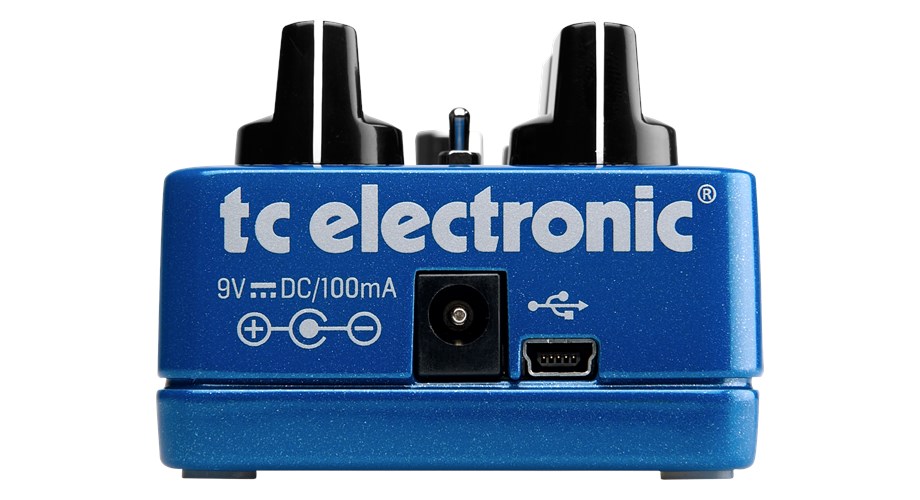
TC Electronic has been hard at work lately. You'd be hard up to name a pedal producer that has put out more new product than TC Electronic. Just a few months ago, they release a entire line of 'value' pedals. Now, they are issuing an update to the Flashback Delay. The Flashback 2 makes some changes to the acclaimed original. So, whats changed? Lets take a look...

Double Down

If you are familiar with the TC line of effects, then you are probably familiar with their "Tone Print" editor. This allows you to edit functions that may not be available manually. Not only that, but you can save your custom setting on the "Tone Print" setting. The Flashback 2 has taken away some of the settings to make room for two more custom, Tone Print setting on the mode selector switch. What you wont see on the front of the Flashback 2 is LoFi, Ping Pong, and Slapback. These features are probably still available via the Tone Print editor, but not available manually.

Tapping That

I neat feature that in included in the Flashback 2 is the ability to set the tap tempo with your guitar. After triggering the pedal to 'listen' to your guitar, the pedal with sync itself to the rhythm of you right hand. For those that have trouble setting a steady rhythm with your foot, this could be your answer. It also allow for you to set the rhythm on the fly without an addition tap switch pedal, so its a space saver as well. You can use a normal tap tempo pedal, but to do that you need to use one side of the stereo input, so it can only be used in mono. You may ask, "Why not just use to switch on the Flashback to set tap tempo like a regular delay?" Well, the foot switch on this pedal has other things to do...

Smashing

New to the Flashback 2 is the Mash function. This basically turns your foot switch into an expression pedal. Listening to demonstrations of the function, it's clear that the effects you can create with this feature very interesting. Being able to summon self osculation sound in real time while you can continue playing is very impressive considering you can do all this with a single compact pedal. What might be even more interesting is that you can combined the Mash function with the shimmer effect to be the envy of all you shoegazing friends.

Conclusion

This update brings a well loved delay up to date with the addition of shimmer. While the Mash function is innovative, its usability may be limited. BOSS have done similar functions with the Space Echo and Giga-delay, but the option to customize the function of Mash is at least novel. I believe that TC Electronic has done an excellent job at updating one of their best pedals.  

Wednesday, December 21, 2016

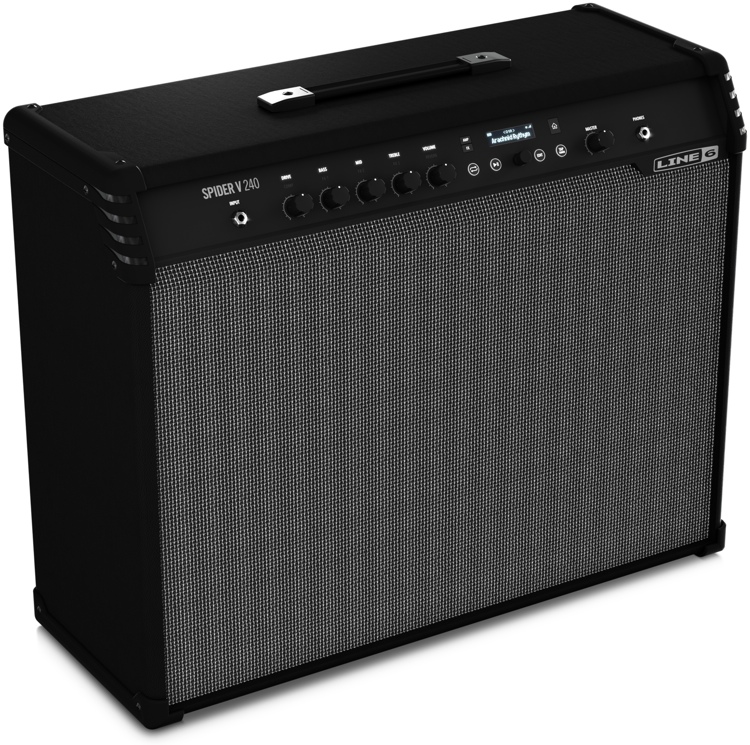
Ugly Truth: Line6 Spider V Amps

Alright so here's the thing, there is a palpable hate toward this entire range of amplifiers. Nearly every guitar player has played through one of these amps, or at least have heard one played. The Spider line has taken more hits than Louisville-Slugger, and has served as the whipping post for anyone putting digital modeling amps on blast. Line6 has doubled down on the Spider name. They have released the fifth generation of the Spider despite any of the negative feedback. Perhaps they've listened to the criticism and produced a better product. It is clear that the stigma still lingers over the Spider name. Do these amp deserve this kind of hate? Well, here is truth:


They Are Well Equipped

The features on the Line6 Spider V amps are actually one of the most interesting things about them. Sure, there are a lot of different sounds on board, as there are with all the amps in this range. The addition of control via mobile device is robust and intuitive. It feels like there was a lot of time spent on interface of the app. Probably the biggest feature that gets overlooked on these amps is its ability to function as an acoustic amp. Equipped with a tweeter, this combo can do more than model electric amps and effects. This alone makes it a little more than meets the eye. In addition, there is actually an integrated wireless receiver with their Relay Go System (In the bigger units). This makes them wireless ready right out of the box.  Also, these amp are compatible with the  FBV control pedal. Making them very easy customize and switch between settings. The third gen  FBV control pedal actually barrows from the Helix motif, color coding the each footswitch according to the effect that it t triggers. Again this is only available on the larger units. And they (the Relay Go and FBV) aren't "features" as much as they are options, as in optional, as in they don't come with it, but you can buy them... making this sizable purchase into a more sizable purchase... causing the whole thing to become rather...


...Expensive

Yeah, even compared to the other offerings in this range, the Line6 Spider V is pricey. Coming in at the higher end of the watt/dollar range, these amp command a hefty sum for what seems like a checkered legacy. That's before you start looking at the optional foot control pedal. (that will set you back another $250) and wireless adapters. It's hard see why the Sider V has to be head and shoulders above in price, when they are competing directly with unit that costs (in some cases) hundreds less. Marshal, Black Star, Boss and Vox all have recently updated their line of make-all-the-sounds boxes and appear to be an attractive value in comparison. And while we're talking about being attractive...


They're Ugly


Yeah, they look like cosmetics were not even considered. I'm not sure if they were going for a modern look, but they failed. I'm not the biggest fan of new gear trying to cop a vintage vibe, but it appears that the Spider V is just phoning it in. It is minimalism and sleek-ish, but it's not winning any beauty contest. Objectively, function trumps form in most cases, but when deciding what amp will set the stage (literally) for your overall vibe aesthetics have to be considered.


Conclusion


While I will concede that this amp often get blamed for a multitude of undeserved sins, some of the blame is well earned. Many guitarist start their musical journey with one of the Spider amps. The popularity of these amp is undeniable. When starting out, these amps promise an feature-laden do-it-all machine. However, after acquiring experience many user discover areas where these amps suffer. The truth is, that these amps are fantastic for a beginner looking to experience a multitude of sounds without have to invest thousands into a collection of gear that would ultimately go underutilized. Just like every other product out there, these amps have a undying following as well as detractors. While features and connectivity are growing and becoming more user friendly, these amps will probably never ascend to their aspired heights. What we need to do is to realize that there is no magic bullet, and if there were, it would extremely expensive. These amp have a place, but they are probably not the only amp you'll ever need. More specifically, the Spider V is not even my top choice of modeling amplifier. If you are looking for a amp with a solid reputation, check out the Vox Valvetronix line. If you want something more innovative and inexpensive, look at the BOSS Katana. The Spider line IMHO is a chronic underperformer.


Support the blog by shopping on Amazon by using my link!


There should be an ad below:


Friday, September 18, 2015

Ugly Truth: Music Gear Is Expensive

Before I get into talking about whatever this post is about, Id like to take a second and say that Brian Wampler of Wampler Effects commented on my post about his new overdrive pedal. You get see that here.

Take a second and thing about your most recent music-related purchase. Regardless how much you spent, it probably wasn't the first or last purchase you'll make. I own several guitars at varying prices. With that I have amps, and effects. I also have accessories that complement these things (cables, pedalboards, capo, stands, cases). Over the many years I've played music, I've amassed quite a bit of expensive gear. I try not to spend boat load of money (mostly because I don't have it) by budgeting and saving. I also buy most of my gear used. This is tricky, and you must be able to tell a diamond in the rough from a turd.

The key to not spend too much money of music gear is to be happy with what you have. I know that acquiring new things is fun. I love to get a new piece of gear and analyze it to death. How is this drive different than this other drive? What can I do with two delays that I can't do with one? Yes, you might be able to do more with more, but why not challenge yourself to do more with less (or maybe with what you already have). Most of the guitar players that we idolize had nothing between them and their amps but a guitar lead. We over complicate sometimes to compensate.

I for one will be reworking my sound from the ground up. The very foundation of our sound comes from our chops. So much time and effort go into "shaping our tone", but could our skills be what really need developing. I'll admit, buying a pedal is easier than devoting the time and effort it better our abilities. Am I going to start playing without effects? HA! no. What will do is take that money that I usually invest in gear and converting it into time to invest into where the real tone comes from: my hands!

Tuesday, February 10, 2015

The Ugly Truth About Your Boost Pedal

If you asked someone to name the pedal on their board, chances are that you'll hear a lot about distortion, overdrive, filters, reverb, delay, and maybe even a fancy programming or looping pedal. Chances are, that person won't wax poetic about their boost pedal. Sure, there are a lot of pedals out there that promise a "clean boost", but what is that really? Isn't that just turning up the volume on you guitar? Maybe you want something to drive the front end of you amp a little harder, but isn't that why we have overdrives? So say you don't want your signal clip before it goes to your amp. You want the sound that your amp makes when pushed past it's clip. Fair enough. Do you need a special pedal to do that? ...eh

So you want a straight path your amp. Chances are your no a bid "pedal" guy. So why not set your amp up to overdrive (turning up your level and lowing your master)? Maybe because your amp is too simple to have a level and master. So you're one of "those guys". Your amp came from Sear and Roebuck's back when it was a mail-order and it only have two knobs and one broke off. But this is the best amp and the only thing that you truly love. You just want to torture the tubes enough to make it scream. Your the type of guy that needs a boost pedal. Right? ...eh

So you have to have a boost pedal. You want some ridiculous box with one know that only turns up the volume on your signal. The simpler that better, right? that is your motto. After all, that amp of your has only got one knob and it's the best. Your amp is a relic and your ideas about "boost" pedal is a little screwy, but hang in there, I'll explain.

You boost pedal is basically the same thing as an overdrive, except that they've removed the clipping circuit and your are just left with a boosted signal. Great right? Maybe not. Everyone loves a good TS-9 tube screamer, and everyone is familiar with the big fat "mid-hump" that you get when you kick one on. (if you're not then you must be very board, why are you reading this?) So the pedal effect the shape, tone, color of your tone. In the same way, all these boost boxes do the same thing. Maybe its not as noticeable, or maybe you just like the way it changes things, Think all those wonder sounds are made by your amp being pushed? Maybe they are, or maybe its that pedal you just hit.

So you must boost, but your boost pedal is just a neutered dirt box that you can't control as much as said dirt box because they took the "tone knob off the thing! Don't worry. I wouldn't leave you hanging. I have an answer for you. You might not like it, but its the truth. Behold, your new boost pedal!

 Yes. The lowly Boss GE-7 Equalizer. Vile and reproachable as it is. Boss the brand of pedal that everyone started with and now no one will admit to using. I too have started limiting the number of boss pedals on my board. The humble GE-7 without as much as a 3PDT switch is the king of all boosts. The pedal does what it claims. It can cut or boost your frequencies, but it has a feature that not all EQ do. The level slide is actually the star of the show here. Now I know what you are saying, "I've used this pedal and its too noisy to boost." Ok, I hear you, but I raise you this: I once got my self into modding pedals. opening these things up and fiddling with their insides. There is a lot of potential in this box, but wait it get better. I was once half way into a mod, meaning I had removed all of the pieces of the pedal that were to be replaced, then just for kicks, I powered it on and played through it. It sounded identical to another GE-7 that had already been through the mod and it was missing bits of its insides. I'm not a electrical engineer (if you couldn't tell) but to this day I can't remember which one has the mod and which one is running around with less than a full deck of cards. And they are both dead silent. So for no more than you'd pay for a boutique boost and a little be of stomp-box-operation you can have a flat boost, treble boost, bass (fat) boost, mid boost, mid scoop or low-fi pedal. In short, friends don't let friends buy boost pedal.