The BOSS Nextone amp is the newest amp to come from BOSS. Fresh off of the success of the Katana amps, the Nextone takes a page from the Katana, but clearly shares DNA with the Blues Cube series. It features four different tube settings. For the sake of this review, I'm focusing on the EL84 British setting, so I'm comparing it with my Vox AC15 combo.
Cleans:
Right out of the gate, the Nextone is impressive. I am a fan of Vox amps. I've owned and used a Vox for years. In the room, playing big open chords, the chime is there. The sound is big and focused. Of course, with reverb and delay, the sound is pure ambient greatness. There is note definition without a hint of mud. While the higher register is bright and chimey, The experience with lower notes is where we lose some of the similarities. It may be due to the different cab designs, but the Vox seems to shake everything around it. At similar volumes, the BOSS doesn't seem to resonate as well. Besides that, the BOSS produces great clean sounds, but it lacks the big bottom-end that the Vox has.
Crunch:
I've recently discovered that the Vox dirty sounds are somewhat... polarising. Where I enjoy turning up my AC15, others can't stand the sound. Now, guitarists are known to be a tiny-bit particular about their tone so the difference between love and hate could be psychosomatic, but it is a difference of opinion. Vox may not be known for their crunch sounds, but I enjoy how the breakup is a little trashy with a big bottom-end and chimey highs. As I increased the gain on the Nextone however, the breakup was not the same. It wasn't bad, but this was probably most different the amps sounded during the test. I did my best to EQ the Nextone a little closer. No dice.
Recording:
So, the amp I used for comparison is the Nextone Studio. I decide to make a short recording I could go back and listen without the influence of room noise. I listened to both amps through headphones to compare. What I found is that the clean tones are impressively similar. While I enjoyed the way the Vox filled the room when playing live, recording by micing the speaker removed that effect entirely. The Crunch tones again were where I heard the most difference again. The breakup was a little more generic than the Vox. The Nextone wasn't bad, but it's not a replacement for my Vox.
Conclusion:
The BOSS Nextone isn't a stand-in for a list of amps, but in the case of the EL84 setting emulating a Vox. It does a decent job of copying the clean chime. During recording, the results are similar. One isn't far and away better, and that is probably the best thing you could say about this amp. It's a little like cooking with garlic powder instead of fresh garlic. Is the product better with one over the other? Probably. Is the product drastically different at the end of the day? Not really. The Nextone is what it is. When it is all said and done. It is a Solid State amp doing an impressive job at imitating a tube amp.
Showing posts with label Vox. Show all posts
Wednesday, December 5, 2018
Tuesday, January 30, 2018
NAMM 2018
NAMM 2018 is finished and there is ton of new stuff that is out there. There is still a load of stuff that is yet to be released. Digitech was a big hold out this year. They didn't show us anything new, but they have promised much more stuff later this year. Several other companies showed some pretty exciting working prototypes, so we still have a lot to look forward to in 2018.
There is so much stuff out there that I can't wait to dive into. Milkman came out with a pedal based amp as did Victory. Vox expanded their MV series to include a 150 watt head. Line6 gave the HX multi effect pedal. There are more new guitars from major bands than I know what to do with. Marshall showed us the Origin series. I'm really looking forward to taking a much closer look at a lot of the stuff that has been announced as well as the stuff the I just mentioned.
NAMM is a super busy time, and I've been trying to cover most of the stuff that I've found interesting, but if there is something that you've seen from NAMM and I haven't mentioned it, then let me know in the comments. I'll try to check it out and be sure to let you know what I think.
Monday, January 22, 2018
NAMM 2018:Vox MV50 Boutique Hybrid Amp Head
Following the release of the first three super-compact amp heads using Nu Tube technology, Vox has released another. Calling it "Boutique" Many are speculating that these heads will be Dumble inspired. Starting around the time Orange released their Micro Terror heads, the idea of tiny of tiny amps have started catching on. In the past, these little amps were mere novelties, but now they capture more of the sound of their larger kin. Fitting these amp with practical features that many want with a larger amp added to 50 watts of power and Vox have put together rather impressive amps. But let's focus on the Boutique...
What is a Dumble, anyways...
Dumble is to amplifiers as Klon is to pedals. I'm not saying that a Dumble isn't a wonderful amp, but let's not kid ourselves. Guitarists are a superstitious bunch. The Klon Centaur wouldn't be the pedal it is today if they started mass producing them. That is to say, they wouldn't be able to fetch thousands of dollars and have countless clones if the original was readily available. If Dumble started producing amplifiers like Fender or Vox, would they have the same mystique? Possibly not. Would they cost as much as a Porsche? Absolutely not.
Is It A Dumble?
Let's not get carried away. These little head do a fine job, but lets not forget that Vox put out an AC version. If Vox actually believed that these amp sound as good as the amps that inspired them, then they have done a great disservice to their bottom line. Would you buy a Vox AC amp with 50 watts for 200 dollars? I know I would. Does the MV50-AC sound like a Vox, sure... kinda. They gave it the Vox-y chime, but it's not in that league. It's somewhere between the Valve Reactor series ( which is somewhere dying in a fire hopefully) and the current AC tube amps. So what about the Boutique? It's probably something like that. Kinda like putting a "Dumble-pedal" in front of Blues Jr. But you know, it's an amp.
Conclusion
Do I like it? Yeah, I kind of do. The features and functions of these amps are rather impressive. More importantly, the development of new/Nu tube technology is important. If they can replicate tube tones with this, then that's very exciting. The features of the Nu Tube seems a bit like snake oil. They've been trying to replace tubes for ages. Guitarists in general love their old tech, so even if these do perform just like tubes, they are fighting an uphill battle. My biggest concerns about the Boutique are the same ones that I have for the rest of them. There is a single Tone knob. The controls, in general, look like they belong more on a pedal than a head. Maybe they should make an MV series amp with more robust controls...
Tuesday, January 2, 2018
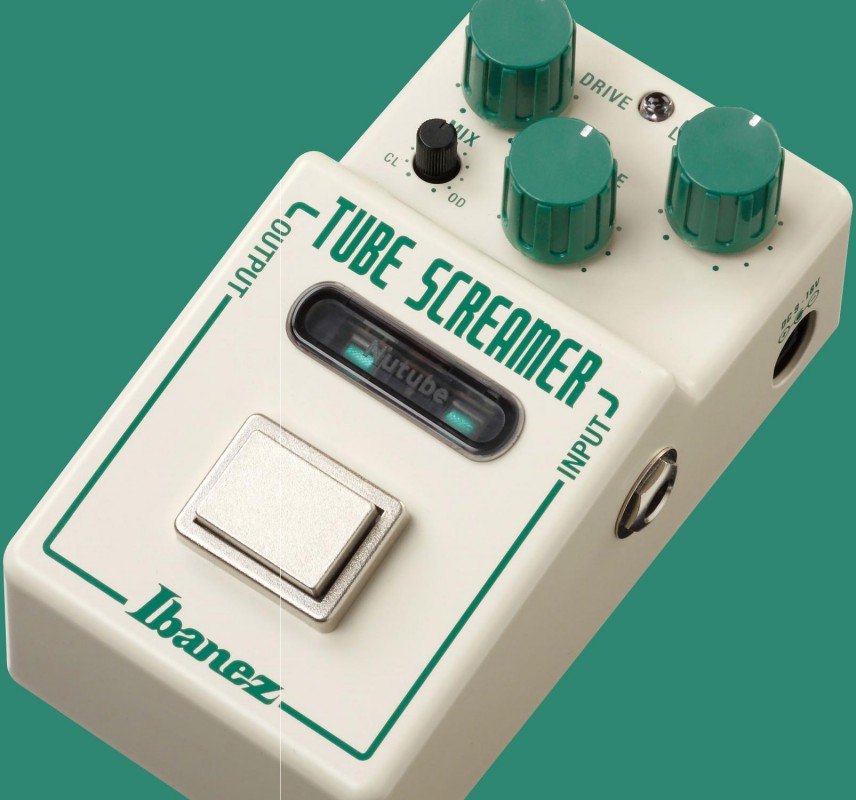
Ugly Guitar Truth: Ibanez NTS Nu Tube Screamer
I almost didn't believe it. I almost had to make sure that today wasn't April first and not January first because I saw something that absolutely did not make sense. Ibanez has leaked some information about a new pedal.The NTS or Nu Tube Screamer has been making the rounds. At first glance, it seems like a new color pallet for a vintage TS pedal, but new tech has made its way inside an old circuit.
It's Pretty
The first time I saw this pedal I thought it looked sharp. I dig the white and green. I like the colors so much I missed the addition of a new knob, gaping window, and odd power supply placement. For such classic design, the aesthetic was enough to pull me away from these glaring changes.
Mixing It Up
I'll admit. I love a Mix knob. I want every pedal I own to have a mix knob. I think it's a control thing. I don't like committing to one sound. I don't want a pedal to completely take over the sound of my guitar. With a Mix knob, I tell the pedal how much it can have. This is the reason I don't get along with most distortion pedals. It also might be the reason why I chase "transparent" overdrives.
NuTubes
I love the idea of compact vacuum tubes. I want to see more pedals and amps use them. I hope that technology is as impressive as I keep hearing that it is. So far Vox's line of super compact heads is the only implementation of these NuTubes that I know of. I've heard good things about those. Although I have yet to use a tube base overdrive, I look forward to doing so. I'd love to see how the TC Electronic Tube Pilot and Ibanez NTS stack up.
Conclusion
I'm excited. How could I not be? This is the first "New Tube Screamer" in over a decade. I've actually seen a site sell this pedal for about 240 BSP making it something like 300 USD. So, in short, it is a pedal a hundred dollar more than the price of a 50-watt head using the same tubes. I guess we'll have to wait and see when Ibanez rolls out the hard launch closer to NAMM.
Labels:
2018,
808,
9,
Ibanez,
Korg,
NAMM,
Nu Tube,
Nu Tube Screamer,
NuTube,
TS,
tube screamer,
Vox,
Winter NAMM
Friday, May 19, 2017
Hands On Review: Fender Mustang GT Modeling Amp
Recently I was able to sit down with not just one, but all three model of the Fender Mustang GT. There is a lot of information out there about these amps. Some rave about the features (and there are some innovated and ambitious features in these amps). Others complain about performance. The best way to navigate all the information out there is to spend enough time to get to know these new amps form Fender. That's exactly what I did. Here's what I've found:
Fender Does Fender Well
Fenders Modeling amps have always done their clean tone the best. This may be because they know their particular tone better than anyone, or maybe they just aren't that good at doing models of other amps... The Basic 65 and Bassman models are my favorite. Now, this is across all version of the amp. The clean tones are standout, but that is partly due to the fact that the dirty channels don't really hold up. Marshall type tones aren't hitting mark here. Vox tones don't come across convincing either. Although the worst offender here is the metal sounds. The preset isn't impressive, but changing the setting, at least in my experience, just made things worse. Muddy tones and tons of mush are found in the metal tones. This amps doesn't djent (not that I'm an expert here).
Tech Troubles
I was prepared to check out the app that accompanies this amp, and I did sort of. As I was getting everything set up, I connected my phone to the amp via bluetooth... for a few minute until I lost my connection. I did not reestablish the connection after that. It wasn't for lack of trying. It did force me to get to know the physical controls on the amp. Lets be honest, if you are at a live show, you aren't relying on bluetooth to do on the fly changes. The controls are cleaned up from the previous model. However, that's not always the most convenient when making fast changes in the middle of a set. The large wheel is pretty integral to making any changes. You have to make selections by rotating the knob and then pressing it. This is not always the easies thing to do. I'm sure you can get used to this, but I found my self scrolling past my intended selection and rotating the knob when trying to push it. I will say that the controls are rather easy to get the hang of, but quick and reliable changes aren't easiest thing to do with this set up.
Pecking Order
How does this amp compare to other amps. Well, put this next to other fender amps and you'll find it wanting. Next to a Blues Jr., this amp doesn't stand up well. Even more so with a Princeton. Typical with solid state amps, there seems to be a cap to how loud the amp gets. There is an organic volume level and when you pass that the amp just can't handle it. Instead of tube break-up, these amps react harshly to high volume applications. Comparing the GT next a BOSS Katana is where it really get interesting. These amp are very comparable in price, however they function is a different way. The Mustang and Katana both start in the mid $200 range, but they have different strengths. The Mustang has decent cleans and can mock many of its high dollar relative. The Katana is a little sterile on some clean settings. Other than that, the Katana takes the cake. The higher gain models of the Mustang do not have the convincing openness of the cleans. The Katana shines in the higher gain settings. The Katana also handles effect in the front of the amp better than the Mustang. Which brings up a another point... The effects in the Mustang are a little less than convincing. The list of overdrives is a little thin as well. Just a reminder, the Katana has access to 55 effects... The Mustang doesn't stand up very well to many other amps...
Conclusion
I really wanted to like these amps. Fender took their time coming to market with their latest modeling amps. It looked like Fender had everything wrapped up, but the most important part of the amp is performance. No matter the feature set, at the end of the day, you want the amp to sound good. The more features you add, the more opportunity you have to get it wrong. We want an amp that does everything, and it's tempting to think that "Now they've done it", but they haven't yet. Specifically, the Fender Mustang GT hasn't.
Support the blog by shopping on Amazon by using my link!
There should be an ad below:
Labels:
Amps,
Blues Jr.,
Clean Tones,
Fender,
Katana,
Marshall,
Modeling,
Mustang GT,
Princeton,
Vox
Friday, January 27, 2017
Ugly Guitar Truth About Pedal Board Amps
Diffidently not a new thing, but a huge trend this year at NAMM, the pedal board amp has seen a huge rise in popularity among manufactures. Seymour Duncan, among others, have put forth product that are designed to basically take the place of the power section of your amp. Vox has put out a tiny amp head that would be easy enough to mount on a board. Hotone has designed a 20 watt head that is to be paired with their amp model pedals to create a varity of tones. A conglomerit of boutique amp called Boutique Amps, have devised a system of enterchangable preamp circuits to recreate a range of... boutique amps. What does all of this have in common? Not very much, I kind of went off the rails there a little bit. What I want to talk about is that we are seeing tiny little power amps flood the market and what that fact means for the world of guitar players. Shall we?
First Things First
Guitar player hate change, or we love it depending on who you ask. I can't wait to see what pedal or piece of kit come out next. Then I plug my Telecaster directly into a Vox AC15... Loopers, Delays, pretty much everything Strymon does, has facilitated progression in the guitarist spectrum. However, we still love playing amps that were designed in the 1950s with antiquated technology. We can plug a pedal into a Blues Jr. to make it sounds like a space ship taking off and then talk about the richness and warmth that you value from that amp (to make space noises with).
Then Something Happens
Something that the average guitarist has is pedals. Collect a few of those, and you get a pedal board. The most common pedals, or the ones that seem to pile up, are drive pedals. The ones that give you a boost or gain can really help your amp be all that it can be. In fact, so pedals emulate completely different amps. Pedals like the 30 Something, or Golden Plexi practically tell you, "This is a Vox sound," or "This pedal sounds like a Marshall." So if your pedal sounds like an amp, what is your amp doing.
What Are We Doing?
On my board there are several pedal that handle Gain, EQ, Reverb... so I set my amp clean, flat and kill any reverb. If I set my amp to a nice tone (not hard) I will be finding it difficult to find a application other than simple signal processing for my pedals. However, set my amp flat, and I can use my pedals to create a wider range or tones leaning more heavily on the pedals to come up with the distinct sounds. What I'm saying is: you can have a range of great sounds from a particular amp, but they are going to sound like that amp, but a flat (pedal friendly) power section can give you more room to let you pedals shine through.
Conclusion
I meant to talk about amps like the one Seymour Duncan are putting out, but looks like I've just chased my tail for 500 words. Long story... still long actually... pedals are covering a multitude of tasks. Some of those tasks have long been associated with guitar amplifiers. As we are doing more signal processing before the amp, we are asking less of the actual amp. Thus, we are seeing amps that compliment this by having few features and simply push our tone into a speaker. I like this, and at the same time, I don't really like this.
Support the blog by shopping on Amazon by using my link!
There should be an ad below:
Labels:
Amps,
Fender,
Guitar Effects,
Marshall,
NAMM 2017,
Pedal Board amp,
pedals,
PowerStage,
review,
Seymour Duncan,
Vox
Thursday, December 22, 2016
Ugly Guitar Truth: Marshall CODE Digital Modeling Amps
Marshall is one of the biggest name in guitar amplifiers. They are preferred by professional around the world. JCM 800 is so iconic among guitarist that without it, we wouldn't have the same music that we enjoy today. Punk and grunge music almost exclusively used these amps, so its no wonder that the Marshall name has garnered a lot of weight with the guitar playing public. Almost as strong as Marshall's legacy of tone is the disdain that guitarist have for modeling digital amps. It is not a secret that guitarist love there old school gear. The more vintage something is, the more a guitarist wants it. Guitars from the 50's and 60's are some of the most coveted pieces of kit one could want. And yet, every time a new product comes out, we get excited to see if it stands up to the standards we have set. Does the Marshall CODE line of amps uphold the standards set by its tubey-big brothers? It's about to get ugly...
It's Expansive
So, the first thing you notice about these amps is that the list of features is long. 14 preamp models, 4 power amps, 8 speaker cab models, 24 fx (5 at-a-time), Bluetooth integration and USB connectivity top the list. Looking at the list of models, it looks like a list of classic Marshall amps. Plexi, Silver Jubilee, JCM800 make it seem worth it alone. Not to mention you can have your pick of 8 speaker sims to craft your model. So there are options. If that sounds like a lot, it's because it is. But don't worry, connecting a mobile device with help sort through the huge list of options and help visualize your settings. That's really what is setting this new generation of modeling amp apart. The fact that you can connect your tablet or phone with your amp and make real time changes is a game changer. Of course your have to make good sounds with those settings...
The Hardware Is Getting Overlooked
With an overwhelming list of features and a whole lot of new tech under the hood, the CODE amps come a long way from the dark ages of modeling amplifiers. Or have they? There is just some things that you can't do with your fancy 1s and 0s. The speakers and amps in these type amps have to be flexible. The have to sound like dark, deep amp one second and then a bright, middy amp the next. There is a classic problem with this that gets crowded out by all these features. You are physically limited by the hardware (speaker, amp, enclosure). You can simulate the affect that a 4x12 has on a sound wave, but you can make a single speaker sound like a 4x12 cab. If you could produce a solid state amp that replicated a Silver Jubilee faithfully, then you can retire and enjoy all of the money that guitarist will throw at you, but you are limited. Has Marshall stunted their amp with sub performing hardware? No, but they asking a great deal from their hardware. No doubt Marshall chose the amp/speaker combo to best suit their need, but lets be real. The best digital model is only as good as the analog parts it's put through.
Just Look At It
So, if I'm being honest. This is, in my opinion, the best looking modeling amp. Classic black on black with the Marshall script logo is super solid. I would be proud to have this on stage behind me on looks alone. The controls have a classic Marshall look as well. There is one aspect of this amp that is a bit of an eyesore though. The app and not the easiest to navigate and easily the weakest link in it's chain. Line6 probably saw the CODE app and then poured a lot more assets into the app design.
Conclusion
The CODE line was actually one of the earliest lines to include Bluetooth and app integration and control. Marshall was on the forefront of the next generation of modeling amplifiers. For being the front runners, Marshall got a lot thing right. Others have been playing catch up (*cough Line6 cough*) and others have put out very comparable offerings (Black Star and BOSS). We readily await other entries into the next generation of modeling amps (VOX and Fender). There is a lot to praise on these amp such as price, size, features, and power. But it's important to remember that, despite the fact that is both new and shiny (two things that excite all guitarist), it has limits. Yes, we can push a button that says PLEXI, but what we receive is a digital approximation of what that sounds like. We will get close, and that's about it.
Support the blog by shopping on Amazon by using my link!
There should be an ad below:
Labels:
Black Star,
Bluetooth,
Cab sim,
CODE,
Combo amp. Amp Head,
Digital Modeling,
Fender,
FX,
Line6,
Marshall,
Modeling,
Power amp,
Pre amp,
Vox
Wednesday, December 21, 2016
Ugly Truth: Line6 Spider V Amps
Alright so here's the thing, there is a palpable hate toward this entire range of amplifiers. Nearly every guitar player has played through one of these amps, or at least have heard one played. The Spider line has taken more hits than Louisville-Slugger, and has served as the whipping post for anyone putting digital modeling amps on blast. Line6 has doubled down on the Spider name. They have released the fifth generation of the Spider despite any of the negative feedback. Perhaps they've listened to the criticism and produced a better product. It is clear that the stigma still lingers over the Spider name. Do these amp deserve this kind of hate? Well, here is truth:
They Are Well Equipped
Yeah, even compared to the other offerings in this range, the Line6 Spider V is pricey. Coming in at the higher end of the watt/dollar range, these amp command a hefty sum for what seems like a checkered legacy. That's before you start looking at the optional foot control pedal. (that will set you back another $250) and wireless adapters. It's hard see why the Sider V has to be head and shoulders above in price, when they are competing directly with unit that costs (in some cases) hundreds less. Marshal, Black Star, Boss and Vox all have recently updated their line of make-all-the-sounds boxes and appear to be an attractive value in comparison. And while we're talking about being attractive...
They're Ugly
Yeah, they look like cosmetics were not even considered. I'm not sure if they were going for a modern look, but they failed. I'm not the biggest fan of new gear trying to cop a vintage vibe, but it appears that the Spider V is just phoning it in. It is minimalism and sleek-ish, but it's not winning any beauty contest. Objectively, function trumps form in most cases, but when deciding what amp will set the stage (literally) for your overall vibe aesthetics have to be considered.
Conclusion
While I will concede that this amp often get blamed for a multitude of undeserved sins, some of the blame is well earned. Many guitarist start their musical journey with one of the Spider amps. The popularity of these amp is undeniable. When starting out, these amps promise an feature-laden do-it-all machine. However, after acquiring experience many user discover areas where these amps suffer. The truth is, that these amps are fantastic for a beginner looking to experience a multitude of sounds without have to invest thousands into a collection of gear that would ultimately go underutilized. Just like every other product out there, these amps have a undying following as well as detractors. While features and connectivity are growing and becoming more user friendly, these amps will probably never ascend to their aspired heights. What we need to do is to realize that there is no magic bullet, and if there were, it would extremely expensive. These amp have a place, but they are probably not the only amp you'll ever need. More specifically, the Spider V is not even my top choice of modeling amplifier. If you are looking for a amp with a solid reputation, check out the Vox Valvetronix line. If you want something more innovative and inexpensive, look at the BOSS Katana. The Spider line IMHO is a chronic underperformer.
Support the blog by shopping on Amazon by using my link!
There should be an ad below:
They Are Well Equipped
The features on the Line6 Spider V amps are actually one of the most interesting things about them. Sure, there are a lot of different sounds on board, as there are with all the amps in this range. The addition of control via mobile device is robust and intuitive. It feels like there was a lot of time spent on interface of the app. Probably the biggest feature that gets overlooked on these amps is its ability to function as an acoustic amp. Equipped with a tweeter, this combo can do more than model electric amps and effects. This alone makes it a little more than meets the eye. In addition, there is actually an integrated wireless receiver with their Relay Go System (In the bigger units). This makes them wireless ready right out of the box. Also, these amp are compatible with the FBV control pedal. Making them very easy customize and switch between settings. The third gen FBV control pedal actually barrows from the Helix motif, color coding the each footswitch according to the effect that it t triggers. Again this is only available on the larger units. And they (the Relay Go and FBV) aren't "features" as much as they are options, as in optional, as in they don't come with it, but you can buy them... making this sizable purchase into a more sizable purchase... causing the whole thing to become rather...
...Expensive
They're Ugly
Yeah, they look like cosmetics were not even considered. I'm not sure if they were going for a modern look, but they failed. I'm not the biggest fan of new gear trying to cop a vintage vibe, but it appears that the Spider V is just phoning it in. It is minimalism and sleek-ish, but it's not winning any beauty contest. Objectively, function trumps form in most cases, but when deciding what amp will set the stage (literally) for your overall vibe aesthetics have to be considered.
Conclusion
While I will concede that this amp often get blamed for a multitude of undeserved sins, some of the blame is well earned. Many guitarist start their musical journey with one of the Spider amps. The popularity of these amp is undeniable. When starting out, these amps promise an feature-laden do-it-all machine. However, after acquiring experience many user discover areas where these amps suffer. The truth is, that these amps are fantastic for a beginner looking to experience a multitude of sounds without have to invest thousands into a collection of gear that would ultimately go underutilized. Just like every other product out there, these amps have a undying following as well as detractors. While features and connectivity are growing and becoming more user friendly, these amps will probably never ascend to their aspired heights. What we need to do is to realize that there is no magic bullet, and if there were, it would extremely expensive. These amp have a place, but they are probably not the only amp you'll ever need. More specifically, the Spider V is not even my top choice of modeling amplifier. If you are looking for a amp with a solid reputation, check out the Vox Valvetronix line. If you want something more innovative and inexpensive, look at the BOSS Katana. The Spider line IMHO is a chronic underperformer.
Support the blog by shopping on Amazon by using my link!
There should be an ad below:
Labels:
Boss,
Digital Mseling,
Footswitch,
Katana,
Line6,
Modeling,
Spider V,
tone,
Ugly Truth,
valvetronix,
Vox,
Wireless
Thursday, October 13, 2016
Ugly Truth About The BOSS Katana Amps
The latest amp to hit the solid-state, modeling, DSP market is the BOSS Katana series. This series is a completely new line of amps. It also is has the distinction of wearing the BOSS badge instead of Roland or WAZA. Many see this as a step in the right direction for BOSS, as they have the recognition among guitar players and not Roland. However, many have come to appreciate the Roland Cube series of amps. Roland Jazz Chorus amps have a long and proud history unto themselves. BOSS have struck out with a distinct offering that may have borrowed from the their heritage, but absolutely breaks new ground for the effects company that many love to hate. There are good and bad things about this amp, but what about the ugly?
There Are The Looks
Once you get past the black on black aesthetic, the dated BOSS logo, and the scrabble tile with a cursive "r" (or maybe a fancy "d"?)on it, well, there isn't much left is there. (edit: I am very aware that the symbol means "sword". It was mentioned in the promotional material and just about everywhere else. I didn't see the need in repeating it here.) The Blues cube took cues from Fender with it's 1X12 combo, but if you take the badges off and go by looks, it'd be difficult to tell these apart from the standard cube series. These amps do look a fair bit better than the cube amps, but there is nothing particularly striking about the design of these amps. Nothing says, "I'm a sexy, tone-machine". It has about as much appeal as a stage monitor.
They Are A Little Late To The Game
When you look at the list of feature on the Katana, it does seem a little similar to others that are already on the market. The Vox AV series and the Fender Mustang line both do similar functions, and do them rather well. So, is this a case of, "Too Little, Too Late"? It very well may be. A lot of the fans of these amps are also current users of the other two mentioned. Not to mention that users (or past users) of the Line6 Spider series or the Marshall CODE amps might be a little skeptical of the modeling scene. Are these amps worthy of the praise of the Fender and Vox offerings or do these fall to the dark side? Well, I'll tell you what they aren't...
They Aren't The Blues Cube
Those interested in a SS amp to do the work of your favorite 1X12 are probably familiar with the Roland Blues Cube. These amps come close to the sounds of their tube driven kin, but there will always be those the "hear" the difference. SS amps are supposed to be rugged and affordable. The Katana series are affordable. Although their ruggedness is yet to be tested, their price points make them attractive.This calls in question their fidelity to the faithful adaptation of tube-tone that the Blues Cube claims. While I am among those that would love to see an amp with the talents of the Blues Cube at a $300 price point, I doubt that Roland/Boss would undercut their own sales,
Conclusion
This isn't the point to where we can all trade in our tubes for transistors. However, these amps have some interesting features and have won the endearment of many that have had a chance to try them out. What is very interesting is that they have included access to the BOSS effects catalog via the "Effects" section. You are able to run three effect at a time. This is standard feature on all the amp in the line. They self-attenuates, so that you can play at any volume without changing your levels. If anything, these amps are well thought out, which can explain why they are a little late out of the gate. Among the cool feature, there are some slightly strange ones (like the tiny kickstand and tiny speaker hidden the 100 watt head). Considering the starting price for the 50 watt combo is $200, it might be worth serious concideration.
Continued Reading:
-Hands-on Review
-Katana 50 Watt Combo Vs Marshall Code
-Update: Katana Mini
-Update: Katana Air Portable Wireless Amp
Labels:
Affordable,
Beginner amp,
Boss,
Effects Loop,
Effects. BOSS Effects,
Fender,
Katana,
Line out,
Master,
Midi,
Modeling,
Mustang,
New Gear,
New Models,
Presence,
Solid State,
Tube,
Tube Amp,
Vox,
Waza
Saturday, October 1, 2016
Ugly Truth About EHX Wailer Wah
So, I'll admit that I haven't been keeping my ear to the ground lately. That's probably why i was taken off guard by the announcement of EHX's new Wah pedal. I always get excited when I see a new product from Electro Harmonix because they reteenly crank out outstanding products and they keep consumer price low. These two thing are huge in my book. So, recently they told us that they are going to put out a pretty standard Wah. Huh... Let's see what we know.
It's Not Exactly New...
Yeah, this isn't ground breaking stuff. Big black wedge shaped rocker pedal with a mid-filter circuit inside. It's been done before... like a lot. So why is EHX putting out a standard wah? Not only is this well trodden ground for Dunlop and Vox, but it's rather familiar to EHX as well. Not as flexible as their Cock Fight pedal, this brick put the guts of the well-intentioned Crying Tone wah in a more conventional box. The Crying Tone had a lot going for it. The tones were talked about. The sweep and action were second to none, but there was one complaint that would torpedo this pedal. You couldn't hardly mount it to a pedalboard. So EHX have shoved a great wah in a conventional box. All good right?
It's Affordable, Lightweight and... Plastic?
That's right. EHX when old school with this pedal, but decided to make that familiar rocker out of plastic. They make a point to describe it as "heavy duty", but all that does for me is bring to mind those batteries that last about half as long as name brand ones. So we have our great sounding wah in a package that doesn't scare us and there isn't anything too crazy (like a LED when the pedal is on). So, if you can get past the fact that it is made out of plastic, then you can have yourself a Crying Tone wah for less money. Whats more is that the battery is probably behind a door. I don't know that, but I'm assuming they aren't going to include a solid plate bottom like its metal brethren. It does look like the 9v jack will go on the left like normal.
Conclusion
This looks to be a traditional spin on an original EHX wah. Those of us that fear change rejoice, we now don't have to get something "new" when we get a new pedal. Thank goodness. EHX pushes forward into the weird and wacky, but know that some of us need a little safety blanket too. Did I mention that it's only 62.50 USD? There's that too!
Support the blog by shopping on Amazon by using my link!
There should be an ad below:
Labels:
Cheap Pedals,
Cry Baby,
Crying Tone,
Dunlop,
EHX,
Electro Harmonix,
New Gear,
New pedal,
Plastic,
Traditional,
Vox,
Wah Pedal,
Wailer Wah
Friday, April 8, 2016
Vox AV Series: Update
I first reported about these amps when Vox announced them back at NAMM this year. They Stood out because of there styling and features. They are analog, solid powered combos that look rather striking. The looks alone were enough to make me interested. I've been able to see one in action and I have to say that I'm am impressed. I was almost dismissive of the new line. I wasn't the biggest fan of the little modeling amps that came out recently. I was afraid that these guys were still coming from that prospective. This does not seem to be the case. These are something akin to the Super Champs that Fender put out. They replicate the front ends of other various amps, sans digital modeling.
Starting at just over $200 these amps are poised to be an excelent first amp, or a great step into valve-ish amps. If you need or want a variety of amp sounds but don't have the funds to buy half a dozen or more amps to make those sounds, then this amp could be an excellent fit. I liked the Super Champ amps and these seem to be in the same ballpark. In fact, I'd pick up one of these on the looks alone. The fact that these amps can emulate so many others and even the biggest one in the lineup comes in under $500 doesn't hurt either. Vox has put a lot of work into making great little amps. Even the the cabinet design is made to make you forget that (unless you have the 60 watt version) you aren't playing though a 12" speaker.
All in all. these amps are stacking up to be a step above what I was predicting. Kind of a foot-in-mouth moment, but I'm glad it is. The world need more great amps. This quite possibly, could be one. At least, it might be a good choice for many musicians.
Support the blog by shopping on Amazon by using my link!
There should be an ad below:
Labels:
Amp,
Av Series,
Combo Amp,
Guitar Amp,
review,
Series,
Solid State,
Tube Amp,
Ugly Truth,
Update,
Vox
Wednesday, January 20, 2016
Ugly Truth About Vox Starsteam Guitar
From time to time Vox has released a select line of guitars. Many of these guitar of late have been vintage inspired instrument with a special flare. Vox has always hit the mark in the looks department, as far I'm concerned. That is, until now. But first, let's hear Vox's side of the story:

Created to provide a wide range of sounds including electric guitar, acoustic guitar, synths and other stringed instruments, the VOX Starstream Type-1 is the ultimate instrument for players looking to redefine the electric guitar and what it can do. Whether you are playing with a band, in the studio or practicing silently at night with headphones, the Starstream Type-1 offers exciting new possibilities.
Incorporating the AREOS-D system, the Starstream Type-1 is the latest evolution in onboard guitar electronics, furthering VOX’s reputation of breaking the boundaries when it comes to advanced guitar electronics. Putting control over your sound at your fingertips, the system integrates several essential elements: magnetic pickups for authentic and classic electric guitar sounds; a piezo pickup system for rich-sounding traditional and acoustic instruments; a powerful DSP engine; familiar volume, tone and pickup selector controls and a Control Module that provides instant access to important tone-shaping parameters.
The unique frame construction is three dimensionally contoured for maximum comfort, easily conforming to your personal style. Equipped with a smoothly shaped neck, unlimited upper fret access, warm-toned resonant wood body, specially voiced magnetic pickups and a balanced, easy to use tremolo system; this is the ultimate modern guitar.
- Exclusively developed AREOS-D system uses the guitar’s traditional magnetic pickups to create the electric guitar sounds for greater realism and accuracy.
- Nine banks of instruments, with three variations in each, plus two user banks to store up to six favorite sounds.
- Synth sounds track effortlessly and respond dynamically to touch, pick attack and vibrato.
- Simple, intuitive volume, tone and three-way switch make changing models and sounds quick and easy.
- 1/4” output for live performance or recording and 1/8” output for use with headphones for private listening and practice.
- Sculpted mango body; 22 fret maple neck with rosewood fingerboard; 2 x XLM humbucking pickups; 2-point fulcrum vibrato; sealed die cast tuning machines.
Yes. It's Ugly
This is a striking looking guitar to say the least. I was on the fence, until I saw the video of a person playing it. It looks like someone strumming an over-sized electric violin, which no doubt was at least somewhat of an inspiration for the design. It is goofy looking, but worst of all the is the on board controls. They look straight out of the 90's. There is no attempt to blend them in with the look of the guitar. They stick out like a sore thumb. Maybe the thought was to make the guitar so distracting that you don't notice the honking bit of kit bolted to the guitar... Swing and a miss Vox...
There Are Others Out There
Maybe you like this guitar. Maybe you aren't a guitar player so much as an experimental-soundsmith. (you must be lost) If you want a guitar to sound like a bunch of other guitars, then take your pick. I'll just say it, Line 6 is you best bet. Their VariAX line has you covered. If you are into synth sounds, then prepare to be disappointed, because you get your choose of two sounds with this guitar and I was inspired by what I saw in the Vox promotional video. Looking for crazy sounds out of a guitar, then Ibanez made that weird Kaoss guitar a while back. That should take care of weird. (but why not look into Earthquaker Devices pedals. Lots of weird stuff for guitar and more...)
Maybe there are some good sounds in there
I know that's not an "ugly truth" but come on, I've been slamming this thing pretty hard, and it's kinda sad that I have to say 'maybe'. The 12 string and 'banjo' sounds in the video that Vox put out themselves, sound terrible. It might have something to do with the fact that the guitarist playing in the video was probably on par with my own playing, meaning it was nothing special. Nothing in that video made me want that guitar. However, I didn't hear the acoustic sounds. Those might be surprisingly good, but probably not, because they never are. there just isn't much about this guitar to get excited about. And I love Vox...
Maybe they will develop this line in the future, but right now it's a hard pass.
Labels:
Ibanez,
Kaoss,
Kaoss Pad,
Line 6,
NAMM,
NAMM 2016,
New Gear,
Starstream Guitar,
Starstream Type 1,
Synth,
VariAX,
Vox,
Winter NAMM
Monday, January 18, 2016
The Ugly Truth About The Vox AV Series
Vox unveiled its new line of amp ahead of NAMM. They are impressive to look at and they boast a list of features that sound pretty ambitious. The stand out features are: Valve Operation, Analog Amp Modeling, Adjustable bias control, and Retro-Inspired Looks.
From Vox:
Drawing upon nearly 60 years of tube amplifier design, the all-new AV (Analog Valve) Series from VOX offers players a full pallet of authentic amplifier sounds via eight, all-analog pre-amp circuits .VOX’s AV amplifiers also feature a true analog circuit design based on the classic 12AX7 tube, which lends classic, harmonically rich tones to these amps. The innovative Valve Stage section modifies the circuit to add, or reduce, brightness & bass response, and also allows users to adjust the bias and response of the power section on the fly. Additional features like a unique, sealed cabinet design, three classic effects (Chorus, Delay & Reverb), and a retro-inspired aesthetic establish the AV Series as one the most exciting, and unique, offerings in the VOX lineup.
This all looks appealing, but there are some points that are cause for concern...
Exactly How "Tube" Is It?
Vox is all too happy to call this thing Analog Value, but what seems strange is that it uses two 12AX7 tubes. If you notice, Vox usually puts a EL84 in the power section of its amps. 12AX7s are usually doing the light duty in the pre-amp section, even in 15-watt amps. The presence of the these tube make think that it is solid state that is doing the real heavy lifting in these amps. If that is the case, then it hearkens back to the old "valve reactor" line that failed to excel, despite doing something that Vox has had a great track record doing: good sounding hybrid amps (VT series and Cambridge amps.
This Isn't A New Idea
Amp modeling and on-board effects have been done before. Vox's VT series has been doing just that for years, and doing a rather decent job at it. This amp claims to accomplish its amp-tones from analog circuits rather than digital modeling. It also included a second 12AX7 tube in the "power section" and that all sounds rather exciting, but there is nothing really new to the table. I'd be impressed if there is a measurable difference between the VT and AV tones.
I Still Kinda Want One
Sure, there are somethings that look a little fishy, but the proof is in the pudding. These amps look amazing in the pictures that Vox has put out. I can't wait to see one in person. I'm more excited about playing one of these and seeing how well it stacks against the VT amps. These amp sort of remind me of the Fender Excelsior amps that came in went a few years ago. These have a few more tricks up there sleeve though. There hasn't been a price point set yet, so there is still a chance these things are overpriced/ a bargain.
Check out the update: HERE
Labels:
Amps,
AV,
NAMM 2016,
New Gear,
New Products,
Product Debut,
Retro Amp,
Vintage amp,
Vox
Thursday, January 14, 2016
Ugly Truth About Vox AC30 Custom Head
Yes, Just before NAMM this year, Vox announces the release of their AC 15 and 30 in a Custom Head.
From Vox:
So Vox is putting out a head and cab for their flagship amps... again.
They've Already Done This
That's right, Vox have offered heads for the AC30 and AC15 in the past. It hasn't been news, but here it is 2016 and they are back at it. So why now? I've always liked have a separate heat and cab. It allows me to plug into different speakers without any hard work, it separates the work load of carrying an amp, and I think it looks cool. But Vox has offered these very amps in head and cab combos before, maybe they didn't sell well and they stopped for a time. They are back now, but does that warrant any excitement?
They've Changed Things
They've given these amps an attenuator. Vox states that it uses their "reactor technology". If by this they mean the same tech they used in their "valve reactor" amps, then keep these thing away from me. The VR series of the popular AC amps were some of the worst takes on the hybrid amp concept I've ever heard from Vox.
Thing Have Stayed The Same
The Reactor Technology sounds scary, but the fact that they have given the AC15 head an effects loop is disappointing. If they had, I'd might look into changing out my current AC15 combo for a Head and Cab unit. It looks like they didn't take the time to give the little bother any upgrades, besides that attenuator... bummer
These amps might be great, but I guess we will have to wait and see when we can actually get out hands on some of them.
From Vox:
The VOX AC Custom Series now available in classic head and cabinet set.
Based on the design of the classic AC30, the new VOX AC30CH and AC15CH are now available as a set of amp head and cabinet. Featuring a new reactive attenuator, these AC custom series units provide even more flexibility for live performance or playing at home.
Amp heads and speaker cabinet that inherit the classic VOX look and sound
Just like the other amps in Custom Series, the AC30CH and AC15CH heads utilize 12AX7 tubes in the preamp and EL84 tubes in the power amp.
The V212C speaker cabinet completes the package and features two 12-inch Celestion G12M Greenback speakers for that classic British tone.
The Normal and Top Boost channels each have a dedicated volume control, and the Top Boost channel also provides Treble and Bass tone controls. In the Master section, there’s the distinctive VOX Tone Cut and Master Volume that allow you to obtain a variety of sounds ranging from the extraordinarily sparkling VOX clean tone to a powerful, raw overdrive.
The familiar VOX Tremolo and Spring Reverb from the Custom Series are also found in the new AC30CH and AC15CH. These effects can be switched on/off using the optional VOX VFS2A foot switch.
What is a reactive attenuator?
This is a newly designed attenuator that uses VOX’s Reactor Technology to send speaker drive information to the attenuator, optimising the interaction of the speaker and amp at any volume. This allows the speaker and amp to behave in the same way at stage or bedroom levels, delivering a sense of power and tone that cannot be obtained from conventional attenuators.
So Vox is putting out a head and cab for their flagship amps... again.
They've Already Done This
That's right, Vox have offered heads for the AC30 and AC15 in the past. It hasn't been news, but here it is 2016 and they are back at it. So why now? I've always liked have a separate heat and cab. It allows me to plug into different speakers without any hard work, it separates the work load of carrying an amp, and I think it looks cool. But Vox has offered these very amps in head and cab combos before, maybe they didn't sell well and they stopped for a time. They are back now, but does that warrant any excitement?
They've Changed Things
They've given these amps an attenuator. Vox states that it uses their "reactor technology". If by this they mean the same tech they used in their "valve reactor" amps, then keep these thing away from me. The VR series of the popular AC amps were some of the worst takes on the hybrid amp concept I've ever heard from Vox.
Thing Have Stayed The Same
The Reactor Technology sounds scary, but the fact that they have given the AC15 head an effects loop is disappointing. If they had, I'd might look into changing out my current AC15 combo for a Head and Cab unit. It looks like they didn't take the time to give the little bother any upgrades, besides that attenuator... bummer
These amps might be great, but I guess we will have to wait and see when we can actually get out hands on some of them.
Labels:
AC15,
AC15 Head,
AC15CH,
AC30,
Ac30 Head,
AC30CH,
Head and Cab,
New Vox,
Ugly Truth,
Vox
Tuesday, December 15, 2015
Hands On Review Of The Electo Harmonix Crayon Overdrive
There has been a lot of talk about this little pedal. Most web-stores don't even have the Crayon on there sites yet. A local store selling through Reverb.com was able to hook me up with one. The main thing is that everyone wants to know what other pedal it sounds like. Well I've tried it out and I can now tell you. However, that would be blowing my load a little too soon. So here's what owning and using this particular pedal has shown me.
It's Pretty Good.
A lot of people liked what they heard from the EHX video demos. The Soul Food was a huge hit, so when they debuted a new light/medium overdrive peoples ears perked up. The Four knobs are a departure from most of their small drive pedals. Giving us Bass and Treble to manipulate is a step up. The clipping is musical and satisfying. The Bass and Treble are responsive and flexible. The Gain take you from clean to filthy with a twist. There is plenty of meat on these bones too. Playing a Tele through a Vox AC15 you'd expect twangy and spanky, but with this pedal engaged you plenty of grunt to thicken up that Tele sound.
The Name Is A Little Silly, Considering...
This pedal is one of the best clean boosts with the gain dialed back. It really preserves the sound of your guitar when playing through it. It doesn't jack with your tone in a bad way. Tube screamers will always add that mid-hump, but this pedal, when set correctly, will give you your tone right back to you, only louder. But not much louder. Much of the volume remain hidden until you start to add gain. But that is the reason to buy an overdrive, right? Besides being named after a childish art utensil, "coloring you tone" is considered a no-no, so when the hype video said the pedal did just that, well, it was a little bit of a face-palm moment.
It Gets You Close To That Sound With Minimal Effort
If you look at my pedal board, you will see that I like stacking my gain pedals. I have a Soul Food almost always on and cranked up to push the next pedal (Tube Screamer/OCD/Super Badass). Some times I'll run the TS into the OCD to get really noisy. I like combining Overdrives with other pedals to simulate the effect of a overdriven amp while keeping to bedroom levels. Not to say that other pedals need a another in front of it, but this pedal has gotten pushed-a-little-too-hard (in a good way) sound all by it's self. There are a lot of things that I like about the Soul Food in this pedal, but mixed with better EQ and great clipping section.
In Conclusion
If you are in the market for a single pedal to do must of the heavy lifting of your dirt section and don't want to full with stacking different pedals, then this might be right up your ally. What the Soul Food lacks in flexibility, The Crayon Does rather well, with the bonus of being transparent in the best way possible. This pedal is a little more than just the "pre" section of you gain section. It has the grunt to be your entire overdrive section. It does play well with other though. Especially if the other pedal is heavier. All in all this pedal is a great box. Even if it turns out to be heavily "inspired" by another pedal, this pedal is a great addition to an already pretty stellar list of pedals in EHX's line.
Labels:
AC15,
dirt,
Distortion,
Effect pedal review,
effect pedals,
EHX,
EHX Crayon,
EHX Soul Food,
Fender Telecaster,
gain,
GAS,
Guitar Pedals,
Klon,
Klone,
Overdrive,
Pedal Review,
Tele,
Vox
Monday, August 24, 2015
The Ugly Truth: Vox Pathfinder 10
I took a trip to my local music store, as I do, and tried the wears. I also like to give the used gear a good look, because that tends to be interesting and affordable than the new stuff that fills the walls. So I grabbed a Jay Turser strat copy and when to test it out through an amp. I'm aware of the good-amp/bad-guitar paradox. A cheap guitar through a good amp will sound good, but a good guitar through a cheap amp will sounds "cheap". So I matched my budget guitar with a budget amp to see what a "typical" rig would sound like. I picked a Vox Pathfinder 10 (Union Jack themed) to run through.
Notice this is not "The Ugly Truth about a Jay Turser Strat". The guitar was bulky and uncomfortable to play. (which is actually pretty though to be for a strat, one of the most comfortable and body conforming guitars on the market.)
The Looks
The Pathfinder 10 is about the size of a large lunch box and not much heavier. It doesn't impress anyone with its size. I've played several small "lunch box" amps: Yamaha, Pignose, ZT. Not to mention the small "practice" amps that most all major brand produce (think beginner package amp). This one is among the prettiest. The Union Jack in particular has caught my eye. The ivory tolex appeals to me evidently, since I also enjoy the look of my Palomino 15. The grill cloth is really fun too. The amp just looks like a British amp should, just a bit smaller. There is absolutely nothing ugly here, I just wanted to talk about how much I enjoy the looks of this amp. For an amp that is going to be hanging out in office or on top of a desk, this is rather important.
The Sounds
The worst thing about this amps is the small, boxy sound that they all intrinsically have. That is, except this one. Yes, it has a single 6.5" speaker, but you would never would have guessed. I played this amp for a considerable time, and after the shock of how nice this amp actually sounds, I tried to make that little 6.5 inch speaker get mushy on the low-end. I was able to do it, but not until getting rather abusive with it. The Vox "bull dog" speaker gets a lot of respect from me. I have another Vox combo with those speakers and they are just top-notch. The amp has two channels, Clean and Drive. The way they have put this amp together is super smart. You can play squeaky clean all the way to super saturated and when the gain in pegged on the clean channel, just roll it all the way back and switch to the drive and pick up where you left off. Its a simple concept and this amp has nailed it. The Treble and Bass knobs are extremely flexible.
The Size
Ok, so the looks and the sounds are pretty great for an amp that you can take as a carry-on. What is actually ugly about this amp is that it's nearly the biggest in the "under $100, micro-sized, multi-channel" category. It should be the best. What isn't flattering about this amp is the limitations. The optimum listening area, that all amps have, is small. There is little in the way of features. I'd like a speaker out (which is asking a lot from a 10 watt amp) for "amp stacking", and a foot switch out to change amp channels. Those two options would make this amp a steal even at the $90 they want for the dressed up Union Jack edition.
The Conclusion
I am impressed by this amp. It punches way above the $80 price tag of the plain-clothed version. If you like the sound of a chime-y, British amp and have need of a small desktop/bedroom amp, this is it. I haven't played anything else that rivals its value and sound. No build-in effects, no frills, just solid, straight-forward tone at a decent value. This amp is an Absolute win! (I just so happen to own one)
It's just so dang pretty...
Notice this is not "The Ugly Truth about a Jay Turser Strat". The guitar was bulky and uncomfortable to play. (which is actually pretty though to be for a strat, one of the most comfortable and body conforming guitars on the market.)
The Looks
The Pathfinder 10 is about the size of a large lunch box and not much heavier. It doesn't impress anyone with its size. I've played several small "lunch box" amps: Yamaha, Pignose, ZT. Not to mention the small "practice" amps that most all major brand produce (think beginner package amp). This one is among the prettiest. The Union Jack in particular has caught my eye. The ivory tolex appeals to me evidently, since I also enjoy the look of my Palomino 15. The grill cloth is really fun too. The amp just looks like a British amp should, just a bit smaller. There is absolutely nothing ugly here, I just wanted to talk about how much I enjoy the looks of this amp. For an amp that is going to be hanging out in office or on top of a desk, this is rather important.
The Sounds
The worst thing about this amps is the small, boxy sound that they all intrinsically have. That is, except this one. Yes, it has a single 6.5" speaker, but you would never would have guessed. I played this amp for a considerable time, and after the shock of how nice this amp actually sounds, I tried to make that little 6.5 inch speaker get mushy on the low-end. I was able to do it, but not until getting rather abusive with it. The Vox "bull dog" speaker gets a lot of respect from me. I have another Vox combo with those speakers and they are just top-notch. The amp has two channels, Clean and Drive. The way they have put this amp together is super smart. You can play squeaky clean all the way to super saturated and when the gain in pegged on the clean channel, just roll it all the way back and switch to the drive and pick up where you left off. Its a simple concept and this amp has nailed it. The Treble and Bass knobs are extremely flexible.
The Size
Ok, so the looks and the sounds are pretty great for an amp that you can take as a carry-on. What is actually ugly about this amp is that it's nearly the biggest in the "under $100, micro-sized, multi-channel" category. It should be the best. What isn't flattering about this amp is the limitations. The optimum listening area, that all amps have, is small. There is little in the way of features. I'd like a speaker out (which is asking a lot from a 10 watt amp) for "amp stacking", and a foot switch out to change amp channels. Those two options would make this amp a steal even at the $90 they want for the dressed up Union Jack edition.
The Conclusion
I am impressed by this amp. It punches way above the $80 price tag of the plain-clothed version. If you like the sound of a chime-y, British amp and have need of a small desktop/bedroom amp, this is it. I haven't played anything else that rivals its value and sound. No build-in effects, no frills, just solid, straight-forward tone at a decent value. This amp is an Absolute win! (I just so happen to own one)
Labels:
10 watt amp,
bedroom amp,
Best amp,
British,
desktop amp,
Pathfinder,
pratice amp,
Under $100,
Vox
Wednesday, July 29, 2015
The Ugly Truth About Vox VXII Amps
When these amp were announced I was skeptical. Vox has a long history of digital modeling amps. While most of their offerings respectable, They are sometimes less than outstanding. It would be extremely noteworthy if an amp could faithfully replicate a dozen different amps. There would be no need to own all those other amps. Yet, the amp that can effortlessly change from one voice to another has not been invented. So when I spotted one of these amp at my local music store, it was exciting to get my hands on one. This amp has claims to do a lot. Does it live up to the hype? The truth is a little less than pretty.
It's Small
Yes, these are little combo amps. I own a Valvetronix 30 Combo and it dwarfs this little VX. Even when they bother have 30 watts.
It's Super Light (because it's made of plastic)
Yes, the combo is made of plastic. How does this make it sound? Well, I was surprised how well it did. The Plastic didn't hurt the sound, in fact I think the thin plastic frame may have allowed it to be bright and more transparent.
It Has Trouble With The Low End
Yes, this is a little amp and it has trouble with bass. I know that little amps are kind of notoriously bad with the low end, especially inexpensive small amps. Vox had this in mind so they ported the cab and put a special speaker designed to handle it. It may be punching above its $150 price tag, but to a discerning ear, the low end get "flabby" when pushed.
They are limited
The biggest surprise is that the effects are not editable. You ether have them or you don't. Reverb is ether on or off. The same is for all of the effect. This is a little underwhelming. Having 11 Amp models and 30 watts of power isn't bad and the effects aren't bad, but if you're going to do it, do it right.
In Conclusion
These amp are impressive. They are small and light and affordable. They do a lot, but they don't do everything. I'd love to see an extension speaker out so you can plug into a cab that can handle the lows, and a way to turn the effects up or down would be nice to. The super light weight design makes it portable, but I wouldn't take it to band practice. It is at home in the bedroom, where it is well suited.
Subscribe to:
Posts (Atom)