The Panther Cub has been a massively popular pedal for those that love analog, bucket-brigade delays. JHS has somehow stuffed the contents and features of the previous versions into a much smaller package. Good things come in smaller packages because the Cub now has active EQ, Smoother Oscillation, Gain Control, and Full Wet Mix. Everything you love from the original, plus some, in less pedal board real estate.
More Info From JHS:
In 2011, we released the Panther Analog Delay. Almost exactly two years later in 2013, we tried a nearly impossible feat of taking everything we love about the Panther Delay, making a few improvements, and packaging it into an enclosure half the size. Today in 2018 we're repeating the feat and making the Panther Cub V2 half the size once again!
What's New on the V2?
- Half the size of the Panther Cub V1 and Panther Cub V1.5
- Fully Wet Mix now available
- Gain Control to set overall volume
- Even smoother oscillation and run-away
- Active EQ, which functions at a Tilt style EQ
100% Analog Bucket Brigade Technology
The Panther Cub V2 is voiced to deliver the dark and chewy repeats that analog delay fans clamor for. The Panther Cub offers you 1,000ms (one full second) of delay time! Bring in beautiful, ambient modulation with the pedal's modulation controls.
- 1,000ms of Delay (1 full second)
- Four 3205 Bucket Brigade Delay chips
- Onboard Modulation that stays accurate even when using Tap Tempo
Extensive Onboard Control
Thanks to its groundbreaking feature set, the Panther Cub Delay has been one of our most intriguing pedals to date. It's not often you find an all-analog delay with onboard tap tempo and a 4-section RATIO control with settings for quarter, dotted-eighth, eighth, and triplet divisions. In fact, our original Panther Delay was the first to do it in 2011!
- Soft-touch Tap Tempo switch
- 4-position RATIO control (1/4, 1/8, dotted 1/8, Triplets)
- True Speed LED (indicates rate of actual delay)
External Tone-shaping Power
The Panther Cub's control and tweakability extend further than what you'll find onboard. An expression pedal input can be assigned to change many of the pedal's settings on the fly. And you even have the opportunity to externally control your tap tempo and tap slave the Panther Cub to your other time-based pedals.
- Dry Out (via TRS splitter) for stereo field of sound
- Assignable Expression (control Time, Ratio, Modulation)
- Tap Input/Output allows external tap controller or tap slaving
Additional Panther Cub Benefits:
- Even smaller Pedalboard-friendly size
- Space-saving top-mounted Input/Output jacks
- True Bypass Switching
- Standard 9V DC negative power
100% Designed, Populated, and Assembled in Kansas City USA
Showing posts with label NAMM 2018. Show all posts
Showing posts with label NAMM 2018. Show all posts
Thursday, February 1, 2018

Wednesday, January 31, 2018
NAMM 2018: JSH Andy Timmons V2
The Andy Timmons pedal from JHS has been a huge success for JHS. Guitarist have loved the original so much that JHS has come back with a version 2. So how the guys at JHS have found a way to squeeze a boost into their compact pedal. The boost is selectable via an addition footswitch. If you are a fan of the original, then you might dig applying the AT just the way Andy does. With a specially designed and tuned boost, you can boost it just like Mr. Timmons too.

More Info From JHS:
In 2016 we brought you the AT, Andy Timmons artist signature pedal and we're really proud to bring you the next iteration of this phenomenal stomp box, The AT+.
The JHS Pedals AT is Andy Timmons signature overdrive pedal that gives Andy his unmistakable lead and rhythm tone. Upon purchasing a JHS Angry Charlie in 2013, Andy began using it as his primary tone and soon after got in touch with Josh Scott about modifying it for his needs. Through going back and forth and tailoring it to Andy’s tastes, the “@“ was born and eventually released into production in 2016. This pedal gives you all the soaring overdrive and distortion that you hear from Andy with plenty of options to craft your tone with your rig. So pay ATtention and we’ll see what makes the AT rock.
Does the AT+ sound the same as the original AT?
Yes! The drive channel of the AT+ is identical to our original AT pedal. No changes were made whatsoever and the controls remain the same. They include Volume, EQ, Drive, Air, and a three-way toggle for 25-watt, 50-watt, or 100-watt modes. The Volume gives you plenty of headroom to play with, while the Drive control has a wide range from high gain blues to thunderous distortion. The tone controls work together to give you the ability to shape your tone and sit perfectly in a mix. The EQ works as a standard bright/dark tone control, while the Air control rolls in top end like a presence control so you can have just the right amount of brightness for articulation and clarity. The three-way toggle gives you the feel of different wattage amplifiers. The up position is the 25-watt setting with the most compression and saturation with the least amount of volume. The down position is the 50-watt setting for a good balance of compression and openness. The middle position is the 100-watt position for tons of volume and open crunch while being less focused.
Two channels are better than one!
New to the AT+ is an independent foot-switchable Boost...essentially creating a second channel and gain stage for the pedal. The boost side of the AT+ is a slightly dirty and overdriven pre-boost that allows you to hit the front end of the AT drive channel and achieve more saturation and definition for applications where you need more. Since the Boost is independent, it can be used alone to drive your amp or other drive pedals in conjunction with the AT+ drive channel.
This pedal requires standard 9V DC Negative power, consumes less than 100mA, and measures 2.2"x4.8"x1.6".
You can safely run “The AT“ at 18 or 9 volts.
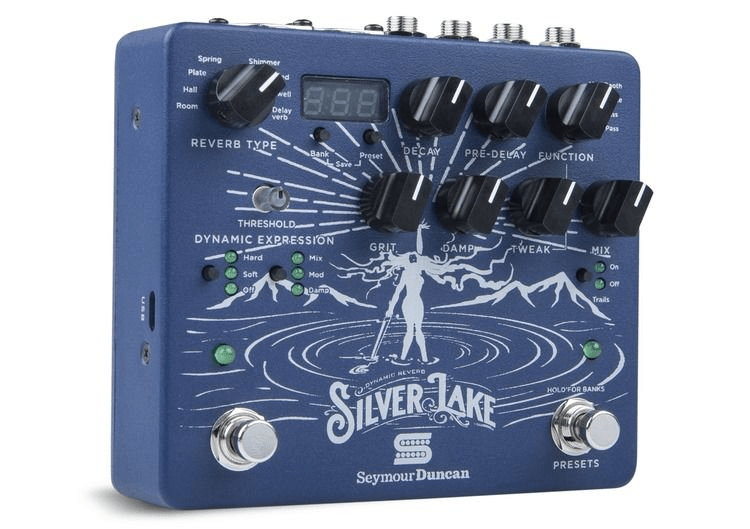
NAMM 2018: Semour Duncan Silver Lake Dynamic Reverb
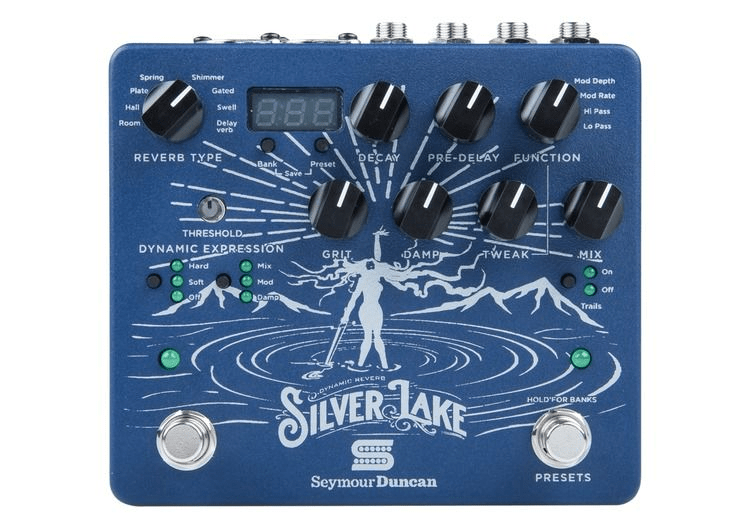
At NAMM, Seymour Duncan let us take a look at their Silver Lake Dynamic Reverb pedal. If there was a award for the most improved pedal brand, then Seymour Duncan would have to take it. There is no other brand that has risen out mediocracy as well as SD. The Andromeda Delay was impressive in a time where everyone was producing some of the best digital effects that the world of guitar has ever seen. Now we get Seymour Duncan take on a top shelf Reverb. This pedal is packed full of features and designed beautifully. It's priced ($350) to compete with pedals like the RV-500 from BOSS and due to drop soon.
More Information From Sweetwater:
More Information From Sweetwater:
Fully Programmable Reverb with a World of Ambiance
With the wide variety of powerful multi reverb pedals on the market, it's refreshing to see one as intuitive and great-sounding as the Seymour Duncan Silver Lake Dynamic Reverb pedal. Onboard you'll find eight different reverb varieties, with enough tonal tweaking to create the exact sound your music needs. And thanks to Duncan's dynamic technology, you can set the reverb's character to react to the intensity of your playing. And with its MIDI capabilities, the Silver Lake is also the perfect companion for switching-based pedalboards.Create your own space
At the heart of the Seymour Duncan Silver Lake Dynamic Reverb pedal is a powerful digital engine. It's this power that allows you to access eight separate reverb voices, including room, spring, shimmer, delay verb, and more. From there, the Grit, Damp, Mix, and Pre-Delay controls take over, tuning your delay trails to perfection. Whether you want the vintage sounds of a cranked spring tank, the natural sound of a large hall, or something completely your own, the Silver Lake Dynamic Reverb is a more than capable partner.Dynamic Expression control
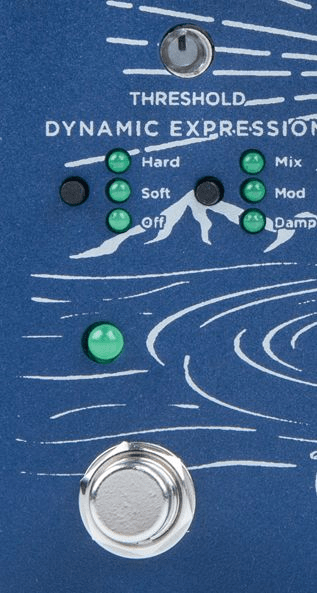
Even with all this tone shaping onboard, what sets the Silver Lake Dynamic Reverb effects pedal apart from the crowded pack available at Sweetwater is its ability to change its character based on your playing dynamics. Dynamic Expression can be tuned to affect the Mix, Mod, or Damp settings of your tone, depending on how hard you hit the strings. With this feature, you can go from a warm, modulated ambiance when lightly picked to a cavernous modulation by digging in, and it couldn't be easier to control.Power to spare
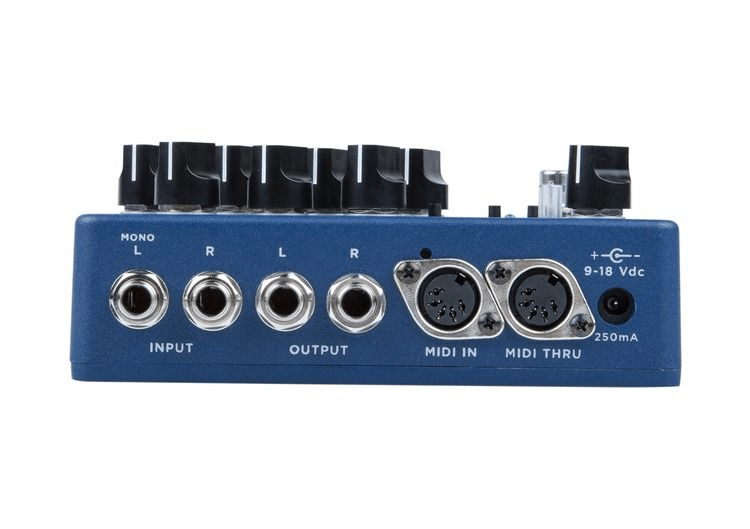
On top of its multitude of reverb types, tone-shaping abilities, and dynamic expression, the Silver Lake packs a ton of features onboard to make it extremely player friendly. The pedal's MIDI capabilities integrate the pedal into a larger rig for effortlessly accessing your presets on the fly. Stereo I/O allows you to spread your tone across multiple amplifiers. The Silver Lake's ability to run at 18 volts enhances the pedal's headroom and clarity. And a USB jack is there when it's time to keep the Silver Lake's software updated far into the future.Seymour Duncan Silver Lake Dynamic Reverb Pedal Features:
- Powerful programmable reverb pedal with a bevy of intuitive features
- Multiple voicing options, such as Grit, Damp, and Decay
- Dynamic control changes its sound depending on your playing dynamics
- MIDI switchable
- Over 100 preset locations
- Fully programmable via the top of the unit
- USB connectivity for software updates
- 8 types of reverb selectable with a rotary switch
Tuesday, January 30, 2018
Ugly Guitar Truth: Boss Katana Artist Amp
When the BOSS Katana was first announced, I wrote up my impressions of it. I liked the idea of it. It seemed like a well though out and executed design but it wasn't without it faults. I never did like the look of the amp. It was simple, but the overall look was a little bland. There was too much black on black. While I like the concept of the Kanji symbol for Katana being the amp's main design feature, it too was underwhelming and too close to familiar English letters. The price and features were too good though. BOSS had nearly every competitor beat hands down. So it's no surprise that BOSS has once again expanded their line of Katana amp with the 100 watt Artist model.

Still 100 Watts
If you are familiar with the BOSS Katana 100 Watt, then you are familiar with most of the features of the Artist. The five amp models are still there. The tone section still lets you control Lows, Mids, and Highs. You still have your Three FX: Boost/Mod, Delay FX, and Reverb. You still get Presence, and Master controls with 100/50/0.5 Watt settings. So if you were a fan of the Katana before, then you are still going to like the Artist, but is there enough to really call this an upgrade?
What's New
For starters you get a WazaCraft speaker in the Artist model. Waza is BOSS Premium line, but personally, I've never really thought that the Waza amps met the hype (or the price for that matter). The Waza was a feat for sure, but the Katana was were BOSS really hit the homerun. Having said that, is the Waza speaker an upgrade? After hearing a side by side comparison, the Artist does have the edge. However, that might be due to the cabinet construction. Another key feature is the more robust cabinet construction and the semi-open back cab. My money is on the shape and size of the cab having more to do in the change in sound than the speaker, but that's just my two cents. Other than that, the Artist gives you Cabinet Resonance and Line Out Air Feel functions.
Is It Worth It?
So, right now the Katana is priced at $600. The 2x12 100 watt Katana is priced at $500. You're getting one less speaker for 100 more dollars. While this seems like a bum deal at first, there is a fair amount of value for your money. The cabinet alone is a huge improvement. The Waza speaker may help as well. The Cabinet Resonance and Line Out Air Feel could help breathe a little life into you signal. The overall look of the amp is much improved in my opinion. Will I buy a Katana Artist? Personally? I'd love to see the head version, but I love what they done. BOSS has done an impressive job topping their already impressive line of Katana Amps.
NAMM 2018
NAMM 2018 is finished and there is ton of new stuff that is out there. There is still a load of stuff that is yet to be released. Digitech was a big hold out this year. They didn't show us anything new, but they have promised much more stuff later this year. Several other companies showed some pretty exciting working prototypes, so we still have a lot to look forward to in 2018.

There is so much stuff out there that I can't wait to dive into. Milkman came out with a pedal based amp as did Victory. Vox expanded their MV series to include a 150 watt head. Line6 gave the HX multi effect pedal. There are more new guitars from major bands than I know what to do with. Marshall showed us the Origin series. I'm really looking forward to taking a much closer look at a lot of the stuff that has been announced as well as the stuff the I just mentioned.
NAMM is a super busy time, and I've been trying to cover most of the stuff that I've found interesting, but if there is something that you've seen from NAMM and I haven't mentioned it, then let me know in the comments. I'll try to check it out and be sure to let you know what I think.
Saturday, January 27, 2018
NAMM 2018: MXR Sugar Drive Overdrive Pedal
MXR make some of the most iconic pedals on the market. I was excited to hear that this year at NAMM they've added several pedals to the line. Addmittedly, the pedal I most excited for is the MXR Sugar Drive. I'm a sucker for a transparent overdrive and this one seem to fit that description to a tee. In fact, several times, the guys at the MXR booth stop just short of calling it a Klone clone by name. So, if you like your pedals tiny and you are also a fan of MXR, then this is right up your ally. I would be remiss if I didn't mention that there are some other pedals strikingly similar to the MXR (Tone City Bad Horse) but the MXR does have a bypass-able buffer, so there is that.

More Information:
This year, MXR is releasing its own take—dubbed the Sugar Drive—on a rare, beloved circuit from the '90s. Packed into a pedalboard-friendly mini chassis, the pedal provides a wide range of tones, from driving boost to lush overdrive.
The pedal's interface is clean, with only three knob controls—Tone, Drive, and Volume—and an on/off footswitch on its face. Despite its simplistic aesthetic, the pedal's finely tuned circuitry is a bit more dynamic than it appears.
Instead of a Drive knob that simply increases the pedal's intensity, it actually grabs your clean, unaffected signal and blends it with the overdrive as you turn the knob. Then, the pedal's "Charge Pump" increases headroom by increasing the operating voltage. This makes for a deeper, more progressive move from clean tone to affected dirty tone and allows your sound to open up more naturally.
On the side of the chassis, you'll find a selectable switch and corresponding LED indicator for choosing between true bypass or MXR's buffered bypass.
NAMM:2018: Fender Level Set Buffer Pedal
Buffer pedal tend to be small little boxes that get little attention on your board if you even have one on your board. However, Fender decided that their Buffer, in the recently release line of effects pedals, needed a couple of knobs and a footswitch. This feature make it much more of utility player than plain-Jane buffer, but I guess you could make a case that its main job is to buff. Clean looks and useful features put this buffer in strong contention for the best buffer on the market. So far, we've only been able to hear it on a loud NAMM Show floor so we may have to wait to really know how this little all-arounder really stacks up.

More Information
This is a thoroughly professional pedal - both in tone and appearance - and would make a welcome addition to your pedalboard.
More Information
Buffer and Level Matching
The Fender Level Set Buffer Pedal does not create any 'sound' as such, but it does solve two important problems with guitarists' rigs:- When using long cable runs or multiple pedals, signal can be sapped, and the upper frequencies can be lost along with the natural dynamic playing response.
- When switching guitars, levels can become miss-matched and the gain levels that you have set up on your pedals and amplifiers may be suddenly incorrect.
Professional Buffer
The Level Set Buffer creates a buffered signal and features a high-frequency control to bring back those missing treble frequencies in your tone. It also has a 'load' control to match your signal perfectly.Level Set
The Level Set Buffer also has a level control to match the signal difference when switching guitars; one example is when switching from humbuckers to single coils. This level control lets you maintain your gain levels without having to make adjustments after changing guitars; ideal for musicians playing live or for guitarists who like to maintain a predictable setup.Tuner Out
The Level Set Buffer has a tuner out for an independent tuner signal. The main footswitch acts as a mute and is a very handy tool for live players, letting them tune silently or switch guitars on-the-go.Professional Features
The Level Set Buffer has a rugged and lightweight aluminum chassis with a brushed metal finish. This gives it both read-ready durability and a classy-aesthetic that can take pride-of-place on your pedalboard. The pedal is built by Fender who have a multitude of experience in amplifier design and you can be sure that this pedal will last a lifetime of gigging, rehearsing and recording.Magnetic Battery Door & Jewel Light
The jewel LED light not only looks great, it also adds a handy on-stage visual indicator of the pedal's operation. The pedal has a clever battery compartment door; it has a magnetic latch which means you can easily change the battery with no fiddly screws to worry about.This is a thoroughly professional pedal - both in tone and appearance - and would make a welcome addition to your pedalboard.
Features
- Provides a balanced tone for pedalboards, long cable runs, and solves the problem of changing guitars
- Low and hi-frequency adjustment to match your instrument and overall tone
- Load switch to adjust signal
- Main footswitch acts as a mute
- Tuner output for independent tuning
- Enables you to switch guitars and balance your settings
- Rugged anodized aluminum construction
- Classy brushed finish and jewel light
- Battery door with magnetic latching opening (no screws needed)
- Powered by 9V battery or DC
Specifications
- Effect Type: Buffer
- Controls: Output Level, Hi-Freq Trim, Load Toggle (On/Off), Mute Footswitch
- Inputs: 1 x 1/4'' Instrument
- Outputs: 1 x 1/4'' Instrument, 1 x 1/4'' Tuner Output
- Power Requirements: 9-Volt Battery or DC Negative AC Adaptor
- Power Consumption: 14mA
- Input Impedance: 1M ohm
- Output Impedance: 1k ohm
- Material: Anodized Aluminum
- Colour: Silver
NAMM 2018: Fender Mirror Image Digital Delay Pedal
If I asked you to imagine a Fender effects pedal what would it look like? Would you think of the vintage Fender Bender, or the recent line of micro pedals? Either way, you probably would picture what Fender brought to NAMM 2018. These sleek, brushed aluminum bodied effect are rather impressive coming from fender. While it is rare to see a brand have a successful line of guitars and effects, Fender wants provide everything from the instrument to your effects, to the amp you play through (not to mention Fender branded cables, tuners, picks, etc...) What is surprising is that these effect look like a solid offering. They look high quality, and from the demonstrations that available, they don't sound bad at all.
The Mirror Image is no lazy nock-off of a popular delay. It seems functional and well thought out. I can honestly say that this is the first Fender effect pedal that I've seriously considered purchasing. I'm sure we will find out more about the pedals as more people are able to review. This is a step is the right direction for Fender effects.

More Information:
The two circuits can be run independently and blended together, or cascaded (one running into the other) which can provide a thick saturation and a high degree of interactivity.
In the Pugilist's Series Mode, the two distortion circuits are cascaded, and this has the effect of letting circuit A become a 'boost' into circuit 'B'. This mode lets you achieve a full-on saturation with thick sustain and dynamic articulation that is ideal for crushing rhythm sounds and liquid smooth lead guitar playing. A bass boost also lets you achieve a thick low-end response.
This is a thoroughly professional pedal - both in tone and appearance - and would make a welcome addition to your pedalboard.
The Mirror Image is no lazy nock-off of a popular delay. It seems functional and well thought out. I can honestly say that this is the first Fender effect pedal that I've seriously considered purchasing. I'm sure we will find out more about the pedals as more people are able to review. This is a step is the right direction for Fender effects.
More Information:
Pugilist Distortion
The Pugilist Distortion features a dual circuit design that can provide a huge range of distortion tones, from light breakup through to fully-encompassing saturation.The two circuits can be run independently and blended together, or cascaded (one running into the other) which can provide a thick saturation and a high degree of interactivity.
Dual Circuits
Each of the Pugilist's distortion circuits features tone and gain control to let you shape your sound to how you desire. The circuits can be operated in blend mode, which runs them in parallel and means you can blend both sounds together for an incredible amount of diversity. This mode is fantastic for achieving a nuanced distortion tone for riffing and complex chordal work.In the Pugilist's Series Mode, the two distortion circuits are cascaded, and this has the effect of letting circuit A become a 'boost' into circuit 'B'. This mode lets you achieve a full-on saturation with thick sustain and dynamic articulation that is ideal for crushing rhythm sounds and liquid smooth lead guitar playing. A bass boost also lets you achieve a thick low-end response.
Professional Features
The Pugilist has a rugged and lightweight aluminium chassis with a brushed metal finish. This gives it both read-ready durability and a classy-aesthetic that can take pride-of-place on your pedalboard. The pedal is built by Fender who have a multitude of experience in amplifier design and you can be sure that this pedal will last a lifetime of gigging, rehearsing and recording.Magnetic Battery Door & Jewel Light
The jewel LED light not only looks great, it also adds a handy on-stage visual indicator of the pedal's operation. The pedal has a clever battery compartment door; it has a magnetic latch which means you can easily change the battery with no fiddly screws to worry about.This is a thoroughly professional pedal - both in tone and appearance - and would make a welcome addition to your pedalboard.
Features
- Dual circuit distortion pedal
- Dual circuits can be cascaded for thick saturation with great versatility
- Bass boost to bring back the low-end
- Series/blend lets you control the two circuits (parallel or series operation)
- Dual tone controls
- A very versatile pedal, with great interactivity between the two circuits
- Rugged anodized aluminium construction
- Classy brushed finish and jewel light
- Battery door with magnetic latching opening (no screws needed)
- Powered by 9V battery or DC
Specifications
- Effect Type: Distortion
- Controls: Tone A, Drive A, Tone B, Drive B, Blend (A/B), Blend/Series Toggle, Bass Boost Toggle (On/Off), Output Level, Bypass Footswitch
- Inputs: 1 x 1/4'' Instrument
- Outputs: 1 x 1/4'' Instrument
- Power Requirements: 9-Volt Battery or DC Negative AC Adaptor
- Power Consumption: 22mA
- Input Impedance: 1M ohm
- Output Impedance: 1k ohm
- Material: Anodized Aluminium
- Colour: Gold
NAMM 2018: Fender Marine Layer Reverb Pedal
At this point it's hard to say anything that hasn't been said about the new line of effect from Fender. They look like a clear despatcher from their previous attempts to establish themselves in the current effects market. Professional looking boxes and features that compete with more substantial on the market make this effect stand out from their previous works. Obviously Fender has put in a fair amount of time and effort to correct past mistakes. However, these pedal still seem to blend in almost too well. Sure, the features are solid and the design are now something you wouldn't mind putting on your pedalboard, but they may suffer by trying to compete with similar effect from BOSS and TC Electronic. Would you take a Marine Layer over a Hall of Fame II or RV-6?

More Information
The Marine Layer pedal has simple controls, yet they offer powerful control over every important parameter of the reverb tone, including the time, pre-delay (for a 'bounce' back effect), damping and overall level.
Between the reverb types and controls, you should be able to achieve a range of ambient sound for almost any musical eventuality.
This is a thoroughly professional pedal - both in tone and appearance - and would make a welcome addition to your pedalboard.

More Information
Versatile 'Verb
The Marine Layer Reverb Pedal has 3 types of reverb to choose from. Each reverb sound has 2 distinct variations that provide even more versatility, while the simple yet powerful control layout provides intuitive control over every aspect of your ambient sound.Three Reverb Types
The Marine Layer pedal has a hall, room, and 'special' reverb (that features a shimmer sound). Each mode has two variations and can let you achieve a wide range of tones. The hall sound is a large spacious ambience with a warm tonality, the room is a brighter and more focused ambience, while the special effect can send your tone to the heavens and back with its expansive sound.The Marine Layer pedal has simple controls, yet they offer powerful control over every important parameter of the reverb tone, including the time, pre-delay (for a 'bounce' back effect), damping and overall level.
Between the reverb types and controls, you should be able to achieve a range of ambient sound for almost any musical eventuality.
Professional Features
The Marine Layer Reverb has a rugged and lightweight aluminum chassis with a brushed metal finish. This gives it both read-ready durability and a classy-aesthetic that can take pride-of-place on your pedalboard. The pedal is built by Fender who have a multitude of experience in amplifier design and you can be sure that this pedal will last a lifetime of gigging, rehearsing and recording.Magnetic Battery Door & Jewel Light
The jewel LED light not only looks great, it also adds a handy on-stage visual indicator of the pedal's operation. The pedal has a clever battery compartment door; it has a magnetic latch which means you can easily change the battery with no fiddly screws to worry about.This is a thoroughly professional pedal - both in tone and appearance - and would make a welcome addition to your pedalboard.
Features
- 3 Reverb types - hall, room, special
- Each reverb type has 2 variations for maximum versatility
- Control over reverb time, damping, pre-delay and level
- Effect tails continue when pedal is bypassed for a smooth performance
- Lets you achieve all manner of reverbs, from slap-back, subtle room ambience, through to huge atmospheric halls and 'shimmer'
- Rugged anodized aluminum construction
- Classy brushed finish and jewel light
- Battery door with magnetic latching opening (no screws needed)
- Powered by 9V battery or DC
Specifications
- Effect Type: Reverb
- Controls: Reverb Time, Damping, Pre Delay, Type Toggle (Hall/Room/Special),Variation Toggle (1/2), Filter Toggle (On/Off), Effect Level, Effect Mute Footswitch
- Inputs: 1 x 1/4'' Instrument
- Outputs: 1 x 1/4'' Instrument
- Power Requirements: 9-Volt Battery or DC Negative AC Adaptor
- Power Consumption: 71mA
- Input Impedance: 1M ohm
- Output Impedance: 1k ohm
- Material: Anodized Aluminum
- Colour: Green
NAMM 2018: Fender Santa Ana Overdrive Pedal
The Santa Ana Distortion from Fender is bold offering. In fact, all of the pedal in their new range at NAMM 2018 are surprising. In the past, Fender have played it safe when dealing with effects. Most recently they've produced pedals that resembled far east micro-clones of three knobbed overdrive, distortion and the like. But it looks like they are ready to blaze a new path. The Santa Ana features a brushed aluminum body and a full range of features. I'd say that Fender has a winner on its hands, but I'd need to hear a better demonstration than the NAMM Show floor can provide.

More Information:
The Santa Ana is designed to be an open sounding and dynamic pedal that can achieve a wide range of overdrive flavors, from edge-of-breakup tones through to thick, rich and sustaining lead sounds. It responds very well to your playing dynamics, and will clean up simply by rolling down the volume control on your guitar.
For blues and rock players who like an amp-like response, this pedal will give the balanced range of dynamics that you require, and help to bring out every nuance in your playing.
A boost switch is a handy addition to the Santa Ana that lets you set up your core tone with the pedal, and then engage the boost effect to push your sound even further into saturation. This effectively gives the Santa Ana two separate tones making it a very versatile pedal.
This is a thoroughly professional pedal - both in tone and appearance - and would make a welcome addition to your pedalboard.
More Information:
Santa Ana - Sounds Like Santana?
The Fender Santa Ana Overdrive pedal is a dynamic and nuanced overdrive effect that is perfect for generating the types of tones associated with the guitarist from which this pedal (most likely) gets its name - Santana.The Santa Ana is designed to be an open sounding and dynamic pedal that can achieve a wide range of overdrive flavors, from edge-of-breakup tones through to thick, rich and sustaining lead sounds. It responds very well to your playing dynamics, and will clean up simply by rolling down the volume control on your guitar.
For blues and rock players who like an amp-like response, this pedal will give the balanced range of dynamics that you require, and help to bring out every nuance in your playing.
Multiple Controls
The Santa Ana pedal has a 3-band EQ and presence control to shape your sound. It also dual independent voices for different flavors of overdrive.A boost switch is a handy addition to the Santa Ana that lets you set up your core tone with the pedal, and then engage the boost effect to push your sound even further into saturation. This effectively gives the Santa Ana two separate tones making it a very versatile pedal.
Professional Features
The Santa Ana has a rugged and lightweight aluminum chassis with a brushed metal finish. This gives it both read-ready durability and a classy-aesthetic that can take pride-of-place on your pedalboard. The pedal is built by Fender who have a multitude of experience in amplifier design and you can be sure that this pedal will last a lifetime of gigging, rehearsing and recording.Magnetic Battery Door & Jewel Light
The jewel LED light not only looks great, it also adds a handy on-stage visual indicator of the pedal's operation. The pedal has a clever battery compartment door; it has a magnetic latch which means you can easily change the battery with no fiddly screws to worry about.This is a thoroughly professional pedal - both in tone and appearance - and would make a welcome addition to your pedalboard.
Features
- Rich and open overdrive with great pick dynamics and nuance
- 3-band EQ plus presence control for maximum tonal shaping
- Two voices
- Boost switch
- Drive and level controls for wide ranging tone from edge-of-breakup to thick saturation
- Responds to guitar volume control and cleans up when volume is rolled down
- Rugged anodized aluminum construction
- Classy brushed finish and jewel light
- Battery door with magnetic latching opening (no screws needed)
- Powered by 9V battery or DC
Specifications
- Effect Type: Overdrive
- Controls: Bass, Middle, Treble, Presence, Output Level, Voice Toggle (A/B), Drive, Boost Footswitch, Bypass Footswitch
- Inputs: 1 x 1/4'' Instrument
- Outputs: 1 x 1/4'' Instrument
- Power Requirements: 9-Volt Battery or DC Negative AC Adaptor
- Power Consumption: 120mA
- Input Impedance: 1M ohm
- Output Impedance:5k ohm
- Material: Anodized Aluminum
- Color: Red
NAMM 2018: Fender Bends Compressor Pedal
Fender showed off their Bends Compressor pedal at NAMM. Fender has done a lot of work to put out effects that will appeal to series players and pedal geeks. The Bends Compressor is probably one of more interesting ones in the group. I long list of features and creative solutions make the Bends a pedal that many are now counting days until they can get their hands on one. While I can't say that this is a impressive preforming pedal, the demonstrations have been pretty solid. I'm looking forward to giving the Fender Bends a closer look.
More Information:

The Bends also has a Blend control; this lets you blend in your original clean guitar signal and use the compressor in a parallel-style mode. By blending in the original signal, The Bends can create an extreme compression effect while your guitar signal can be blended in to maintain clarity and pick attack dynamics.
This is a thoroughly professional pedal - both in tone and appearance - and would make a welcome addition to your pedalboard.
More Information:

Compression
The Fender Bends Compressor Pedal is designed to provide any type of dynamic compression effect you need to achieve. Compression is a varied term; it can mean many things for different guitar players.- Some players may want to achieve a subtle 'thickening' of their sound for a natural clean sound with more depth.
- Other players may wish for a sympathetic sustain that lets notes ring on for much longer; such as during epic guitar solos.
- Some guitarists may even require an extreme compression effect that squashes every dynamic; think of funk rhythm guitar parts or country 'chicken picking' styles of playing.
Ultimate Control
The Bends Compressor has a control for every important compression parameter, including recovery, drive, and level. This lets you set up the initial note attack and the amount of sustain you require.The Bends also has a Blend control; this lets you blend in your original clean guitar signal and use the compressor in a parallel-style mode. By blending in the original signal, The Bends can create an extreme compression effect while your guitar signal can be blended in to maintain clarity and pick attack dynamics.
Professional Features
The Bend Compressor has a rugged and lightweight aluminum chassis with a brushed metal finish. This gives it both read-ready durability and a classy-aesthetic that can take pride-of-place on your pedalboard. The pedal is built by Fender who have a multitude of experience in amplifier design and you can be sure that this pedal will last a lifetime of gigging, rehearsing and recording.Magnetic Battery Door & Jewel Light
The jewel LED light not only looks great, it also adds a handy on-stage visual indicator of the pedal's operation. The pedal has a clever battery compartment door; it has a magnetic latch which means you can easily change the battery with no fiddly screws to worry about.This is a thoroughly professional pedal - both in tone and appearance - and would make a welcome addition to your pedalboard.
Features
- Versatile compression pedal which can create all sorts of dynamic response
- Multiple controls over the overall compression effect
- Blend control lets you run the effect in parallel and blend in your dry signal for maximum transparency
- Drive and recovery controls let you shape the sustain and attack properties
- Rugged anodized aluminum construction
- Classy brushed finish and jewel light
- Battery door with magnetic latching opening (no screws needed)
- Powered by 9V battery or DC
Specifications
- Effect Type: Compressor
- Controls: Drive, Recovery, Blend (Dry/Comp), Output Level, Bypass Footswitch
- Inputs: 1 x 1/4'' Instrument
- Outputs: 1 x 1/4'' Instrument
- Power Requirements: 9-Volt Battery or DC Negative AC Adaptor
- Power Consumption: 15mA
- Input Impedance: 1M ohm
- Output Impedance: 1k ohm
- Material: Anodized Aluminum
- Colour: Black
Friday, January 26, 2018
NAMM 2018: Fender Pugilist Distortion Pedal
Probably the most surprising thing to come from NAMM so far is the new line of effects from Fender. No, Fender branded effects are not new, but this line of effects is different from effect pedal from Fender in recent years. These pedal are actually interesting. Several years ago, Fender put a line of effect with racing stripes. These effects were underwhelming from top to bottom. Fender also had a line of micro-sized effect. I'm unsure if either of these lines of effects are discontinued, but it does look like they are moving in a completely different direction. I personally like this directing.

More information:
The two circuits can be run independently and blended together, or cascaded (one running into the other) which can provide a thick saturation and a high degree of interactivity.
In the Pugilist's Series Mode, the two distortion circuits are cascaded, and this has the effect of letting circuit A become a 'boost' into circuit 'B'. This mode lets you achieve a full-on saturation with thick sustain and dynamic articulation that is ideal for crushing rhythm sounds and liquid smooth lead guitar playing. A bass boost also lets you achieve a thick low-end response.
This is a thoroughly professional pedal - both in tone and appearance - and would make a welcome addition to your pedalboard.
More information:
Pugilist Distortion
The Pugilist Distortion features a dual circuit design that can provide a huge range of distortion tones, from light breakup through to fully-encompassing saturation.The two circuits can be run independently and blended together, or cascaded (one running into the other) which can provide a thick saturation and a high degree of interactivity.
Dual Circuits
Each of the Pugilist's distortion circuits features tone and gain control to let you shape your sound to how you desire. The circuits can be operated in blend mode, which runs them in parallel and means you can blend both sounds together for an incredible amount of diversity. This mode is fantastic for achieving a nuanced distortion tone for riffing and complex chordal work.In the Pugilist's Series Mode, the two distortion circuits are cascaded, and this has the effect of letting circuit A become a 'boost' into circuit 'B'. This mode lets you achieve a full-on saturation with thick sustain and dynamic articulation that is ideal for crushing rhythm sounds and liquid smooth lead guitar playing. A bass boost also lets you achieve a thick low-end response.
Professional Features
The Pugilist has a rugged and lightweight aluminum chassis with a brushed metal finish. This gives it both read-ready durability and a classy-aesthetic that can take pride-of-place on your pedalboard. The pedal is built by Fender who have a multitude of experience in amplifier design and you can be sure that this pedal will last a lifetime of gigging, rehearsing and recording.Magnetic Battery Door & Jewel Light
The jewel LED light not only looks great, it also adds a handy on-stage visual indicator of the pedal's operation. The pedal has a clever battery compartment door; it has a magnetic latch which means you can easily change the battery with no fiddly screws to worry about.This is a thoroughly professional pedal - both in tone and appearance - and would make a welcome addition to your pedalboard.
Features
- Dual circuit distortion pedal
- Dual circuits can be cascaded for thick saturation with great versatility
- Bass boost to bring back the low-end
- Series/blend lets you control the two circuits (parallel or series operation)
- Dual tone controls
- A very versatile pedal, with great interactivity between the two circuits
- Rugged anodized aluminum construction
- Classy brushed finish and jewel light
- Battery door with magnetic latching opening (no screws needed)
- Powered by 9V battery or DC
Specifications
- Effect Type: Distortion
- Controls: Tone A, Drive A, Tone B, Drive B, Blend (A/B), Blend/Series Toggle, Bass Boost Toggle (On/Off), Output Level, Bypass Footswitch
- Inputs: 1 x 1/4'' Instrument
- Outputs: 1 x 1/4'' Instrument
- Power Requirements: 9-Volt Battery or DC Negative AC Adaptor
- Power Consumption: 22mA
- Input Impedance: 1M ohm
- Output Impedance: 1k ohm
- Material: Anodized Aluminum
- Colour: Gold
NAMM 2018: ProCo Rat Tail Distortion Cable
No, the title of this post is not some sort of typo. I has to read a little bit before I actually understood what this product actually is. I still may not know exactly what this cable does, but I do know that it is a guitar cable. Everything else I haven't fully accepted yet. According to ProCo this cable has a Rat circuit in it. Meaning that your cable is now capable giving you that sweet vintage distortion that you love so much. I guess there are those that only use a Rat and no other pedals. This product lets them get their kicks without have a pedal on the floor. This isn't a product that I don't particularly see a market for, but I'm wrong a lot.

From Effects Database:
Built-in and Selectable Distortion Now Available Directly on the Connector
JACKSON, MO, JANUARY 16, 2018 – RAT FX, known for its world-class distortion pedals, enters into the cable market with its first RAT Tail distortion cable at NAMM 2018 (RapcoHorizon Booth #11610). The new RAT Tail distortion cable offers guitarists a new way of achieving some of the effects of the Vintage RAT distortion pedals, as this cable is built using the same clipping diodes that drive Vintage RAT pedals’ signature distortion tones.
With two built-in ranges of distortion circuitry directly selectable on the connector, guitarists can shift seamlessly between settings with the connector’s easily accessible dial, without missing a beat. The RAT Tail distortion cable comes equipped with three settings, including true bypass, distortion overdrive with unity gain and distortion overdrive (+3dB of gain).
“We pride ourselves on providing the highest quality distortion options on the market, which is why we utilized our expertise in the cabling market to innovate this new RAT Tail distortion cable,†says Darius Seabaugh, vice president of marketing for RHC. “We’re confident guitarists will recognize the benefit of having a full range of distortion options at their fingertips, no matter where they’re playing on the stage.â€
From the very beginning, the RAT was destined to define “The Sound of the Underground.†It was, after all, born underground in the basement of the ProCo Sound factory in downtown Kalamazoo, Michigan. RAT has evolved from a single, hand built prototype into a family of the most versatile and most recorded distortion pedals in the world. The brand is now adding cables to its line-up, offering even more options for its customers to achieve the quality distortion that they have come to expect from RAT.
More than 23000 guitar effects pedals from 4000 brands:
http://www.effectsdatabase.com/model/proco/rattail

From Effects Database:
RAT INTRODUCES NEW RAT TAIL DISTORTION CABLE AT NAMM 2018
Built-in and Selectable Distortion Now Available Directly on the Connector
JACKSON, MO, JANUARY 16, 2018 – RAT FX, known for its world-class distortion pedals, enters into the cable market with its first RAT Tail distortion cable at NAMM 2018 (RapcoHorizon Booth #11610). The new RAT Tail distortion cable offers guitarists a new way of achieving some of the effects of the Vintage RAT distortion pedals, as this cable is built using the same clipping diodes that drive Vintage RAT pedals’ signature distortion tones.
With two built-in ranges of distortion circuitry directly selectable on the connector, guitarists can shift seamlessly between settings with the connector’s easily accessible dial, without missing a beat. The RAT Tail distortion cable comes equipped with three settings, including true bypass, distortion overdrive with unity gain and distortion overdrive (+3dB of gain).
“We pride ourselves on providing the highest quality distortion options on the market, which is why we utilized our expertise in the cabling market to innovate this new RAT Tail distortion cable,†says Darius Seabaugh, vice president of marketing for RHC. “We’re confident guitarists will recognize the benefit of having a full range of distortion options at their fingertips, no matter where they’re playing on the stage.â€
From the very beginning, the RAT was destined to define “The Sound of the Underground.†It was, after all, born underground in the basement of the ProCo Sound factory in downtown Kalamazoo, Michigan. RAT has evolved from a single, hand built prototype into a family of the most versatile and most recorded distortion pedals in the world. The brand is now adding cables to its line-up, offering even more options for its customers to achieve the quality distortion that they have come to expect from RAT.
More than 23000 guitar effects pedals from 4000 brands:
http://www.effectsdatabase.com/model/proco/rattail
NAMM 2018: Outlaw FX Cactus Juice 2-Mode Overdrive
If you are a fan of inexpensive compact guitar pedals, then you probably already know about Outlaw effects. They hit the scene a couple years ago and they have been expanding their line steadily since. Also, if you like your effects western themed, you are defiantly a fan of Outlaw. The Cactus Juice Overdrive is a pretty typical mid-humped Scream-type pedal. The one thing that sets this pedal apart is the switch. Labeled Juiced/Normal, what the switch actually does may be up for debate. But at least we get something more than another tube screamer clone. I'd like to put this next to my other TS pedals and see how it stands up.

From Effects Database:

From Effects Database:
Classic warm, creamy screamer-inspired drive is tonic for your tone
JUICED/NORMAL toggle switch offers additional versatility, with higher gain setting accessible with a flick of a switch:
More than 23000 guitar effects pedals from 4000 brands:
http://www.effectsdatabase.com/model/outlaw/cactusjuice
JUICED/NORMAL toggle switch offers additional versatility, with higher gain setting accessible with a flick of a switch:
- NORMAL: Traditionally warm and creamy breakup, great for rhythm parts, blues guitars, etc
- JUICED: Ups the gain dosage to extra strength, and lets you tear through even the densest of mixes.
More than 23000 guitar effects pedals from 4000 brands:
http://www.effectsdatabase.com/model/outlaw/cactusjuice
Thursday, January 25, 2018
NAMM 2018: Mooer Cali-Dual Micro PreAmp Pedal
Mooer has extended their range of micro preamp pedals. The Cali-Dual is based on the preamp in a Mesa-Boogie Dual Rectifier. Each one of these pedal are designed to actually take the place of your amps preamp. They accomplish this by directing users to plug into the pedal and then plug the pedal directly into your amps effects loop input. How well these little pedal do is a matter of opinion, but the fact that you can decently featured preamp for under $100 is pretty interesting.

From Mooer:
Mooer micro preamps are sonically accurate digital recreations of the preamp sections of popular tube amplifiers. We have developed these by directly analyzing real tube amplifiers using a brand new technology to capture their sound, dynamics and response. Each Micro Preamp comes complete with dual channels, integrated speaker cabinet simulation and dual operating modes to suit the needs of all users.
Features
High quality dual channel preamp
Independent 3 band EQ, Gain and Volume controls for each channel
Speaker cabinet simulation on/off
2 different modes for footswitch operation. On/Off or channel A/B
Connection:
DCIN:
Connect a DC 9V 300mA centre pin negative power supply
2.INPUT:
Connect your instrument directly or the output of your pre, pre-amp effects like Overdrive, distortion, etc.
3.OUTPUT:
Connect to a power amp or your amplifier's effects return. (highly recommend using a tube amplifier)
Different power amplifier will affect the outcome of the final tone. You can also connect directly to a sound card and activate the speaker cab simulation for recording purposes
Note: You can connect your "fx loop" effects, like modulation and time based effects, in between the MOOER preamps output and the input of the power amp (fx return)
Specification:
Modes: Delay and reverb effects with tap temp functionality
Input: 1/4 mono audio jack. (Impedance: 1 meg Ohms)
Output: 1/4 mono audio jack (Impedance: 100 Ohms)
Power requirements: AC adapter 9V DC, center negative. (Highly recommend to use Mooer Micro Power.)
Current Draw: 300mA
Dimensions:93.5mm(D) x 42mm(W) x 52mm(H)
Weight: 160g
NAMM 2018: Keeley Aria Compression And Overdrive
Keeley has had a reputation of putting out products that are extremely practical. The Aria Compressor and Overdrive is no different. Natural, sweet sounding sustain married to a light/medium overdrive circuit is a solid option to start you signal chain. The compact form and top-jacks make the form factor a thing of beauty. The demos make this pedal very tempting. If you are a fan of this type of combo pedals, you should check this one out.

From Gear News:
Keeley has announced its new Aria Compressor + Overdrive/Distortion pedal, which, as the name subtly suggests, combines a compression and a drive channel into one pedal.
The Compressor side also has three controls: Level, Blend and Sustain and below, another, small pot for Tone. A lever in the middle of the effect allows the order of the effects can be changed, so either one can go first in the signal chain.
The Aria looks a little bit like a cut-down version of their Tone Workstation, but without Mid Cut, Boost and whatnot. Check out the official Keeley demo video of the Aria below and then you can get an idea of how it sounds. It does look like a useful pedal, but it would have to have two really good sides to that circuit to make me want to part with my existing drive and compression pedals.
Keeley has a good reputation for compressor pedals, so this one could be worth a punt if the price is right. As of the time of writing, we don’t yet have a price or any more information on the Aria, so keep checking their official website closer to the show.
From Gear News:
Keeley has announced its new Aria Compressor + Overdrive/Distortion pedal, which, as the name subtly suggests, combines a compression and a drive channel into one pedal.
Keeley Aria
Each side of the effect has dedicated controls. The left side takes care of the Drive part, while the right side is on Compressor duty. ‘Drive’ is equipped with the usual three controls: Volume, Gain and Drive. In addition, there is a small lever that raises the degree of distortion of Overdrive (Low) to Distortion (High).The Compressor side also has three controls: Level, Blend and Sustain and below, another, small pot for Tone. A lever in the middle of the effect allows the order of the effects can be changed, so either one can go first in the signal chain.
The Aria looks a little bit like a cut-down version of their Tone Workstation, but without Mid Cut, Boost and whatnot. Check out the official Keeley demo video of the Aria below and then you can get an idea of how it sounds. It does look like a useful pedal, but it would have to have two really good sides to that circuit to make me want to part with my existing drive and compression pedals.
Keeley has a good reputation for compressor pedals, so this one could be worth a punt if the price is right. As of the time of writing, we don’t yet have a price or any more information on the Aria, so keep checking their official website closer to the show.
NAMM 2018: Chase Bliss Audio Thermea Analog Delay/Pitch Shift
At this point, I think that the guys over at Chase Bliss are messing with us. A lot of people love their nontraditional approach to guitar effect making. Yes, some of the most interesting products from recent history have come from them, but at some point they have to cross a line. Over that line lay pedals that are overpriced, complicated, and impractical. (I'm looking at you Rainbow Maker). The Thermea from Chase Bliss flirts with that line. However, the ability to convert to an analog delay saves this particular pedal from being cast in with those pedals. While a delay that can pitch shift its repeat isn't a new idea. The Thermea seems to take that idea and do what Chase Bliss does best, lets you manipulate absolutely everything. I dig the Thermea, but at the same time I am slightly confused by it.

From Effects Database:
Release: 5/31/18.
$499.
100% analog signal path with digital control / presets / midi.
Max delay time: at least 4 seconds (it likes to be under-clocked) via 4x MN3005 chipset.
Sequence mode, step mode, or normal mode for shifting through delay time intervals.
Three modulation types with three subtypes.
Glide knob for setting transition time between pitch intervals.
Slightly resonant low pass filter for repeats.
Full ramping and expression control.
Optional trails or true bypass via dip switch.
Momentary or latching bypass via dip switch.
More than 23000 guitar effects pedals from 4000 brands:
http://www.effectsdatabase.com/model/chasebliss/thermae

From Effects Database:
More than 23000 guitar effects pedals from 4000 brands:
http://www.effectsdatabase.com/model/chasebliss/thermae
Monday, January 22, 2018
NAMM 2018:Vox MV50 Boutique Hybrid Amp Head
Following the release of the first three super-compact amp heads using Nu Tube technology, Vox has released another. Calling it "Boutique" Many are speculating that these heads will be Dumble inspired. Starting around the time Orange released their Micro Terror heads, the idea of tiny of tiny amps have started catching on. In the past, these little amps were mere novelties, but now they capture more of the sound of their larger kin. Fitting these amp with practical features that many want with a larger amp added to 50 watts of power and Vox have put together rather impressive amps. But let's focus on the Boutique...
What is a Dumble, anyways...
Dumble is to amplifiers as Klon is to pedals. I'm not saying that a Dumble isn't a wonderful amp, but let's not kid ourselves. Guitarists are a superstitious bunch. The Klon Centaur wouldn't be the pedal it is today if they started mass producing them. That is to say, they wouldn't be able to fetch thousands of dollars and have countless clones if the original was readily available. If Dumble started producing amplifiers like Fender or Vox, would they have the same mystique? Possibly not. Would they cost as much as a Porsche? Absolutely not.

Is It A Dumble?
Let's not get carried away. These little head do a fine job, but lets not forget that Vox put out an AC version. If Vox actually believed that these amp sound as good as the amps that inspired them, then they have done a great disservice to their bottom line. Would you buy a Vox AC amp with 50 watts for 200 dollars? I know I would. Does the MV50-AC sound like a Vox, sure... kinda. They gave it the Vox-y chime, but it's not in that league. It's somewhere between the Valve Reactor series ( which is somewhere dying in a fire hopefully) and the current AC tube amps. So what about the Boutique? It's probably something like that. Kinda like putting a "Dumble-pedal" in front of Blues Jr. But you know, it's an amp.
Conclusion
Do I like it? Yeah, I kind of do. The features and functions of these amps are rather impressive. More importantly, the development of new/Nu tube technology is important. If they can replicate tube tones with this, then that's very exciting. The features of the Nu Tube seems a bit like snake oil. They've been trying to replace tubes for ages. Guitarists in general love their old tech, so even if these do perform just like tubes, they are fighting an uphill battle. My biggest concerns about the Boutique are the same ones that I have for the rest of them. There is a single Tone knob. The controls, in general, look like they belong more on a pedal than a head. Maybe they should make an MV series amp with more robust controls...
Saturday, January 20, 2018
NAMM 2018: Mad Professor Kosmos Ambient Reverb Pedal
Mad Professor is a steller making of guitar effects. They have made some of the most acclaimed overdrives and delays. Just before NAMM, they've announced that they are issuing the Kosmos Ambient Reverb. All demos make this pedal seem like a powerful reverb capable of huge, ambient, shimmering reverb sounds. 11 modes (including 3 different shimmers) and a freeze function make the Kosmos a versatile tone-tool. I'm looking forward to NAMM and giving the Kosmos a closer look.

Here are some details:
The Mad Professor Kosmos is a small, easy to use but super versatile pedal for a wide variety of ambient reverbs and delays.
With just one footswitch you can, of course, turn the pedal on and off, but also hold the reverb for eternal ambiance or make beautiful sweet effects without the need for a volume pedal.
All the 11 ambient tones are carefully designed, and you can further adjust the tones with four knobs. The special Control knob has a different function on different presets, so please take time to explore all the possibilities.
The Kosmos pedal will open a universe of ambient tones.
From Plate and Room delays to Spring and Hall delay, different shimmer tones, Swells and reverb with delay.
The tone simply got even more organic!
source: effects database
Wednesday, January 17, 2018
NAMM 2018: Mattoverse Electronics Tetrastep
If you've never heard of Mattoverse, then you and I have something in common. But, it looks like that they are trying to bridge the gap between synth and guitar with their Tetrastep 4 step square-wave sequencer. Similar to the EHX 8 Step Program, but with a built-in tone generator. The Tetrastep allows you to assign a pitch to 4 steps, bring them in and out, and effect tempo at the touch of a button or turn of a know. It even will sync its self with compatible drum machines. All these features are pretty common for these types of units, but it's in a format that feels right at home on your pedal board.

Providing a big update to the original TetraStep, the TetraStep MKII provides users with an even more exciting addition to the realm of crazy noise generating effects pedals. This thing will definitely get your creative juices flowing. While the pedal can be used with guitar and bass, it also works great with synths and drum machines as a desktop unit. While the original TetraStep had 4 pitch controllable steps and an intuitive user interface, the TetraStep MKII adds the following features:
Tap Tempo
Sync In (0-20v) & Sync Out (0-5v)
Illuminated on/off button for each step
Rate Multiplier Switch
Glide Effect
Higher Volume Square Wave Output
Additionally, the audio input of the pedal provides a transparent high impedance buffered audio pass through when the pedal is on and true-bypass audio pass through when the pedal is off.
Audio input and output jacks are 1/4" and the Sync input and output jacks are 1/8"
Subscribe to:
Posts (Atom)