A few years ago Brian Wampler made a few videos that demonstrated some mod ideas. Brian Wampler Might be my spirit animal because the first mod he posted to his YouTube channel was one that changed a BOSS MT-2 Metal Zone into an overdrive. Where are the monuments for this man? He is doing the lords work. However, I know that I'd never perform this mod because I'm not going pause and back up a video the thousand times I'd need to follow his instructions. So I went to transcribe it down.
All credit to Brian Wampler. Please Follow, Subscribe, Like, Comment and generally stalk him on all social medias
link to video: https://www.youtube.com/watch?v=M6aoE3wId3Y&t=627s
Converting MT-2 Metal Zone to overdrive mod:
Remove C35, C25,
Change C34 to .047mf
Remove D003, D004
Change R41 4.7k
Change C30 .047mf
Remove C17 Q007 C25 Q008
Replace C37 with 1n4148 diodes (two inline for asymmetrical or you can make a devils triangle for symmetrical) and cross those with a 100pf Cap
Refer to Brian's video in the link above for additional help/demo.ect.
Showing posts with label effect pedals. Show all posts
Wednesday, January 15, 2020
Tuesday, December 15, 2015
Hands On Review Of The Electo Harmonix Crayon Overdrive
There has been a lot of talk about this little pedal. Most web-stores don't even have the Crayon on there sites yet. A local store selling through Reverb.com was able to hook me up with one. The main thing is that everyone wants to know what other pedal it sounds like. Well I've tried it out and I can now tell you. However, that would be blowing my load a little too soon. So here's what owning and using this particular pedal has shown me.
It's Pretty Good.
A lot of people liked what they heard from the EHX video demos. The Soul Food was a huge hit, so when they debuted a new light/medium overdrive peoples ears perked up. The Four knobs are a departure from most of their small drive pedals. Giving us Bass and Treble to manipulate is a step up. The clipping is musical and satisfying. The Bass and Treble are responsive and flexible. The Gain take you from clean to filthy with a twist. There is plenty of meat on these bones too. Playing a Tele through a Vox AC15 you'd expect twangy and spanky, but with this pedal engaged you plenty of grunt to thicken up that Tele sound.
The Name Is A Little Silly, Considering...
This pedal is one of the best clean boosts with the gain dialed back. It really preserves the sound of your guitar when playing through it. It doesn't jack with your tone in a bad way. Tube screamers will always add that mid-hump, but this pedal, when set correctly, will give you your tone right back to you, only louder. But not much louder. Much of the volume remain hidden until you start to add gain. But that is the reason to buy an overdrive, right? Besides being named after a childish art utensil, "coloring you tone" is considered a no-no, so when the hype video said the pedal did just that, well, it was a little bit of a face-palm moment.
It Gets You Close To That Sound With Minimal Effort
If you look at my pedal board, you will see that I like stacking my gain pedals. I have a Soul Food almost always on and cranked up to push the next pedal (Tube Screamer/OCD/Super Badass). Some times I'll run the TS into the OCD to get really noisy. I like combining Overdrives with other pedals to simulate the effect of a overdriven amp while keeping to bedroom levels. Not to say that other pedals need a another in front of it, but this pedal has gotten pushed-a-little-too-hard (in a good way) sound all by it's self. There are a lot of things that I like about the Soul Food in this pedal, but mixed with better EQ and great clipping section.
In Conclusion
If you are in the market for a single pedal to do must of the heavy lifting of your dirt section and don't want to full with stacking different pedals, then this might be right up your ally. What the Soul Food lacks in flexibility, The Crayon Does rather well, with the bonus of being transparent in the best way possible. This pedal is a little more than just the "pre" section of you gain section. It has the grunt to be your entire overdrive section. It does play well with other though. Especially if the other pedal is heavier. All in all this pedal is a great box. Even if it turns out to be heavily "inspired" by another pedal, this pedal is a great addition to an already pretty stellar list of pedals in EHX's line.
It's Pretty Good.
A lot of people liked what they heard from the EHX video demos. The Soul Food was a huge hit, so when they debuted a new light/medium overdrive peoples ears perked up. The Four knobs are a departure from most of their small drive pedals. Giving us Bass and Treble to manipulate is a step up. The clipping is musical and satisfying. The Bass and Treble are responsive and flexible. The Gain take you from clean to filthy with a twist. There is plenty of meat on these bones too. Playing a Tele through a Vox AC15 you'd expect twangy and spanky, but with this pedal engaged you plenty of grunt to thicken up that Tele sound.
The Name Is A Little Silly, Considering...
This pedal is one of the best clean boosts with the gain dialed back. It really preserves the sound of your guitar when playing through it. It doesn't jack with your tone in a bad way. Tube screamers will always add that mid-hump, but this pedal, when set correctly, will give you your tone right back to you, only louder. But not much louder. Much of the volume remain hidden until you start to add gain. But that is the reason to buy an overdrive, right? Besides being named after a childish art utensil, "coloring you tone" is considered a no-no, so when the hype video said the pedal did just that, well, it was a little bit of a face-palm moment.
It Gets You Close To That Sound With Minimal Effort
If you look at my pedal board, you will see that I like stacking my gain pedals. I have a Soul Food almost always on and cranked up to push the next pedal (Tube Screamer/OCD/Super Badass). Some times I'll run the TS into the OCD to get really noisy. I like combining Overdrives with other pedals to simulate the effect of a overdriven amp while keeping to bedroom levels. Not to say that other pedals need a another in front of it, but this pedal has gotten pushed-a-little-too-hard (in a good way) sound all by it's self. There are a lot of things that I like about the Soul Food in this pedal, but mixed with better EQ and great clipping section.
In Conclusion
If you are in the market for a single pedal to do must of the heavy lifting of your dirt section and don't want to full with stacking different pedals, then this might be right up your ally. What the Soul Food lacks in flexibility, The Crayon Does rather well, with the bonus of being transparent in the best way possible. This pedal is a little more than just the "pre" section of you gain section. It has the grunt to be your entire overdrive section. It does play well with other though. Especially if the other pedal is heavier. All in all this pedal is a great box. Even if it turns out to be heavily "inspired" by another pedal, this pedal is a great addition to an already pretty stellar list of pedals in EHX's line.
Labels:
AC15,
dirt,
Distortion,
Effect pedal review,
effect pedals,
EHX,
EHX Crayon,
EHX Soul Food,
Fender Telecaster,
gain,
GAS,
Guitar Pedals,
Klon,
Klone,
Overdrive,
Pedal Review,
Tele,
Vox
Friday, September 18, 2015
Ugly Truth: Music Gear Is Expensive
Before I get into talking about whatever this post is about, Id like to take a second and say that Brian Wampler of Wampler Effects commented on my post about his new overdrive pedal. You get see that here.
Take a second and thing about your most recent music-related purchase. Regardless how much you spent, it probably wasn't the first or last purchase you'll make. I own several guitars at varying prices. With that I have amps, and effects. I also have accessories that complement these things (cables, pedalboards, capo, stands, cases). Over the many years I've played music, I've amassed quite a bit of expensive gear. I try not to spend boat load of money (mostly because I don't have it) by budgeting and saving. I also buy most of my gear used. This is tricky, and you must be able to tell a diamond in the rough from a turd.
The key to not spend too much money of music gear is to be happy with what you have. I know that acquiring new things is fun. I love to get a new piece of gear and analyze it to death. How is this drive different than this other drive? What can I do with two delays that I can't do with one? Yes, you might be able to do more with more, but why not challenge yourself to do more with less (or maybe with what you already have). Most of the guitar players that we idolize had nothing between them and their amps but a guitar lead. We over complicate sometimes to compensate.
I for one will be reworking my sound from the ground up. The very foundation of our sound comes from our chops. So much time and effort go into "shaping our tone", but could our skills be what really need developing. I'll admit, buying a pedal is easier than devoting the time and effort it better our abilities. Am I going to start playing without effects? HA! no. What will do is take that money that I usually invest in gear and converting it into time to invest into where the real tone comes from: my hands!
Take a second and thing about your most recent music-related purchase. Regardless how much you spent, it probably wasn't the first or last purchase you'll make. I own several guitars at varying prices. With that I have amps, and effects. I also have accessories that complement these things (cables, pedalboards, capo, stands, cases). Over the many years I've played music, I've amassed quite a bit of expensive gear. I try not to spend boat load of money (mostly because I don't have it) by budgeting and saving. I also buy most of my gear used. This is tricky, and you must be able to tell a diamond in the rough from a turd.
The key to not spend too much money of music gear is to be happy with what you have. I know that acquiring new things is fun. I love to get a new piece of gear and analyze it to death. How is this drive different than this other drive? What can I do with two delays that I can't do with one? Yes, you might be able to do more with more, but why not challenge yourself to do more with less (or maybe with what you already have). Most of the guitar players that we idolize had nothing between them and their amps but a guitar lead. We over complicate sometimes to compensate.
I for one will be reworking my sound from the ground up. The very foundation of our sound comes from our chops. So much time and effort go into "shaping our tone", but could our skills be what really need developing. I'll admit, buying a pedal is easier than devoting the time and effort it better our abilities. Am I going to start playing without effects? HA! no. What will do is take that money that I usually invest in gear and converting it into time to invest into where the real tone comes from: my hands!
Labels:
effect pedals,
Guitar Gear,
Guitar Pedals,
Gutar Buying,
pedals,
tone
Thursday, August 27, 2015
Ugly Truth Review: Boss RV-6 Reverb
I was able to sit down recently with the new reverb pedal from Boss. I was quite excited because the demo the made this pedal look like a pedal with more than just a subtle effect. Reverb is something that not all player enjoy. I never used reverb much for a long time, because I saw it as something that made everything sound mushy. I played a lot of punk/rock/metal tunes that didn't quite jive with jangly reverb, but now my style of playing has changed (or at least I play more types of music). So I've found my self using the reverb on my amp, and then I used the reverb on my Line6 M5. So My attention was peaked when I saw all the features of the RV-6.
It's A Reverb Pedal
Yes, it's true, this pedal is exactly what it says it is. The Shimmer and Dynamic settings are new and very enjoyable. I found myself spending the most time with these two new settings. This is probably due to the fact that I, and most other people, are familiar with the other types of reverb. But with is neat is that these effects are more of a "special" effect than an emulation of what amps already do. This pedal does reverb just as well as its older sibling, the RV-5, but has more to offer. The stereo operation is still intact, and the sound quality is just as good or better than before. There really is no setting that is "to far" that you can't make some musical noise out of it, unlike the EHX Holy Grail (not saying that 'to far' is always 'to far'). If you like a good reverb, this pedal is probably the best and most flexible I've played in a long time.
It's More Than A Reverb
I've talked about the new feature of this pedal, and there are several, but the most exciting to me was the fact that you can set the pedal for 100% wet signal. I've become a little more versed in the world of ambient noise and like the idea of a pedal that makes just that. These features, as well as the expression pedal input, suggest that this pedal can do more than just make reverb. In fact, much of my time with the pedal was making strange noises with it. I've mentioned the Holy Grail reverb earlier. That pedal is great when set at reasonable levels. Once you start to crank it, however, thing take a turn for the unmusical. This is not true for the RV-6. Run this pedal full bore and you still get usable, if not a bit "over the top" reverberations. The Expression capabilities are a fun thought. Being able to swell reverb is something that seems applicable in certain situations. No longer is a reverb relegated to subtle "after-note" effects, but can actually made a big difference in the tone and vibe of your playing.
Conclusion
I like this pedal. It may be the most excited I've ever been about reverb. Everything sound great and the controls are dead simple. It's really easy to dial in a tone you're looking for. If you are in the market for a reverb, then you should check this one out. If you like to make weird noises and you want a pedal to help with that, then you should check this pedal out. Other pedal that create just a fraction of this pedals range sell for what you'd pay for this unit or more. Do your self a favor and take a good look at the RV-6 from Boss. It's a reverb that gives you a lot more than "reverb".
It's A Reverb Pedal
Yes, it's true, this pedal is exactly what it says it is. The Shimmer and Dynamic settings are new and very enjoyable. I found myself spending the most time with these two new settings. This is probably due to the fact that I, and most other people, are familiar with the other types of reverb. But with is neat is that these effects are more of a "special" effect than an emulation of what amps already do. This pedal does reverb just as well as its older sibling, the RV-5, but has more to offer. The stereo operation is still intact, and the sound quality is just as good or better than before. There really is no setting that is "to far" that you can't make some musical noise out of it, unlike the EHX Holy Grail (not saying that 'to far' is always 'to far'). If you like a good reverb, this pedal is probably the best and most flexible I've played in a long time.
It's More Than A Reverb
I've talked about the new feature of this pedal, and there are several, but the most exciting to me was the fact that you can set the pedal for 100% wet signal. I've become a little more versed in the world of ambient noise and like the idea of a pedal that makes just that. These features, as well as the expression pedal input, suggest that this pedal can do more than just make reverb. In fact, much of my time with the pedal was making strange noises with it. I've mentioned the Holy Grail reverb earlier. That pedal is great when set at reasonable levels. Once you start to crank it, however, thing take a turn for the unmusical. This is not true for the RV-6. Run this pedal full bore and you still get usable, if not a bit "over the top" reverberations. The Expression capabilities are a fun thought. Being able to swell reverb is something that seems applicable in certain situations. No longer is a reverb relegated to subtle "after-note" effects, but can actually made a big difference in the tone and vibe of your playing.
Conclusion
I like this pedal. It may be the most excited I've ever been about reverb. Everything sound great and the controls are dead simple. It's really easy to dial in a tone you're looking for. If you are in the market for a reverb, then you should check this one out. If you like to make weird noises and you want a pedal to help with that, then you should check this pedal out. Other pedal that create just a fraction of this pedals range sell for what you'd pay for this unit or more. Do your self a favor and take a good look at the RV-6 from Boss. It's a reverb that gives you a lot more than "reverb".
Wednesday, June 17, 2015
The Ugly Truth About TC Electronic MojoMojo Overdrive
I took a trip to my local guitar Mecca and had a look around. I had been feeling like I need to get something out of the ordinary. Something that will challenge and inspire me in certain intangible ways (I wanted a new piece of gear). So, armed with a tiny budget and a little bit of trade-stuffs I ventured forth. What I found was something that caught my attention. It was the TC Electronic MojoMojo Overdrive. Four knobs and a micro toggle on an OD pedal was enough to temp me. Nearly all my dirt are three-knob-jobs, so I wanted to see if this could offer something that I currently cook up with my rig.
First I ran Modern Player Tele through the Mojo into a little Yamaha lunch box amp. My first thoughts were not good. I fiddled with knobs and ran through pickup selections and nothing was good. Of course this could have been due to the 2.5 inch speaker on the Yamaha amp so I changed to a Fender Deluxe Reverb. Clean sounds were great (duh) but this is about a pedal. I fiddled and fiddled with the pedal, looking for the sweet spot that would make the sound that is currently unavailable to me. I never found it. There was some nice voices that I found in the pedal, but nothing that made me want to commit. The best tones of the day were found running straight to the Deluxe. Here is how you know I was underwhelmed, it was new and half price.
The Ugly: It was generic, bland, didn't control low well, not very transparent.
The Pros: It was cheap(ish) and had great build quality
The Conclusion: The MojoMojo lacked just that, Mojo.
First I ran Modern Player Tele through the Mojo into a little Yamaha lunch box amp. My first thoughts were not good. I fiddled with knobs and ran through pickup selections and nothing was good. Of course this could have been due to the 2.5 inch speaker on the Yamaha amp so I changed to a Fender Deluxe Reverb. Clean sounds were great (duh) but this is about a pedal. I fiddled and fiddled with the pedal, looking for the sweet spot that would make the sound that is currently unavailable to me. I never found it. There was some nice voices that I found in the pedal, but nothing that made me want to commit. The best tones of the day were found running straight to the Deluxe. Here is how you know I was underwhelmed, it was new and half price.
The Ugly: It was generic, bland, didn't control low well, not very transparent.
The Pros: It was cheap(ish) and had great build quality
The Conclusion: The MojoMojo lacked just that, Mojo.
Labels:
Drive Pedal,
Effect pedal review,
effect pedals,
Gain Pedal,
Mojo,
MojoMojo,
OD,
Overdrive,
Pedal Review,
TC electonic,
True Bypass
Sunday, February 22, 2015
5 Ugly Truths About Effect Pedals
If you take a look at some of the other posts here, you can tell that I am quite a fan of effects. I have more posts about guitar effects pedals than anything else. That might not be your bag, in fact there are many people who don't share my passion for these little boxes of joy. Ok, that's fine, but why not? Let's look at why effects aren't the end-all be-all that I feel deep down inside they are...if I have to.
1. They don't help
Yes, they do, but not the way you think. A chain is only as strong as its weakest link. If you have a pedal in your chain, then you may be adding something you didn't intend on adding. First, the pedal you are adding may have a buffer that your signal passes through even when the pedal is off. These buffers are added to increase your signal strength so you won't have signal loss over long stretches of cable. Sounds great, right? Well, not all buffers are equal. Some can change your sound. Most are minimally intrusive, but others can really color your sound. What if your chain is all true-bypass? Running a total of thirty feet of cable is enough to take a toll on your sound. Most rigs will run close to thirty even if there aren't many pedals on your board. Now add all those patch cables and you're probably at or over 30 feet.
2. They change your tone
You might be thinking that the point of a pedal is to change your tone, but not in all cases. Volume, boost, comp, noise gate shouldn't change the overall tone of your sound. In many cases this is true to some extent. Think about it. What kind of electronic wizardry do you have to employ to change your sound without actually changing the tone? When you run your signal through a chain, you always effect your tone. Whether it is true-bypass or buffered, there is always an unwanted effect even when the pedal is off. When the effect is on, that's another matter. Many noise gates will clip even some of the wanted signal. Comps and boosts can add noise. Volume pedals can be scratchy. There is always a give and take when running pedals.
3. They over promise
I'm looking at you Digital Effects. My very first guitar effect was a Digitech RP100 Multi-effects unit. I used that thing all the time. It made lots of different sounds. Many effects I didn't use, but I learned how to use overdrives and delays. I also learned how to turn knobs and push buttons till it wasn't fun anymore. The idea was that these were the answer to all of your problems. Every type of effect could be dialed in and stored in a huge bank of presets. It was a great idea. However, the sounds that actually came out of the unit were not the best. Actually, my little Crate practice amp made so much better sounds that even a novice, like I was, could tell right away. I know that not every Digital Effect is like this, but if it seems to good to be true, it probably is.
4. ... and under deliver
In the same way that some effects can promise the world and end up underwhelming, some effects make claims that seem reasonable, but still seem to be lacking. In the case of the Joyo green fuzz box (I forget what its really called), it combines fuzz and octave. This sounds like a great combination, but in practice the effect was not as well conceived as one would like. For one, the octave was only available when the fuzz was on. There was no way to control how present the octave was. Another pedal that tried to do a little too much was the Rout 66 from Visual Sound. The OD and Compressor were both available independently, but the controls seemed to be a little lacking. Given the price of these pedals, it might have served better to buy two separate pedals.
5. They're expensive
If you are anything like me, you've taken a look at your gear and added up the cost of all the things you've collected over your career. I've had thousands of dollars of gear just on my board. While its easy to point to guitars as being the real expense, pedals and other gear can easily cost just as much, if not more than the guitar you use. I've purchased more than one pedal in the last month, but I haven't bought a guitar in years. I'm a little hesitant to add up all the money that I've spent on pedals, partly because it might take awhile and partly because my wife reads my blogs. (I love you, wifey!)
There are many reasons to use pedals. Some sounds are impossible to get without them. I've made my position clear on how I feel about them, but they aren't completely great. There are intended and unintended effects with these pedals. Just be aware of these things when the thought that adding that one pedal will make everything better.
1. They don't help
Yes, they do, but not the way you think. A chain is only as strong as its weakest link. If you have a pedal in your chain, then you may be adding something you didn't intend on adding. First, the pedal you are adding may have a buffer that your signal passes through even when the pedal is off. These buffers are added to increase your signal strength so you won't have signal loss over long stretches of cable. Sounds great, right? Well, not all buffers are equal. Some can change your sound. Most are minimally intrusive, but others can really color your sound. What if your chain is all true-bypass? Running a total of thirty feet of cable is enough to take a toll on your sound. Most rigs will run close to thirty even if there aren't many pedals on your board. Now add all those patch cables and you're probably at or over 30 feet.
2. They change your tone
You might be thinking that the point of a pedal is to change your tone, but not in all cases. Volume, boost, comp, noise gate shouldn't change the overall tone of your sound. In many cases this is true to some extent. Think about it. What kind of electronic wizardry do you have to employ to change your sound without actually changing the tone? When you run your signal through a chain, you always effect your tone. Whether it is true-bypass or buffered, there is always an unwanted effect even when the pedal is off. When the effect is on, that's another matter. Many noise gates will clip even some of the wanted signal. Comps and boosts can add noise. Volume pedals can be scratchy. There is always a give and take when running pedals.
3. They over promise
I'm looking at you Digital Effects. My very first guitar effect was a Digitech RP100 Multi-effects unit. I used that thing all the time. It made lots of different sounds. Many effects I didn't use, but I learned how to use overdrives and delays. I also learned how to turn knobs and push buttons till it wasn't fun anymore. The idea was that these were the answer to all of your problems. Every type of effect could be dialed in and stored in a huge bank of presets. It was a great idea. However, the sounds that actually came out of the unit were not the best. Actually, my little Crate practice amp made so much better sounds that even a novice, like I was, could tell right away. I know that not every Digital Effect is like this, but if it seems to good to be true, it probably is.
4. ... and under deliver
In the same way that some effects can promise the world and end up underwhelming, some effects make claims that seem reasonable, but still seem to be lacking. In the case of the Joyo green fuzz box (I forget what its really called), it combines fuzz and octave. This sounds like a great combination, but in practice the effect was not as well conceived as one would like. For one, the octave was only available when the fuzz was on. There was no way to control how present the octave was. Another pedal that tried to do a little too much was the Rout 66 from Visual Sound. The OD and Compressor were both available independently, but the controls seemed to be a little lacking. Given the price of these pedals, it might have served better to buy two separate pedals.
5. They're expensive
If you are anything like me, you've taken a look at your gear and added up the cost of all the things you've collected over your career. I've had thousands of dollars of gear just on my board. While its easy to point to guitars as being the real expense, pedals and other gear can easily cost just as much, if not more than the guitar you use. I've purchased more than one pedal in the last month, but I haven't bought a guitar in years. I'm a little hesitant to add up all the money that I've spent on pedals, partly because it might take awhile and partly because my wife reads my blogs. (I love you, wifey!)
There are many reasons to use pedals. Some sounds are impossible to get without them. I've made my position clear on how I feel about them, but they aren't completely great. There are intended and unintended effects with these pedals. Just be aware of these things when the thought that adding that one pedal will make everything better.
Labels:
effect pedals,
guitar effect reviews,
Guitar Pedals,
guitar tone,
pedals
Tuesday, March 25, 2014
5 Ugly Truths About Building Your Own Effects
I started a few years back modding pedals. It was exciting to crack open pedals and fiddle with the inside bits. I knew very little about what I was doing, but I knew what I had to do. I was handy with a soldering iron and was cheap, so of course I wanted to try to get the boutique sound everyone was on about on a budget. Going from there, I found that for the price of a used pedal and a mod-kit (or an order from a parts vendor) You can buy a kit with everything you need to build an entirely new pedal. There a few things that you have be mindful of.
1) There is A Steep Learning Curve
Can you tell a resister from a Capacitor? Do you own a soldering iron and necessary accessories to complete projects? Do you have a large amount of free time to use on projects of varying difficulty and usefulness? Do you have a some extra cash to blow on something that may or may not work? Well then, you can embark in to the wonderful world of pedal building. That is, right after you learn how to read schematic and gain a basic understanding how/why pedals work. Building pedals can be a lot of fun. It might save you a bit of money after you get the hang of it. Before you get the hang of it, you might have to sink a bit of money, time, and frustration into gaining that grasp.
2) It won't work
Typically, your first time out won't work. If it does, then you are either lucky or the most talented person I've ever heard of. Depending on the project, there are tons of things that can go airy. So if you are skilled enough to make every solder joint solid, there is still a chance that anyone of the components you've installed are improperly placed. Do you understand exactly how a 3PDT switch works, or how to tell which leg of an LED is negative? Even if you double and triple check your schematics and diagrams as your build, chances are there will be a bug or two that don't work. Which leads us to...
3) Troubleshooting
Typically, this is the step that is the hardest. You know the inner workings of your components, your solder joins are flawless, and you can read technical schematics in Chinese. Now is the time to put all that hard work into action. The pedal is built and everything is "correct" but it is still not functioning properly. This is where a multi-meter comes in handing. You may want to brush up on how to use said device to best serve your needs. The continuity function comes in very handy. I've spent many an hour trying to figure out why something wasn't working only to understand that it was beyond me. So I ended up:
4) Getting Help
There is a wealth of knowledge out there (here) on the interweb. I wouldn't be typing now if not for the vast amount of resources that I've found on this subject and many others that can be found on websites and forums. Sometimes it takes a big man (or lady) to admit that they need help. Other times it take someone who has spend countless hours burning his fingers only to wind up with an extremely frustrating paperweight. You'll find that many people are looking for the same answers that you are. If you are having a particular problem, then you can contact some builders personally. There are fantastic communities of builders and prospect builders willing to help us. Sometimes even with the guided help of experts, we still find a way to fail. Which leads us to...
5) Acceptance
Yes, sometimes the best thing to do is to give up. Maybe today is not your day. Maybe you need to walk away and try again later. Perhaps you were a little too ambitious and need to try a simpler project. I have a couple projects that are just that, projects. I started them with a good understanding of what I need to do and still wind up with something that is unsuitable for use. That's Ok. We learn something every time we start a new project. Its not just about to product at the end of the build but what we learn along the way.
1) There is A Steep Learning Curve
Can you tell a resister from a Capacitor? Do you own a soldering iron and necessary accessories to complete projects? Do you have a large amount of free time to use on projects of varying difficulty and usefulness? Do you have a some extra cash to blow on something that may or may not work? Well then, you can embark in to the wonderful world of pedal building. That is, right after you learn how to read schematic and gain a basic understanding how/why pedals work. Building pedals can be a lot of fun. It might save you a bit of money after you get the hang of it. Before you get the hang of it, you might have to sink a bit of money, time, and frustration into gaining that grasp.
2) It won't work
Typically, your first time out won't work. If it does, then you are either lucky or the most talented person I've ever heard of. Depending on the project, there are tons of things that can go airy. So if you are skilled enough to make every solder joint solid, there is still a chance that anyone of the components you've installed are improperly placed. Do you understand exactly how a 3PDT switch works, or how to tell which leg of an LED is negative? Even if you double and triple check your schematics and diagrams as your build, chances are there will be a bug or two that don't work. Which leads us to...
3) Troubleshooting
Typically, this is the step that is the hardest. You know the inner workings of your components, your solder joins are flawless, and you can read technical schematics in Chinese. Now is the time to put all that hard work into action. The pedal is built and everything is "correct" but it is still not functioning properly. This is where a multi-meter comes in handing. You may want to brush up on how to use said device to best serve your needs. The continuity function comes in very handy. I've spent many an hour trying to figure out why something wasn't working only to understand that it was beyond me. So I ended up:
4) Getting Help
There is a wealth of knowledge out there (here) on the interweb. I wouldn't be typing now if not for the vast amount of resources that I've found on this subject and many others that can be found on websites and forums. Sometimes it takes a big man (or lady) to admit that they need help. Other times it take someone who has spend countless hours burning his fingers only to wind up with an extremely frustrating paperweight. You'll find that many people are looking for the same answers that you are. If you are having a particular problem, then you can contact some builders personally. There are fantastic communities of builders and prospect builders willing to help us. Sometimes even with the guided help of experts, we still find a way to fail. Which leads us to...
5) Acceptance
Yes, sometimes the best thing to do is to give up. Maybe today is not your day. Maybe you need to walk away and try again later. Perhaps you were a little too ambitious and need to try a simpler project. I have a couple projects that are just that, projects. I started them with a good understanding of what I need to do and still wind up with something that is unsuitable for use. That's Ok. We learn something every time we start a new project. Its not just about to product at the end of the build but what we learn along the way.
Sunday, March 9, 2014
5 Pedals That I Wish Actually Worked.
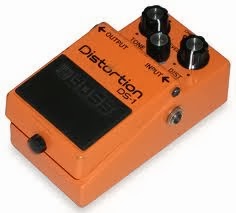
5. Boss DS-1
So I know what you're thinking. "But it does work!" To that I say, "Kinda." Yes, the pedal technically functions as designed. It does cause your guitar signal to distort. However, in it's stock form, it doesn't create a musical effect. The word, "fizzy" comes to mind when playing through this box. There is a lot of support for this pedal, but, in my experience, the only thing that this pedal does is make me sad.
4. Behringer NR-300 Noise Reducer
Behringer is known for making high quality musical products. Cheap. Cheap is what I meant to put there. Behringer is everyone's favorite Chinese importers. They have made knock-offs of other people's things and undercut said people. I've owned several pieces of gear from then from time to time. I've kicked all of it out of my set-up. The NR-300 Noise Reducer not only does a poor job at its primary function, but it ADDS NOISE. It does the opposite of noise reduction.
3. Joyo JF-12 Ultimate Fuzz
I wanted to like this pedal so bad. I thought it was a great combination of fuzz and octave. Fuzz is a very subjective effect. Its obviously an "over-the-top" type of effect. Octave is not very subtle either. I've played a few fuzzes. It seems like there are hundred of boutique type fuzz boxes. This is probably because a fuzz is a simple circuit. Just because it comes in a boutique box with cool graphics, it doesn't mean that they sound great. Just like not all obscure fuzz pedals make great sound, not all prolific. mass-produced units are sure bets either. The Joyo fails to impress on either side of the coin. The fuzz is mediocre at best, and the octave isn't controllable at all and too often covered up. It doesn't do either one particularly well and together they are just noise. Too bad really, Its a great idea.
2. Ernie Ball Volume Pedals
The original volume pedal is an amazing pedal. It has the best feel of any volume pedal that I've used. The Jr editions just aren't the same. I have a big foot, so I like a big pedal. So I picked up one of these and I really dig it, but the ugly truth about this pedal is that they are noisy. The design of these pedals are super-simple. They use string for goodness sake. The pots always go bad. This is a know problem and you can fix it by replacing the entire guts of the pedal. Oh yeah, its expensive too (about $20 a pop). That's what the parts cost. Not handy with a soldering iron? Might as well start looking for a new pedal.
1. Digitech Whammy
So I have a strong dislike for all things digitech. I've used a range of their products and I've been disappointed by all of them. They promise big and under-deliver. The Whammy is a fun effect, no doubt, but the tracking on the whammy is rough to say the least. Its not so much a pitch shifter but an effect of its own type. But as a pitch shifter with real time manipulation, its a fail. Fidelity is a grey area with any effect this type. Something that changes a part of your signal as integral as pitch is going to alter your tone. However, when the effect is off it still "sucks tone". As one of the only effect of this type, it hard to replace this pedal when its need, but for about the same money you can get a Boss pitchshifter and expression pedal. In my onion that is money well spent.
So I know what you're thinking. "But it does work!" To that I say, "Kinda." Yes, the pedal technically functions as designed. It does cause your guitar signal to distort. However, in it's stock form, it doesn't create a musical effect. The word, "fizzy" comes to mind when playing through this box. There is a lot of support for this pedal, but, in my experience, the only thing that this pedal does is make me sad.
4. Behringer NR-300 Noise Reducer
Behringer is known for making high quality musical products. Cheap. Cheap is what I meant to put there. Behringer is everyone's favorite Chinese importers. They have made knock-offs of other people's things and undercut said people. I've owned several pieces of gear from then from time to time. I've kicked all of it out of my set-up. The NR-300 Noise Reducer not only does a poor job at its primary function, but it ADDS NOISE. It does the opposite of noise reduction.
3. Joyo JF-12 Ultimate Fuzz
I wanted to like this pedal so bad. I thought it was a great combination of fuzz and octave. Fuzz is a very subjective effect. Its obviously an "over-the-top" type of effect. Octave is not very subtle either. I've played a few fuzzes. It seems like there are hundred of boutique type fuzz boxes. This is probably because a fuzz is a simple circuit. Just because it comes in a boutique box with cool graphics, it doesn't mean that they sound great. Just like not all obscure fuzz pedals make great sound, not all prolific. mass-produced units are sure bets either. The Joyo fails to impress on either side of the coin. The fuzz is mediocre at best, and the octave isn't controllable at all and too often covered up. It doesn't do either one particularly well and together they are just noise. Too bad really, Its a great idea.
2. Ernie Ball Volume Pedals
The original volume pedal is an amazing pedal. It has the best feel of any volume pedal that I've used. The Jr editions just aren't the same. I have a big foot, so I like a big pedal. So I picked up one of these and I really dig it, but the ugly truth about this pedal is that they are noisy. The design of these pedals are super-simple. They use string for goodness sake. The pots always go bad. This is a know problem and you can fix it by replacing the entire guts of the pedal. Oh yeah, its expensive too (about $20 a pop). That's what the parts cost. Not handy with a soldering iron? Might as well start looking for a new pedal.
1. Digitech Whammy
So I have a strong dislike for all things digitech. I've used a range of their products and I've been disappointed by all of them. They promise big and under-deliver. The Whammy is a fun effect, no doubt, but the tracking on the whammy is rough to say the least. Its not so much a pitch shifter but an effect of its own type. But as a pitch shifter with real time manipulation, its a fail. Fidelity is a grey area with any effect this type. Something that changes a part of your signal as integral as pitch is going to alter your tone. However, when the effect is off it still "sucks tone". As one of the only effect of this type, it hard to replace this pedal when its need, but for about the same money you can get a Boss pitchshifter and expression pedal. In my onion that is money well spent.
Labels:
Behringer,
Boss,
Digitec,
Distortion,
effect pedals,
Ernie Ball,
Fuzz,
Joyo,
Noise reducer
Subscribe to:
Posts (Atom)


.jpg)