Showing posts with label Electric Guitar. Show all posts

Wednesday, January 18, 2017

Ugly Guitar Truth: Gibson S-Series


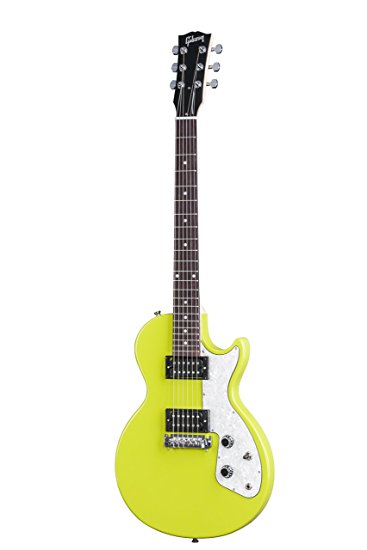
My relationship with Gibson guitars has always been one of admiration from afar. Back in old days, I would look of catalogs with pictures of pretty arch top electric guitars and just pine away. The prices of the Gibson guitars led me to believe that they were something beyond what I've experienced. As grew as a player, I've since played many Gibson guitars and found them to, be for the most part... a guitar. I even own a Les Paul and a 335. But that name on the headstock has always carried a weight to it, and I attributed that weight mostly to the high cost of admission into the 'club'. I was able to buy my first Fender for $300, but a Gibson (a proper Gibson) would be $1000+. But that looks to change with addition of Gibson's new S-Series guitar. Let's see what we know about them..

There are 5 models.


There is the M2: a flat top dual humbucker look-a-like to the Epiphone Les Paul Special II, The Firebird Zero: which looks to be a firebird's little brother, The SG: an SG, LP Special: very similar to the special but a little curvier, and the LP Studio: This one hasn't changed much, haven't the Les Paul Studios always started around $799? Anyways, They are all stripped down to just one volume and one tone knob. They have wrap around tail pieces, that is except the studio, which has a proper stop tail bridge. They look nice, and you can see the attention to detail in the released photos.


Are They proper Gibson Guitars?


Well, that's actually a tough question. take a look at the head stock and say, 'Yes, you idiot! It's right there!" and to that I'd reply, "Geez, name calling is really unnecessary." But back to the subject, those who likes their Gibsons know what feature are traditionally uses. This is mahogany with a maple cap for the body, and a mahogany neck and rosewood fretboard. However, Gibson went a little off-brand with some models giving them poplar bodies (except for the SG, it's still mahogany) and maple neck. It's clear that they were interested in keeping costs down. And to be honest, these aren't going to really appeal to the Gibson faithful anyways. Those who are looking at these are going to be first time Gibson buyers, maybe upgrading from their Epiphones.


Conclusion


I like the new line. Can't wait till I can get my hands on one and see how it feels. The poplar bodies and maple necks don't really bother me (I'm really a Fender guy so...). All these guitar are made in the USA and have a nitro finish, so it's a quality instrument. The Special reminds me a lot of the PRS Mira for some reason. This kind of blew my mind when I heard that Gibson was going to offer guitar starting at $399. We will see in the near future how these do.


Support the blog by shopping on Amazon by using my link!


There should be an ad below:


Wednesday, September 9, 2015

Electro Harmonix Key9 Update

It has finally happened. Was now have teaser trailers for effect pedals. Just like when a major motion picture is upon us, we have gotten a glimpse of what the KEY9 pedal from Electro Harmonix can do. But is this the case of the "unwanted sequel"? I'm rather impressed by the authenticity of the voice this little box can achieve. Having said that, There are some let downs.


 So besides sounding amazing on "Somebody I Used To Know", this unit has a solid list of sounds that it really hits the mark. But if I'm being honest, the Rhoads sound was a little disappointing, but that be a strong case of "I already had a sound in my head and it doesn't live up to that exact specification even if that expectation might not be actually possible". That Rhoads that I mention is heavily influenced by the band that led me to fall in love with sound in the first place, Mutemath. If you don't know them, do yourself a favor and check out what they have to offer. If you are a fan of spacey-electro-rock that dips into a little bit of everything else, then they might be your thing. The band employs amount of Rhoads and that sound has haunted me ever since.

 Something That I like/don't like is the organ. Does it sound like an organ? Sure. But, do you think that the fans of this series of pedals wont already have a B/C9? Probably not. Even so, this pedal doesn't change on the fly very well. If you have one voice dialed in thing you have to wait for a break to flip you controls to another sound. Those wanting Organ and piano will have multiple pedals, so the organ setting is basically taking up space that we could have had another set of keys...

Should you get this pedal? Sure, it does some great thing that might come in handy for you. Do you often wish to make your guitar sound like other things? Then this pedal might be up you ally. If you like the B9 or C9, then this pedal might interest you as well. Want to turn your insane guitar solos into piano solos? Pump the brakes, make sure you get the sounds you want before picking this pedal up. The tracking sounds good, but there is a lot going on under the hood here. You might have to adjust your playing style to get the best results, but there is a lot of potential here.

Friday, July 24, 2015

The Ugly Truth About The Ibanez RGKP6 Kaoss Electric Guitar

If you were alive and going to small shows ten years ago, you might have noticed that once in a while there would be a band with a strange little device that made even stranger sounds. Most people would just shrug and thing that was odd. A gear-nut, such as my self, would then go online and find out what made that sound. The device is a Kaoss pad. It is made by Korg and get gained a lot of traction in Screamo/Metal scene (as well as others). Now they can be heard in much of todays pop music and EDM. This device has tons of filters and sounds built in and can be manipulated with a track pad. This makes it extremely intuitive, with as many variants as there are swipes of the finger. In the right hands, they can become a very expressive tool. It was only time that someone stuck one of these things on to a guitar. Thanks Oba... I mean, Ibanez.


The Guitar Makes Me Sad


These guitars are in the RG series, which means they are the second to last rung of the Ibanez ladder. They aren't anything to look at. They have one single coil sized humbucker in the bridge position. As far as traditional controls, it have a single volume knob. If this was all it has, I'd call it a California style set up, but it has a build it headphone amp. That's neat, but the controls are in a very awkward spot (at the back of the body) and includes some fizzy distortion built in. The body of the guitar is nothing to look at. It's listed as "Mahogany" but I have my doubts. The finish look like a thin coat of paint on top of bare wood. I like minimal aesthetics as much as the next guy, but this just looks cheap. Maybe some cost cutting due to fact that they are plugging a $150 effect into the body of the guitar.


The Whole Thing Says Gimmick


Don't get me wrong, I love innovation and weird sounds, but this is a little suspect. I don't know if this is an attempt to sell guitar to synth guys or sell synths to guitar guys. In reality most people who seriously want a Kaoss pad have the full sized Kaoss III. Guitar player have an abundance of choices when it comes to making weird sounds that don't involve buying a completely new guitar (that looks and probably feels like a cheap starter guitar). The Kaoss mini is a very interesting piece of gear on its own. It has a huge library of sounds, drum machine, built-in microphone, and real-time touch pad control. The question we have to ask out selves is, "Does a neat device warrant the purchase of a sub-par guitar?


I Kinda Want One


I'm not going to lie. At first thought I dismissed this thing faster than Fez after he has already said "good day.". But then I saw something. A video, that I almost dismissed just like the guitar. It was Rob Champman of You Tube fame, and they were review a Ibanez guitar. This is not something I'd normal watch. I'm not interested in Ibanez guitars. Not that they're all bed, but they aren't my cup of tea. The video description guaranteed that I'd want one if I watched the video till the end. Sure enough, I enjoy the video so much that I too want one. It seems more like an expensive toy than anything else. Something that guitarist break out when friends are over and they want to muck about. Think about when the last time a piece of gear made you laugh. That why this guitar exists.


Sunday, April 19, 2015

5 Ugly Truths About Relic'ing Your Guitar


My relic'd SG


Lately I've been wanting a new guitar. I have a pitifully small budget, but I wanted something different. I trolled around for a pre-loved instrument on craigslist, but nothing quite hit the nail on the head. Mostly because nobody wanted to handover a guitar free of charge. I was reminded that I had some gear loaned out to someone that wanted to learn (and had lost all interest.) The gears where set in motion, and once again I was in possession of my Epiphone SG 310 (or something like that. I had picked it up. more or less, as a souvenir while traveling with my wife back when I had some disposable income. I never really fit in with my other guitar (all Telecasters) so it go sidelined a lot. Sitting down with one of my good friends and fellow gear-nut, we discussed relic'ing guitars. He has a Mexican Strat that he has reclic'd. As he described the process, I started to visualize going through the steps. It reminded me of when I went about refinishing my Telecaster back when I only had one. I then knew what I had to do. I was going to beat my SG until it and I had a mutual respect for one another. There are some things that I learned along the way that were somewhat surprising.


Photo by musiczoo.com


1. Your Guitar Will Never Be The Same

Let's start with the obvious. You are going to change your guitar in a way that will be very difficult to repair. In some cases, repairing a relic job would mean replacing so many parts that it would more new pieces than original. So you strip your guitar down to its bare parts and get ready to do the deed. When I began to distress my SG, I had no idea what it was going to look like. I stripped a Telecaster and repainted it. Over the years, the paint job I did wore in some spots. I wanted to replicate that effect on my SG. What I ended up with was something complete different. Many of the edges have "wear" marks and dings, but it was very difficult to cause that effect. Many of the bevels that are part of the SG shape have been rounded off in the "wearing" of the paint job. Even if I repainted the guitar it would still have a "distressed" shape. So think about that before you break out your "murder tools"

2. You Will Regret Almost Everything

I worked at a passionate rate. Every time I nicked, cut and ding my guitar I grew bolder. I wanted more of that effect. I wanted to go further. If one looked good then ten would be great. Only, as I work a noticed that this ding looked like that ding and those nicks look like someone did it on purpose (duh). I started thinking that I had made a huge mistake that I can't take back. Those marks don't look real. Why would there be dings like that over there! It was all falling apart just as fast as it had come together. So I put it down, went back inside, and had a good cry (a figurative cry). I came back with the mentality that it was the journey that matter, not so much the end result. I let my children bead on the body with a file. I stood on it. I laid it flat on a concrete floor and kicked it around. To Hell with the nitpicky. This is supposed to be fun!

3. It Will Always Look "Manufactured"

Indeed, the marks on my guitar may not fool the "expert" but like I explained above, it is something that I enjoyed. So lets talk about your guitar. No matter how well you think you did, it still going to look manufactured to the one person that matters, You. No matter how well you recreate those marks of instruments that have seen decades of heavy use you will know that your were caused by the tools in your garage. Each time you pick up your guitar, no matter how great you think it looks, you are living a lie. It may be an innocent little fib. Your instrument didn't really earn (or deserve) those marks of abuse. Many people will not even question how those got there, but you know that you did it. there is almost an aspect of exhibitionism. You know a dirty little secrete about your guitar and you parade that secrete in front of everyone just to see if anyone will call you on it.

4. You Won't Want To Stop

It is almost addictive when you wear through your finish and you see the wood underneath. You want more. You want more visible wood (that could be taken wrong). You want more battle scars. You rack you brain to think of where the wear should go. You think about wear the pick would scratch or wear the head would bump into something, or how missing the input jack might put a ding in the finish. You could add cigarette burns (man, visible wood and cigarette burn, this might put me on some sort of watch list) or yellow your finish. There is no limit. I guess you could keep going until your instrument is no longer playable. You could do some real damage if your not careful, but in all seriousness...

5. You Need To Stop

Why do we do this to our guitars. There is really no other group of musician that do the thing we do to there instruments. You don't see drummers spend time and energy into making their instrument look abused (it just happens naturally). Pianist take care in preserving their instruments, much like nearly every other musician. Symphonies take pride in the pristine way their instrument are cared for. Marching bands make their instrument shine before every performance. But a faction of guitarist think that they should degrade their instrument to the point (and past said point) of realism. There are guitar that make my heart sink when I see them. I know that someone has beaten it to the point that it looks like it was recovered from the wreckage of the Titanic. So please, if you are going to add "wear" to your guitar, know how far is too far.

Thursday, April 16, 2015

The Ugly Truth About The Electro Harmonix Nano Holy Grail

The Holy Grail is another pedal by Electro Harmonix that takes one of their classic pedals and puts it is a smaller box. It retails all of the original features of the old Holy Grail. It has Three settings: spring, hall, and flerb. The last one being the addition of flang to the reverb trails. The one knob is a simple interface like the one on an amp with reverb built in. It is simple and straight forward. The pedal in EHX's standard aluminum box with a simple decal. The pedal is true bypass with a solid click when thrown. All in all, this is a pretty pleasing pedal to look at.

The Sounds.

I've played many amps with analog reverb units. Fender, Vox, and even some boutique jobs. I am not exactly the biggest fan of reverb. I will often run my amps reverb pegged at zero. I get my "big" sounds from adding delay, but I've played enough to know what a decent sounding reverb sounds like. I can also tell you that a good spring unit is a pretty sweet thing to have available to you. The spring setting on this pedal is very usable. I could see having this on my board if I needed to fatten up a section of a song. The Hall setting is also a usable sound that creates a different "space". The Flerb is interesting. I think that there are applications for this effect, but as I am not huge user of this effect, I can think of any off the top of my head. The Holy Grail has been around for a long time, and might have even pioneered the use of modulation on reverb. Many other makers have copied this in there reverbs, so there is something to be said for that.

The Ugly Truth

This pedal is rather iconic. If you forced a guitar player to list reverb pedals, this would be one of the ones that he/she might mention. Its popularity is not contested, but that doesn't mean that it is the best choice. There are lots of solid options for under $100. The VHT Melo-Verb is a solid choice and comes with a separate tremolo channel. Not to mention, that the VHT has Dwell, Tone, and Mix to control the reverb sound. Digitech Probably has the most solid option for verb under $100. Then there is the standard Boss RV-5 Digital Reverb. It is more expencive than the EHX but offers many more sounds.

Conclusion

The pedal makes some really nice sounds. It is synonyms with reverb, but the price tag on this unit might be its down fall. Although it has nice features and interesting settings, it doesn't offer a great deal more than some other pedals that are close enough in price to consider. There are even options that cost less and do more. This pedal has some unique sounds that might make it special enough to warrant the purchase, but if all you are looking for is a solid reverb pedal, then make sure to check all your options before deciding.

Monday, April 6, 2015

The Ugly Truth About The Electro Harmonix Nano Clone

If you were like me, I've heard chorus in a ton of classic songs, but I had no idea what the sound was much less called. Those that use this effect will add it to make a subtle effect, others will add chorus to make a spacey, trippy type effect. I fall into the first category. I don't typically play big swells and soundscape type stuff, but it is something that mess with in a bedroom type setting. Delay, Chorus, and Vibe are some of my favorite thing to experiment with. So when I sat down with the Nano Clone I had some ideas of what it should sound like. What I ended up with was a little surprising.

One Knob Does It All

The first thing that you notice about this pedal is that it has a single knob. So if you want to control the depth, you are out of luck. However, the Nano Clone is a direct descendant of the Small Stone, which is legendary in it's own right. This translates into familiar, usable tones. This pedal is a great option for anyone getting into chorus and wants something simple and usable. When I started playing with this pedal, I felt like I needed more knobs to get anything desirable. Despite first impressions, There are many settings that are pleasing. However, the experienced player looking for particular tones might be disappointed with the lack of control.

There Is a Limit

Given my choice of playing, it is not a surprise that my favorite settings are on the lower end of the pedals settings. Everything that I could see using would be set before Noon. Up to that point, everything is pretty chill. When the knob get much past 12, the pedal develops a metallic sound that is somewhat unmusical. These setting might compliment certain styles of music, but they are diffidently outside my comfort zone.

The Result

In all honesty, this is a reboxing of a classic pedal. There has been changes to bring the massive Small Stone into today's compact pedal market. The original also had a strange power supply. Many of the quarks of the original have been brought into today's standards. EHX's standard Aluminum case, true bypass, and decals are present. What else is appealing is that it is less than $50 USD. So it might be the right solution for someone looking to get into chorus and doesn't want to invest a great deal of money. This pedal is not the best chorus I've ever played through, but it definitely brings a lot of good things considering the price.

Tuesday, February 24, 2015

5 Accessories That Every Guitarist Should Own


When you walk into a music store and look around, you are confronted with a litany of choices. Obviously there are the instruments, there are probably enough to make your head spin, but lets say you have your instrument (guitar obviously). So what now? If you have an electric then you are going to need things to accompany it like a amp and chord, but lets include the acoustic guys in on this. What do you need with your guitar whether it is electric, acoustic or both. Lets see:

1. Clip-on Tuner

Oh course you need something to keep yourself in tune, but there are lots of options. There are the stand-alone units that fit nicely into the pocket of your guitar case or gig-bag. You may also see the pedal tuners that are very popular with those that play on stage. Then there are the ones that clip on the head stock of your guitar. All of these options work, and I've used them all. Some work really well. Most of the stand-alone units are really good. Some of these you can even plug directly into, but all use some type of internal mic. That can make for a awkward time at a jam session or rehearsal. They don't do well with a lot of excess noise, and you have to balance it on your knee or prop it up somewhere close. The pedal tuners are fantastic. They work well in a lot of situations. They are accurate, and reliable. However if you don't have pickups then you are out of luck, also they require power from a 9-volt or power supply. The nail in this coffin is their cost. You're looking at a hundred dollars for the industry standard Boss TU-3 tuners. Other pedals are out there and work, but not all tuners are the same. Fender put out a pedal tuner that was practically worthless. That leaves us with the clip-on style of tuners. These are my favorite for several reasons. They don't use mics, they actually feel the vibrations of the guitar. This works rather well. I can tune in noisy situations without much difficulty. They live on the head of my guitars so it make keeping up with these things rather easy and there isn't the awkward holding situation as with the stand-alone units. They are battery powered, but usually the battery is included and last for a long time. I've been using one for more than a year without needing a change. The best part is that they are cheap. You can usually find one of these types for less the either of the other two. That's why they are my choice.

Guitar Stand

This may not seem like a necessity, but there are many times when I wished I had an extra stand or two so that all my guitars had a nice place to sit. When starting out it is important to have a good, stable place that will keep your guitar safe. I teach student the guitar and they often come in with banged up instruments. This can be easily remedied with some forethought. There are many brands and designs of stands. Most cost less than twenty dollars. There is no need to buy the most expensive stands. There are some that are crafted out of wood, or some that hold several guitars, these my be the right choice for your particular needs, but the most basic stand with work for most guitars. These are excellent for that beginner, because they keep the guitar in sight. Its much easier to grab the guitar out of a stand than dragging it out of a case.

Capo

Many new guitarist down even know that there is such a thing. It is one of the most frequent question that I get, "What is a 'cap'o?" Its a little hard to explain, but a capo can make your playing much easier. Recently I was play at a rehearsal and realized that didn't have my capo. Come to find out we were playing in some odd keys and needed to modulate. To make things worse my music was written for the use of a capo. Being the guitarist that I am, I re-tuned my guitar and transposed the music. This meant that I came in late to any song that I had to re-tune for. I jumped from a whole step down to a half step up. Not a lot of fun. Life could have been a little easier if I had just remembered that little accessory. Again, these are usually no more than twenty dollars. You can find many for much less. If you play with other musicians or play along with a radio, these things can really be useful.

Case/Protection

So anyone who plays the guitar is going to need some protection. Moving a guitar is probably the most likely time that your guitar will be damaged. I've transported guitars with cases, but its always nerve-racking. Its not just cosmetic. The neck joint of your guitar is sensitive to outside forces. Undue pressure can cause the neck to bend. Guitars are robust. A quality instrument will be made to last for years, but a case will help keep your instrument in like-new condition much longer. There are several options. The two main options are a hard-case and a gig bag. A hard case is going to offer more protection from outside forces. A gig bag is a good option to carry a guitar from here to there. Most gig bags have straps to carry like a back pack. That's helpful for when you have a lot of equipment to carry. Being able to have two available hand while carrying a guitar mean less trip from your vehicle to the venue. A soft case is another option. It's more cost effective than a standard hard-case and almost offers the same level of protection. Flight-cases are just what they sound like, cases that are intended to be put in storage compartments. They offer the most protection for your instruments and they are the standard for professionals, but they can be very expensive. There is little instinctive for the regular musician to have one of these until they have need for that level of protection.

Tablet

This is the only option that is not offered at a music store. A Tablet can be extremely useful for a musician. It is hard recommend this to all my students, but the more serious student can benefit from this piece of tech. There are many options when looking at tablets. The good part is that, for the most part, the application that are used most for music don't require outstanding performance. Music is easily organised and stored, audio is made very available, looking up chords is made very easy, even searching for lessons is made possible. Maybe the best part of using a tablet is that you can play and studio music completely paperless.

Obviously these things are not necessary to play the guitar. After all, people have been playing guitar for years before any of these thing existed. These are the things that I use in my day-to-day that make it easier. I've been playing before some of these things were even around, so I enjoy these innovations. Many of these things are common sense, and you can decide for yourself what you need.


Wednesday, March 26, 2014

4 Ugly Truths about The Guitar You Are Playing

It is easy to think that the guitar that you play on a regular basis is special. You probably take great pride in it's condition and savor it's tone as you play. Perhaps you invested a great deal of money in your instrument so that you could have a recognizable name on the headstock or a certain feature. Well that money you so willingly forked over bought a guitar with some frequently overlooked truths.


1) Its overpriced

I assume that anyone looking at a gear blog is probable an avid musician. Being so mean you probably don't have an entry level instrument. This leads me to believe that you've paid to much for it. There is several things that go into the price of an instrument, but the most important thing to a manufacturer is, "How much are you willing to pay for said instrument.". You may notice that many brands have several "lines" and even some related brands that manufacture copies of more expensive guitar. These guitars look very similar to the more expensive ones, but don't have a particular brand or features that the others do. Fender has their high end "American" line, then their "Standard" line that is manufactured in various place other than the US, and finally they have some models that made in China. They also have a sub-brand "Squire" that makes practically the same instrument in China for much less then similar models made under the Fender brand. I'm not say that Squires are the same guitars as the American line of Fenders, but if someone where to know how to carefully select and set up an instrument then a Squire could perform just as well as a much more expensive guitar. There is just something intangible about owning a genuine article. But remember...

2)Its mass produced

No matter how much your guitar is "the one" remember that a limited run still mean around 500 units. There might be little differences with fit and finish, but the features are the same. There is a lot of talk about a guitars tone being heavily influenced by the type of wood it is made from. There is truth to that. Density influences mass and has a lot to do with reverberation. What does all that mean? Meh... But what has the most influence over the sound your guitars sound? Pick ups. Whats that? You play an (straight) acoustic? Have you read this blog before? Lets look at you signal. You have you guitar (wood and all) and its steel strings that produce notes, these travel through your pick ups and other components. That is just in you guitar! It travels through you chord (hope you got a good one) and trough whatever else in your path; tuner, effects, preamps, and whatever else. And you're worried about your choice of mahogany or maple? Once you decide, keep in mind...

3) There are many like it

Well duh, the woods used, the pick ups, the materials in the hardware, fretboard, inlays, and other part will be the same as many other guitars. In many ways this is a good thing. If your guitar is ever in need of repair, then you have plenty of options. Other than fitting your guitar with serious mods, your guitar is extremely replaceable. Everything from the neck and the body to the string trees, Your guitar is just a series of parts put together by someone that is probably in another country. (By the way, if your guitar wasn't made in another country, then most likely some of the parts were.) No matter where you guitar was made or how many were made with the exact same options by the same people...

4) It is the only one exactly like it

This is what every guitar thinks about their guitar, despite the number of guitars that are just like it. A guitars journey through its life changes it. Take my first Telecaster. It have been through a lot. I've covered it with stickers, repainted, and recovered it with stickers. Its also been thrown against a wall and nearly broke in half. It has had the pick ups, and some other hardware replaced. The dents and dings are more than character, they actually help me feel where certain frets are. The neck has seen more nasty sweat than a cheap motel mattress (thankfully that is the only body fluid its seen. I hope...). Even though I can replace every singe part on the guitar and even buy that exact model again. It would be my tele. It couldn't be my tele. I've owned several Telecasters, and despite being extreamly similar, There is only one.

Tuesday, March 25, 2014

5 Ugly Truths About Building Your Own Effects

I started a few years back modding pedals. It was exciting to crack open pedals and fiddle with the inside bits. I knew very little about what I was doing, but I knew what I had to do. I was handy with a soldering iron and was cheap, so of course I wanted to try to get the boutique sound everyone was on about on a budget. Going from there, I found that for the price of a used pedal and a mod-kit (or an order from a parts vendor) You can buy a kit with everything you need to build an entirely new pedal. There a few things that you have be mindful of.

1) There is A Steep Learning Curve

Can you tell a resister from a Capacitor? Do you own a soldering iron and necessary accessories to complete projects? Do you have a large amount of free time to use on projects of varying difficulty and usefulness? Do you have a some extra cash to blow on something that may or may not work? Well then, you can embark in to the wonderful world of pedal building. That is, right after you learn how to read schematic and gain a basic understanding how/why pedals work. Building pedals can be a lot of fun. It might save you a bit of money after you get the hang of it. Before you get the hang of it, you might have to sink a bit of money, time, and frustration into gaining that grasp.

2) It won't work

Typically, your first time out won't work. If it does, then you are either lucky or the most talented person I've ever heard of. Depending on the project, there are tons of things that can go airy. So if you are skilled enough to make every solder joint solid, there is still a chance that anyone of the components you've installed are improperly placed. Do you understand exactly how a 3PDT switch works, or how to tell which leg of an LED is negative? Even if you double and triple check your schematics and diagrams as your build, chances are there will be a bug or two that don't work. Which leads us to...

3) Troubleshooting

Typically, this is the step that is the hardest. You know the inner workings of your components, your solder joins are flawless, and you can read technical schematics in Chinese. Now is the time to put all that hard work into action. The pedal is built and everything is "correct" but it is still not functioning properly. This is where a multi-meter comes in handing. You may want to brush up on how to use said device to best serve your needs. The continuity function comes in very handy. I've spent many an hour trying to figure out why something wasn't working only to understand that it was beyond me. So I ended up:

4) Getting Help

There is a wealth of knowledge out there (here) on the interweb. I wouldn't be typing now if not for the vast amount of resources that I've found on this subject and many others that can be found on websites and forums. Sometimes it takes a big man (or lady) to admit that they need help. Other times it take someone who has spend countless hours burning his fingers only to wind up with an extremely frustrating paperweight. You'll find that many people are looking for the same answers that you are. If you are having a particular problem, then you can contact some builders personally. There are fantastic communities of builders and prospect builders willing to help us. Sometimes even with the guided help of experts, we still find a way to fail. Which leads us to...

5) Acceptance

Yes, sometimes the best thing to do is to give up. Maybe today is not your day. Maybe you need to walk away and try again later. Perhaps you were a little too ambitious and need to try a simpler project. I have a couple projects that are just that, projects. I started them with a good understanding of what I need to do and still wind up with something that is unsuitable for use. That's Ok. We learn something every time we start a new project. Its not just about to product at the end of the build but what we learn along the way.

Sunday, October 27, 2013

Boss BD-2 Blues Drive Mod

So I've been talking a lot about Boss pedal mods lately... there is a reason. Its because I've done a lot of them recently. I really enjoy messing around inside those little boxes and seeing what I can get out of them. It really is a lot of.... fun? Anyhow, Moute Allum has gotten me in a lot of trouble lately. He is putting out a lot of great stuff that I just have to have. I've posted a lot about OD pedals, like here and here, so you know I like a good dirt box. So when I finally got around to actually buy a Boss Blues Driver it was only a matter of deciding what I was going to do to it. I went with Moute again. I chose the H20 mod because it seems to offer what I would like in my little blue box. I took my time with the mod. I thought that this was going to really wow me like the GE-7 I had done before this one. Here is where the pattern breaks. I was able to side-by-side test this pedal with an unmodded twin and the differences were so slight that at times I was unable to identify which was the modded pedal. Now this was far from scientific. I ran both pedal in series so they had to pass through each others buffers, but as far as the great difference/improvements I have had in the past, there was no one thing I could point to and say was much better. Maybe some further testing is in order...

Here is what Mounte has to say:

Boss BD-H20 DIY Pedal Mod Kits - When searching for a name to call this mod I chose H2O because it's the symbol for water. Water can be clear or transparent and it can be light or heavy. This mod transforms the BD-2 into an almost completely transparent pedal letting the true character of your guitar, pickups and amp shine through. Not only is it almost completely transparent, it's also extremely Dynamic. As you turn the Gain knob up on the pedal you can control the amount of gain using the volume control on your guitar. The BD-H2O will react exactly like a tube driven amp. The shriek highs and splaty gain of the stock BD-2 are completely removed. Compared to our regular BD-2 mod this mod has a much flatter EQ.
My regular BD-2 Mod has a slight mid boost and a little less gain than the BD-H2O Mod. Both mods remove the shriek highs and splaty gain of the stock BD-2. The splaty gain of the stock BD-2 is a common gripe I hear about others that offer mods for this pedal. We have removed this issue with this pedal. We also include a Super Bright 3mm White Clear LED. We also modify a resistor to increase the brightness of the LED X3. You can use the LED as a flashlight on stage after the mod, it is that bright, almost blinding. I will boldly state that this is undoubtedly the best mod on the planet for a BD-2. And the really cool part is we won't break the bank with the price of our mods. We offer top quality parts and expert craftsmanship at very reasonable prices.

Monday, October 14, 2013

Boss DS-1 Distortion Guitar Effect Pedal Mod

       So there is a lot of mods out there and I would be lying if I told you that I tried them all but I have done a few. Some turned out to be big improvements and others were even bigger disappointments. So how do you know which mod is right for you. Well, I can't really tell you. Maybe you want something completely different out of your pedal, I can't tell you that a mod makes a pedal better or worse. I can tell you which I've done and what I've liked.

       A few months ago I found my self owning a Boss DS-1. Picked it up in a gear trade. I've never been a fan of the pedal. It puts dirt on your signal like a box with the word "distortion" should, but there are complaints with the way it does this. I'm not technically gifted. I'm not going to tell you that it compressed my tone, or sucked it dry, or had some kind of mid-hump/scoop I didn't enjoy. It did seem like the mid frequencies were scooped and that no matter how I turned the "tune" knob I couldn't find a sound that I liked. I've tried the pedal in (bedroom)studio and life setting. I did not like what it did for me. So I then turned to mods to make it do something I did like.

      Research. (Google) so looking into what I should do with this big hunk of orange took some time. I had to find something that I found appealing and seemed like I was capable of. (also the first step could not include "throw pedal away and buy -enter boutique pedal here-") I dismissed anything that said "Metal", or "Crazy", or "Super". I did find a mod that seemed to fit the "make it not sound like crap" requirement. Described  plainly as "vintage mod"

The Mod:

Boss ds-1—Vintage 
Mod Location Mod value 
D5 Led 
C3 .033uf 
R16 1k resistor 
C11 .01uf 
C1, C5 .1uf


     Simple enough. 6 pieces. It took less than half an hour. It made all the difference. The Eq was evened out and the nasty, fizzy distortion was lightened into a more mellow, overdriven amp-type sound. Side by side test proved that the mod had turned a hunk of junk (in my opinion) into something that I'd actually use. The change of the diode really changes "type" of distortion and the resistor and capacitor change the "shape" if that makes any sense. (probably not) The tone knob seems to "work" better. The Drive actually controls the amount of gain the unit produces, unlike before were it just went from a little fizz to a lot of fizz. Level kinda works the same, but the sound sounds more transparent. I even had my non-music playing wife listen and she confirmed the mod made it sound "clear-er" 

    So, if you have a DS-1 That you hate and want something that you don't hate, then do what I did and make your own vintage-y overdrive boosty thing

The Best Resource For Guitar Effects

We've all been there, flipping through catalogs of music gear and reading flowery descriptions of every piece of gear found within. I have a weak spot for a shiny new pedal, but which one is right for me? This was the exact question I had in mind when I went online to look for some more information. A quick Google search landed me on YouTube. People love to show off, so the internet is flooded with people noodling around with some of their favorite pedal. There are a ton of pitiful videos. People who have low production quality or those that keep their first take no matter what. I'm glad that we have a outlet for all these creative people and people are free to share their video featuring their passion. But when looking for a useful review or demonstration it does somewhat because like shifting through a waste bin looking for treasure.

The Treasure:

There is one mann that does a excellent job at demonstrating a pedals usefulness. His name is gearmanndude. He has hundreds of videos and does not seem to be slowing down. He has review everything from everyday Boss pedals to mods, vintage, boutique, and even some homemade pedals. Not only does he give us a through look (and listen) at pedals that we'd probably only get to read about, but he also takes a look at other gear such as amps, guitars, picks, chords and other accessories. Not only does he do us a service with all of this, but he is rather unbiased. However there is an exception when it comes to reverb. He is vehemently apposed to reverb, but he will review a reverb unit just like the rest. He responds to viewer request, I know this firsthand. On top of all this, he is insightful, well versed, and entertaining.

Sunday, October 13, 2013

The New Visual Sound VS-XO Dual Overdrive Pedal

So here it is. I have to be honest. I've been geeking out about this one. There are a couple of videos up on Visual Sounds' YouTube channel that make it sound very appealing. I have actually been a pretty big fan of Visual Sound in the past. I have had their Route 66 pedal in my set up, but I decided that the OD/Comp combination was good, but I wanted to be about to control my sounds a little more. The overdrive in that pedal sounded great and the compressor did a good job of being useful without being obvious. There are some speculations that this is an 808 and Open Road OD combo. I actually think it might be mentioned in one of the videos, but another view is that the way the tone is shaped suggest that the non-TS side is base on the Drivetrain pedal from the same maker. What the videos do well is show the versatility of this pedal. In addition to the basic three knob configuration that most of us are familiar with, the pedal has a bass knob on the left-side channel and two three-way, sliding selectors for the clipping section and bass frequencies. For a sound-tweaker such as myself, these fun little knobbies have gotten me foaming at the mouth.

Can't wait for this pedal to debut. Having said that, if anyone at Visual Sound would like to send me one of these pedals so that I can review it for them, then by all means do so. Anyone able to get their hands on one of these before the rest of us regular Joes? Let us know what you think. Big thanks to http://www.tdpri.com for always having useful info and insightful members.

Saturday, June 22, 2013

What Order Do Effect Pedals Go In?

I've asked myself this question so many times, and over the years I'm become inclined to set up a pedal board in certain ways to create particular sounds. There are some general rules to follow or completely ignore, whatever your case may be.

1. Volume.

Volume pedals are very handy tool in a guitarist's bag. It allows you to adjust your volume on the fly, mute your signal for tuning or guitar changes, boost you signal (provided that you running less than full volume) and create swell effects. Personally I like my volume pedals first. Why? Because it create to same effect as the volume knob on your guitar. If your volume runs into you overdrive/distortion then you can manipulate to distortion by changing your volume (ie you'll have a cleaner sound with lower volumes). If this is not the effect you desire then I suggest running the volume after the distortion. This will allow you to change the volume of your signal without changing the distortion level.

2. Wha

I know that this is not typically the wha pedal would fall, but Its where I put it. A wha will manipulate certain frequencies in your signal, mostly the lower-mids to the upper-mids. Your main concern with wha pedals is the voicing and pronunciation of the effect. I've played enough in bedrooms and stages to know that there are huge differences in how the sound is received. I've sat in a bedroom and thought that my digitech rp100 muti-effect pedal sounds great, but when I used it live it sounded like I was playing out of a tin can. ( by the way, never mess with multi-effects. just say no kids. Learn from my mistakes) What you will notice between have your wah before and after your dirt boxes is the presence of the effect. For the most part, the OD and Distortion will want to change your signal frequencies just like the knobs on your amp. The "tone" knob of your Overdrive with play with how your wah opperates. (given that it is on while your using your wha) A wha before the dirt will be less noticeable (more organic sounding). While a wha post dirt will take your whole signal for a ride. This may be what you want. I like a mellow wha, but sometimes you need to be out in front of the sound and make that effect stand out.

3. Dirt

There are many different ways to get your dirty signal, but if your using a stomp box, this is where I put it. Having your Volume and Wha before these pedal gives you more control over the entire sound. I like control. Maybe thats why I have so many choices when it comes to my Dirt Boxes. I have a lot to say about OD/Distortion but you can catch most of it if your follow that link there.

4. EQ  (and other signal processors)

Again, this isn't exactly would you should do, but this is how I like it. Remember how I said I like to control my tone? Well, this is a little part of that. I use my EQ as more of a boost. I set it up to give me a little mid-hump action and maybe a overall volume boost. Some people like to set their EQ and forget it, just let it do its thing for your tone. That's fine, but everything is trying to change your frequencies. If you run a Compressor or Noise Gate of some sort, here is where I would put them as well. Be aware that your Compressor and Volume pedal are not going to play well with each other. Basically, they are doing the exact opposite of each other. If you want comp on your signal and swells. then you have to run your volume after the comp.

5. Delay

I had a Boss DD-3 that absolutely hated be overwhelmed by a distortion. Other than that particular Combo, delay is best left near the end of the chain. I'm not a big delay user. I will use it from time to time to fatten up my sound, but for the most part I like a nice straight sound.

6. Filters

I don't mess with delay much, and I use filters less. In theory, filters behave better at the end of the chain. That way they can have their way with your sound and change it as they see fit. If you are a fan of these then have at it.


So there you have it. I encourage anyone interested in effect to play with them as much as your can. There really is no wrong way to set your rig up and I may be doing it all wrong as far as you are concerned. If you disagree with any of this then leave me a comment below. If you want to see what else I have to say about all things musical then subscribe. Let me know someone reads this mess!

Friday, June 14, 2013

5 Overdrive and Distortion Effect Pedals that I Can't Live Without

Let's pretend that the last couple years didn't happen, OK? ...OK! Here is a little bit of what I've learned: Children will change your life in every way, people won't pay me to be awesome (yet) and there are somethings that I can not live without. If you are a guitar player then chances are that you at least own some type of pedal or effect. Maybe you can't decide. The truth is, neither can I. That is why I have 5 dirt boxes that I will always have around.

5. Boss DS-1.


The Orange Box! I know what you are thinking, but don't right me off yet. I agree, this is a total noob pedal. (people still say "noob" right?) I agree. It is the obvious choice for those who have no idea what they are doing. They are cheap, $50 or so, and they are part of the most recognized line of guitar effects ever. I actually never owned one of these until I did some gear swapping and ended up get one of these thrown into a deal to "sweeten the pot". I've done some looking around and there are some pretty interesting mods out there for these. One of which is the "vintage mod" I worked on mine myself and the result was great. Sound very little like the original pedal. Much clearer. I play through this pedal just as much as the others on the list. The next one being:

4. Boss SD-1


Ok, another cheap stomp box. I don't even have a good reason to like this pedal as much as I do. Its not the best pedal on my list, and not the cheapest either. It does tie for the cheapest, but that is no reason to keep it around. What makes this pedal a keeper is that it feels the void. Not getting the grit from your rig that your looking for? This pedal steps up to offer a little different OD than the rest. Super simple knobs make it easy to tweak and the Boss compact sized doesn't hurt. There are tons of mods for this pedal too... I run one with just the C6 removed. Adds a little presents to the tone but doesn't change the overall tone much.

3. Ibanez TS-9 DX


So far Pretty Standard, Boss and Ibanez Tube Screamer. Kinda predictable. There is a reason that these pedals have been around as long as they have. They make good sounds, they are affordable, and they are available. You don't have to shell out big bucks to have a handmade box (that probably is a clone of a TS anyways) to have that great tone that you can hear in half the songs on the radio. They do still play songs with real instruments in them, right? Anyways, the DX is a great TS because of all the different sounds that your can make with addition of the mode switch. The "Turbo" setting is not all that usable with my rig, but you might disagree... I dig my Boss pedals, but Tube Screamers have a great sound that is very unique. Speaking of Boss pedals

2. Boss BD-2


Surprise! Its a Boss Pedal... My relationship with the humble Blues Driver is complicated. At first I hated it. Nothing I did seamed to get me what I wanted. I would later come back to it years later in a drunken attempt to rekindle a flame that never was. Then something magical happened. With a little help from guys at Monte Allums, my Blues Driver and shared a blissful reunion of some pretty great tone. After my pedal went under the knife, it was true love. And then disaster. The pedal died and my love was lost. It would over a year before I could replace her. Sure there were other pedals, but nothing I was committed to. Wistful affairs with dirty little boxes that always ended in regret... except

1. Velvet Umble


Handmade in Greece, its almost like you're sending a bailout to their economy. But really there aren't that expensive. $160. They are based on a circuit from the guys at Runoffgrooves. After studying the magical and mystical Dumble Amplifier, the pedal was designed to emulate the tone stack used in the actually amp. The dirt is obtained by actually overdriving the circuit. (turning up the Level and adjusting the Master) It basically acts like a preamp you can overdrive. The guys at Velvet go on to add a boost feature that make this pedal really hard to beat. Really great stuff!


Friday, April 23, 2010

Bugera V22 22W 1x12 Tube Guitar Combo Amp

This is only a teaser. I don't own this amp, but I have given it a fairly good run through and so far I'm impressed. It has two channels running through an all-tube amp. These amps are cheap and china-made, but the sounds they produce don't lie. The sounds are good, but some what limited. The 22 watt version breaks up a little too early to play much outside the bedroom. It will get volume but at the cost of your clean tone. Serious musicians would be advised to get the heavier-watt model. As for a bedroom/recording amp aimed at getting nice vintage "brown" tones, this is a solid contender. (of corse you can add pedals, mod, and tweaks and a whole world of options opens up) Its not the greatest amp I've played through, but it has some serious bang of the buck. If you are interested then I would suggest finding one and playing through it. The quality control may be and issue since they do descend from behringer. I'd like a 2x10 or 2x12 model combo, but then again I'd end up replacing the speakers in the cab any way.

The sounds are nice and the potential is there, plus it looks cools...