I've talked about Fender's current line of pedals on here before. Personally, I like the concept. It's probably the best offering from Fender effects that I've seen maybe ever.
Here's a story:
I bought a fender twin. It was brand new from the store. I loved the cleans. I was transitioning from metal player to whatever it is I am not, so at the time I thought this was a smaller (quieter) amp. I got the amp home and started messing around with all the knobs and whatnot. Hooked up the pedal and quickly realized that it didn't work. The amp switch had two or three buttons and it was completely DOA. So I take the rig back to the store and they swap the pedal out for a new one. This one had a bad switch in it. They couldn't find a pedal that actually worked. Does this have anything to do with the Fender Pelt Fuzz? No, not really, but it does give you a point of reference for my impression of Fender pedals. It didn't help that they released a line of pedals that looked more like accessories you would see on a desk of a middle-aged man that collects model cars and has a Fender Stratocaster mouse pad. Then we got direct from China mini pedals that weren't bad but they were what they were. So, I feel like you can hold my Fender pedal skepticism against me.
It's Fuzzy
Ok, duh, but let me explain. The world of Fuzz has exploded in the last few years. It has never really disappeared, but today we have more options for fuzz than ever before. I know that everyone first DIY pedal is a fuzz. They are very simple circuits to build, but recently we have seen the rise of complicated fuzz pedals. This one is no different. The granddaddy of all silicon fuzz, the Fuzzface, had only two knobs. Even the addition of two knobs was a technical marvel compared to the circuits origins. Now we have pedals like the Pelt. Not only do we have the familiar Volume, Tone, Gain knobs, but we get a Bloom knob and two switches for Mid (Contour) and Thick (Bass Boost Cut/Boost). The pedal has enough fuzz to nearly lose the guitar in the noise of the pedal. Fender also claims that the pedal responds well to rolling the volume down on your guitar. Fuzz pedals have a bad habit of cutting out or become more splatty when lowing volume is applied, but the Pelt is supposed to clean up. In my experience, the pedal doesn't clean up as much as it gets darker with lower volume. This may work relatively the same in a band situation. There may be no real way to get around how the circuit actually works.
It's Pretty
This may not be my favorite look that I've ever seen on a pedal, but it is far and away the best one that I've seen on a Fender pedal. It's not even much of a contest. These are the first pedal that I feel like they actually care anything about, so they had to give them an aesthetic that wasn't embarrassing to be seen with. The Amp jewel cover is a nice touch. I am a little worried about the magnetic battery door. It's begging to get crushed by a stray stomp, so be careful I guess. The backlit knobs are cool until you are on a dark stage and those lights are the only thing you can see and you can't tell you are changing the Tone or Gain knob. They pumped these pedals full of features, but this is basically Fender's first grown-up pedal line, so they still have refining to do.
Conclusion
I like this pedal. I haven't said a lot of great things about it, so you should know that this pedal is one of the better sounding fuzz pedals that I've seen come out lately. I'm a pretty big fan of the Big Muff style of Fuzz, but the Pelt is a robust pedal capable of being more than that one sound on that one song. Even though I really dig the Big Muff sound, do I have one on my board? No. The Pelt Fuzz is much more of a sonic tool that I could see actually using in a rig. The price is also something of importance. Lately, EHX has put out clones of the Big Muff in its many stages (Triangle, Russian, Silicon) and for the price of just two of those, you can have the Pelt. I may or may not own more than one of these pedals, and I may or may not wish I had the Pelt... just saying.
Showing posts with label Fuzz. Show all posts
Monday, October 15, 2018
Monday, January 15, 2018
NAMM 2018: Way Huge Pork and Pickle
Way Huge have unveiled the Pork and Pickle Bass Overdrive and Fuzz. For those that aren't a follower of Mr. Tripps, this looks like a combination of the Pork Loin overdrive and the Swollen Pickle fuzz. Bass player rejoice. Although maybe bass players already use Way Huge pedals in their sound, This pedal is designed with them in mind. The two blend knobs give the low-end thumpers the control over just how dirty they want to get. This pedal looks pretty spectacular.
The Details:
-Combines two great bass-friendly effects in a single housing
-The Pork Loin OD circuit provides warm, soft-clipping overdrive
-Russian-Pickle Fuzz provides thick, fatty fuzz
-Blend a sauced up clean signal with either circuit
-Control interface offers a wide range of tweakable tones
The Way Huge® Pork & Pickle™ Bass Overdrive & Fuzz™ serves up a perfectly balanced diet of gnarly tones for bass players who like to get down and dirty. The first ever bass pedal from Way Huge, this delectable dish combines the warm, soft-clipping tones of the Pork Loin Overdrive and the rich, fatty tones of the Russian Pickle Fuzz in a single package. To toggle between the two, just flip the OD/Fuzz switch.
The Volume, Tone, and Drive controls perform their standard functions, applying to whichever dirt circuit is selected. This pedal has the Pork Loin Overdrive’s distinct sauced up clean channel from the Pork Loin Overdrive—a modified classic British style preamp—but it can be used with either mode. That means that, for the first time, you can run the Russian-Pickle Fuzz signal alongside that super sweet sounding clean channel. Stir in as much of the clean signal as you need with the Clean Blend control, and then use the Clean Tone control to season it to taste. If you’re the adventurous type, internal controls allow you to concoct more complex tonal recipes.
The Pork Loin and Russian-Pickle circuits each have a level control so you can set how much overdrive or fuzz is unleashed by external Volume control. Curve and Presence controls let you further refine the tone of the Pork Loin signal.
The Details:
-Combines two great bass-friendly effects in a single housing
-The Pork Loin OD circuit provides warm, soft-clipping overdrive
-Russian-Pickle Fuzz provides thick, fatty fuzz
-Blend a sauced up clean signal with either circuit
-Control interface offers a wide range of tweakable tones
The Way Huge® Pork & Pickle™ Bass Overdrive & Fuzz™ serves up a perfectly balanced diet of gnarly tones for bass players who like to get down and dirty. The first ever bass pedal from Way Huge, this delectable dish combines the warm, soft-clipping tones of the Pork Loin Overdrive and the rich, fatty tones of the Russian Pickle Fuzz in a single package. To toggle between the two, just flip the OD/Fuzz switch.
The Volume, Tone, and Drive controls perform their standard functions, applying to whichever dirt circuit is selected. This pedal has the Pork Loin Overdrive’s distinct sauced up clean channel from the Pork Loin Overdrive—a modified classic British style preamp—but it can be used with either mode. That means that, for the first time, you can run the Russian-Pickle Fuzz signal alongside that super sweet sounding clean channel. Stir in as much of the clean signal as you need with the Clean Blend control, and then use the Clean Tone control to season it to taste. If you’re the adventurous type, internal controls allow you to concoct more complex tonal recipes.
The Pork Loin and Russian-Pickle circuits each have a level control so you can set how much overdrive or fuzz is unleashed by external Volume control. Curve and Presence controls let you further refine the tone of the Pork Loin signal.
Labels:
bass,
Big Muff Pi,
Fuzz,
Jeorge Tripps,
NAMM 2018,
Overdrive,
Pork and Pickle,
Pork Loin,
Russian,
Swollen Pickle,
Ugly Guitar Truth,
Way Huge
Thursday, November 9, 2017
Ugly Guitar Truth: TC Electron Honey Pot Fuzz
In the ever-expanding line of TC Electronics value based effect, the Honey Pot Fuzz is just one of the latest offerings. Currently available for pre-order from most major online retailers, not much is known about the fuzz. Most of the information currently know is based upon the demo TC posted directly after the announcement of their release. So what do we know about this pedal, and should we be looking forward to its release?
Don't We Already Have One Of These
Yes. The Initial release of these pedal included the Rusty Fuzz. However this was a silicon fuzz based on the Fuzz Face. For those unfamiliar with fuzzes, there are just as many fuzzes to have as there are overdrives. Does that mean that they are all different? I'll answer that question with another question. Are all overdrives different? Let's just think about how many "different" Tube Screamers there are. Sure, there may be some slight differences for one manufacturer from another, but for the most part a Tube Screamer is a Tube Screamer. But a Tube Screamer isn't a Blues Driver.
Ruby Fuzz is to Fuzz Face as Honey Pot Fuzz is to...
Big Muff. Yes, the Honey Pot seems to be a clone of the EHX Big Muff Pi. It's also been suggested that even the name may be a reference to same anatomical location as the Muff. The largest hint as to what the circuit is based upon are the label given to the knobs. Volume and Tone are pretty basic stuff, but Sustain on a fuzz usually point in one direction, Big Muff.
Which Muff Is This Muff?
This is where it get a little trickier. The Big Muff Pi has several versions to choose from when cloning. From the Triangle to the modern USA version, there are at least a handful of circuits and sounds that we could expect from this pedal. If I had to take a guess, I'd say that we might be getting a Russian variant of the pedal. This may be wishful thinking on my part, or it may be due to the fact that another pedal announced along side this one is call the Iron Curtain (far better name if this is a Russian version). The main reason I think this is that it sounds rather tame. The Russian Big Muff is one of the lower gain version of the pedal. In any case, we probably aren't looking at a clone of the modern Big Muff Pi.
Conclusion
Yes, these pedals are bulky little tanks, but given their relationship with Behringer I'd rather have these than those. Personally, I have never been a huge fan of TC's dirt pedals. The Mojo and Dark Matter were both rather underwhelming But with the new line of "inspired" pedals, TC might just have my attention. A $50 Muff clone has my attention. But if this really is a Russian Big Muff, then it could possibly take the wind of the resent EHX Green Russian release. But for the love of Pete, they should have name this one the Iron Curtain... Such a better name!
Tuesday, August 15, 2017
Ugly Guitar Truth: Cock Fight Plus Wah
Talk about burying the lead, EHX has announced their third rocker pedal in the last few weeks. The Cock Fight Plus is planned for release soon. Fans of the cocked wah sound flocked to the Cock Fight for its expressive nature and unique filter. EHX has now taken that sound added more control and feature, then put it inside of a rocker pedal. Is it all good news?

No Brainer
Fans of the original Cock Fight could add an expression pedal for real-time control of the pedal's filter. The Combination of the two pedals seemed like a given. With the release of EHX's two new expression pedals, this pedal is a perfect match. In fact, it makes one wonder which they developed first. Was the Expression pedal just a byproduct of the Cock Flight Plus' development? Either way, this pedal has a lot under the hood. You have your choice of vintage wah filter or vowel sounding format filter, in addition to a pre- or post-fuzz. Certainly not a one-trick-pony.
Return To Form... Kinda
Although most of us are glad that Electro Harmonix has done away with their "no moving part" type rocker pedals, these rockers are not just like the classics. Every rocker that EHX has produced recently has been composed from a composite material. This adds cost savings and weight reduction, but at what costs. EHX has stated more than once, that these pedals are road-worthy and just as dependable as their aluminum counter parts. But what if I have to break out my car's window? What will I use if my Wah isn't made like a brick?
Chicken Feed
Fans of the original Cock Fight might not trade their pedals for this. After all, the main attraction of the original was that it was a wah pedal that was attached to a wah. You can set-it-and-forget-it unlike a wah that is easily displaced from the 'sweet spot'. However, those that want a feature heavy wah, or those that use an expression with the Cock Fight, it is time to rejoice. For less than 12 dollars over the cost of the original, you have the Cock Fight filter, an expression, and fuzz in a single box. All that for a poultry sum.

Conclusion
I enjoyed the Cock Fight when I first tried one out. I never bought one because I wouldn't use a cocked wah sound and I had a wah that did its duties well. I did think would have made more sense to put the whole thing in a rocker but maybe I just missed the point. We now have what is possibly the best of both worlds. Two filters, a fuzz, and a rocker come together to make Dunlop cry like a baby...
Support the blog by shopping on Amazon by using my link!
There should be an ad below:

No Brainer
Fans of the original Cock Fight could add an expression pedal for real-time control of the pedal's filter. The Combination of the two pedals seemed like a given. With the release of EHX's two new expression pedals, this pedal is a perfect match. In fact, it makes one wonder which they developed first. Was the Expression pedal just a byproduct of the Cock Flight Plus' development? Either way, this pedal has a lot under the hood. You have your choice of vintage wah filter or vowel sounding format filter, in addition to a pre- or post-fuzz. Certainly not a one-trick-pony.
Return To Form... Kinda
Although most of us are glad that Electro Harmonix has done away with their "no moving part" type rocker pedals, these rockers are not just like the classics. Every rocker that EHX has produced recently has been composed from a composite material. This adds cost savings and weight reduction, but at what costs. EHX has stated more than once, that these pedals are road-worthy and just as dependable as their aluminum counter parts. But what if I have to break out my car's window? What will I use if my Wah isn't made like a brick?
Chicken Feed
Fans of the original Cock Fight might not trade their pedals for this. After all, the main attraction of the original was that it was a wah pedal that was attached to a wah. You can set-it-and-forget-it unlike a wah that is easily displaced from the 'sweet spot'. However, those that want a feature heavy wah, or those that use an expression with the Cock Fight, it is time to rejoice. For less than 12 dollars over the cost of the original, you have the Cock Fight filter, an expression, and fuzz in a single box. All that for a poultry sum.

Conclusion
I enjoyed the Cock Fight when I first tried one out. I never bought one because I wouldn't use a cocked wah sound and I had a wah that did its duties well. I did think would have made more sense to put the whole thing in a rocker but maybe I just missed the point. We now have what is possibly the best of both worlds. Two filters, a fuzz, and a rocker come together to make Dunlop cry like a baby...
Support the blog by shopping on Amazon by using my link!
There should be an ad below:
Labels:
Cock Fight Plus,
Cry Baby,
EHX,
Filter,
Fuzz,
Guitar Effects,
New Gear,
Rocker,
Ugly Guitar Truth,
Wah
Wednesday, July 6, 2016
Airline Guitar Effects Are Now A Thing
I was first aware of Eastwood/Airline guitar when my local music store clerk alerted me to them. I was in the market for something funky, but playable. Their blend of vintage looks and modern craftsmanship make for a unique product. I've been a fan of there designs ever since, so when I saw that they were coming to market with effects my attention was peaked.
Designed after the front end, reverb, and tremolo of a vintage Airline amplifier, this pedal has a lot going on. You have Shape, Mix, Tone, Drive, Rate, more Tone, Depth, Level and Size. So if you like knobs or switches, then you need to pay attention to this pedal. I am digging the look and feel of the pedal. I can't speak much to the sound of it, but from what I've heard, it is at least not your 'same old' effect.
The next effect in their line is a Fuzz/Octave. Given the fact that Eastwood and Airline guitar kinda live in the "good old days", it makes sense that they make a Fuzz/Octave. The combo that rocked the 60's and 70's. Just like their guitars, they've added some modern features. The Octave is digital and it is fast tracking. You can blend an upper and lower octave. You can also select each effect separately. Not only that, but you can choose to separate the octaves from the fuzz. I dig it.
Support the blog by shopping on Amazon by using my link!
There should be an ad below:
Designed after the front end, reverb, and tremolo of a vintage Airline amplifier, this pedal has a lot going on. You have Shape, Mix, Tone, Drive, Rate, more Tone, Depth, Level and Size. So if you like knobs or switches, then you need to pay attention to this pedal. I am digging the look and feel of the pedal. I can't speak much to the sound of it, but from what I've heard, it is at least not your 'same old' effect.
The next effect in their line is a Fuzz/Octave. Given the fact that Eastwood and Airline guitar kinda live in the "good old days", it makes sense that they make a Fuzz/Octave. The combo that rocked the 60's and 70's. Just like their guitars, they've added some modern features. The Octave is digital and it is fast tracking. You can blend an upper and lower octave. You can also select each effect separately. Not only that, but you can choose to separate the octaves from the fuzz. I dig it.
Support the blog by shopping on Amazon by using my link!
There should be an ad below:
Labels:
Airline,
Airline TT,
Drive,
Eastwood,
Fuzz,
Guitar Effects,
Octave,
Reverb,
SFO,
Summer NAMM 2016,
Tremolo
Tuesday, March 8, 2016
Ugly Truth: Fulltone Catalyst
Lately I noticed that a couple of the Fulltone pedals have been marked down to a reasonable price. $80 for a Fulltone pedal used to be unheard of. The Catalyst and Fat Boost have both been marked to a discount price. I don't keep tabs on Fulltone, so I don't know when this happened, but everything looks like it has been recently. Used prices are still floating around previous levels. I was reading about the Catalyst on some forums and found where someone was over the moon to find one used for $99. I had a little experiences with the pedal a few years ago. I was playing some sessions with a group of guys, and used some borrowed gear. I dug the pedal then, but it was traded/sold. I haven't thought much about the pedal since, but when I saw that it was so affordable I decided to visit it again.
It's Flexible
You read the description on the Fulltone website and it makes this pedal sound like it can do anything. Boost, Overdrive, Distortion, and Fuzz. There are tons of pedal that want to do "everything" but few actually do more than one thing very well. Once you start to play with this pedal, you notice that it achieves several sounds. You might not like all of them, but there is probably a few you might. I ran this into my Vox AC15. It wasn't magic right away. I am a pretty big fan of the Vox on its own, but I did like the Catalyst as a Boost/light OD. It thickened up the sound and acted like a nice EQ. It sounded nice with Chords, but I think this pedal is more flexible than articulate.
It's Underwhelming.
For a pedal that debuted well over $100, it kinda under-preform. This pedals actually acts better when the front of the pedal is hit pretty hard. I put a Klone in front of this pedal and it really opened up. This pedal seems to have plenty of head room, which is odd for a dirt box. So I'm guessing that it's a holdover from it being capable of a clean boost. However the boost isn't very "clean". It colors the tone in a very noticeable way. I liked it with my Vox. But I found that heavier gain setting were better with my American voiced amp.
I Like It
But I don't love it. It comes up a little short of awesome. My biggest complaint is that is not articulate enough. Chords sound thick and rich, but the single note runs don't translate well. Also, picking patterns get muddy. That's my biggest complaint, but you don't buy a fuzz to be clean and clear. But you think that your fuzz could be a boost, or work as and overdrive... So maybe Fulltone didn't really hit it out of the park with this one.
Conclusion
Fulltone may be clearing out the Catalyst and Fat Boost. They aren't the most popular pedals. They haven't been updated. Mine still say V1 on the PCB. This pedal is a little confused, but it still has a some good sounds. Its flexibility and versatility are what set this pedal apart. Would it be better if you had single pedals that did fantastic jobs of each one of the things that this pedal can do? Of course. However, this pedal is enough to do several different functions, and it has a voice that is unique. If you considered picking one of these up, then it may be time to grab one.
Support the blog by shopping on Amazon by using my link!
There should be an ad below:
It's Flexible
You read the description on the Fulltone website and it makes this pedal sound like it can do anything. Boost, Overdrive, Distortion, and Fuzz. There are tons of pedal that want to do "everything" but few actually do more than one thing very well. Once you start to play with this pedal, you notice that it achieves several sounds. You might not like all of them, but there is probably a few you might. I ran this into my Vox AC15. It wasn't magic right away. I am a pretty big fan of the Vox on its own, but I did like the Catalyst as a Boost/light OD. It thickened up the sound and acted like a nice EQ. It sounded nice with Chords, but I think this pedal is more flexible than articulate.
It's Underwhelming.
For a pedal that debuted well over $100, it kinda under-preform. This pedals actually acts better when the front of the pedal is hit pretty hard. I put a Klone in front of this pedal and it really opened up. This pedal seems to have plenty of head room, which is odd for a dirt box. So I'm guessing that it's a holdover from it being capable of a clean boost. However the boost isn't very "clean". It colors the tone in a very noticeable way. I liked it with my Vox. But I found that heavier gain setting were better with my American voiced amp.
I Like It
But I don't love it. It comes up a little short of awesome. My biggest complaint is that is not articulate enough. Chords sound thick and rich, but the single note runs don't translate well. Also, picking patterns get muddy. That's my biggest complaint, but you don't buy a fuzz to be clean and clear. But you think that your fuzz could be a boost, or work as and overdrive... So maybe Fulltone didn't really hit it out of the park with this one.
Conclusion
Fulltone may be clearing out the Catalyst and Fat Boost. They aren't the most popular pedals. They haven't been updated. Mine still say V1 on the PCB. This pedal is a little confused, but it still has a some good sounds. Its flexibility and versatility are what set this pedal apart. Would it be better if you had single pedals that did fantastic jobs of each one of the things that this pedal can do? Of course. However, this pedal is enough to do several different functions, and it has a voice that is unique. If you considered picking one of these up, then it may be time to grab one.
Support the blog by shopping on Amazon by using my link!
There should be an ad below:
Labels:
Boost,
Catalyst,
Distortion,
Flexible,
Fulltone,
Fuzz,
gain,
Gear Review,
Guitar Gear,
Guitar Pedals,
OD,
Overdrive,
review,
Sell
Tuesday, February 23, 2016
Ugly Truth: Buying Your First Guitar Effect Pedal (Distortion)
Congratulations. You have discovered guitar effect pedals. But what should your first one be? There are so many choices. If you go to Musician's Buddy web store and check out the first page of effect pedals you'll see over a thousand different products. That's not even all the options out there. Most boutique and custom pedals are available only from the builders directly. But lucky for us, there are some simply categories that we can break these down into. We'll talk about what typically is someones first pedal purchase:
Overdrive/Distortion/Fuzz
This group of pedals range from pedals that are designed to boost your amp into a naturally broken up (distorted) sound to those that are heavily saturated, over-the-top type sound. These pedals are used by nearly all guitarist. Some pedals are famously associated with iconic guitarist. Stevie Ray Vaughn famously used the Ibanez Tube Screamer, Jimi Hendrex used Fuzz Face pedals. Some pedals even include artist's editions with the guitarist name actually on the pedal. Distortions sit somewhere in the middle of Overdrive and Fuzz. They tend to add a distinct voice and ample gain to your signal. There are many of all these type of pedals. It is important to try many of these pedals and to find what suits you and helps you find the sound you want to make.
What you should try first:
EHX Soul Food, Ibanez TS9, MXR Super Badass, Proco Rat, EHX Big Muff, Dunlop Fuzz Face
Support the blog by shopping on Amazon by using my link!
There should be an ad below:
Overdrive/Distortion/Fuzz
This group of pedals range from pedals that are designed to boost your amp into a naturally broken up (distorted) sound to those that are heavily saturated, over-the-top type sound. These pedals are used by nearly all guitarist. Some pedals are famously associated with iconic guitarist. Stevie Ray Vaughn famously used the Ibanez Tube Screamer, Jimi Hendrex used Fuzz Face pedals. Some pedals even include artist's editions with the guitarist name actually on the pedal. Distortions sit somewhere in the middle of Overdrive and Fuzz. They tend to add a distinct voice and ample gain to your signal. There are many of all these type of pedals. It is important to try many of these pedals and to find what suits you and helps you find the sound you want to make.
What you should try first:
EHX Soul Food, Ibanez TS9, MXR Super Badass, Proco Rat, EHX Big Muff, Dunlop Fuzz Face
Support the blog by shopping on Amazon by using my link!
There should be an ad below:
Wednesday, October 7, 2015
Are Joyo Pedals Worth It?
No one wants to overpay for anything. I often look for bargains when shopping for music gear. I regularly check the Stupid Deal Of The Day at Musicians Friend. (not a sponsor) I keep tabs of craigslist. I'm a member of Facebook pages were locals post music gear. I'm always on the lookout for a good deal/trade. So when looking at pedals of EBay, one will notice pedals with bargain basement prices. Joyo is probably the most talked about brand in this category. That begs a question, are these extremely affordable pedals worth it? Let's see.
Just like any other pedal brand, no pedal will suit every player. Joyo has amassed a line of pedals long enough that they is sure to be a pedal that is at least appealing to most any player. Many of these pedals are clones, or at least close facsimiles of others. The ones you see mentioned in the forums the most are the gain pedals. Ultimate Drive, Vintage Overdrive, AC Tone, and the Hot Plexi are praised by many. Two of these (the Ultimate Drive and Vintage Overdrive) are 'clones' of an OCD and TS-808 respectively. I've owned an Ultimate Drive (due to a fulfillment error) and gave it a run through. It wasn't a bad pedals at all, but not something I was looking for. However, according to a credible source, my beloved EHX Glove OD is a Ultimate Drive clone!? The latter two pedals are pedals that are voice like a Vox (AC Tone) and a Marshal Plexi (Hot Plexi, duh). All these pedals are spoken of favorably by many.
There are many videos of Joyo pedals, but anything you find on YouTube, and other sites like it, is compressed. You can heard minor differences sometimes, but definitive answers are not found in these videos. I've personally owned several and have tried many of these pedals. I've found that their construction and reliably are solid. But the main aspect to any effect is the sound. In every case, I've found pedals that I've preferred to the Joyo pedals. Joyo fuzz fell to a Big Muff, Joyo Comp yielded to a vintage Ross Comp clone, Joyo Ultimate Drive... well I don't remember because it was replaced by something else... maybe a modded Blue Driver. The following is not an original thought: The difference between Joyo pedals and the ones that may be preferred to them will/can not be heard by the average audience member.
There is a certain effect that brands of pedals like Joyo have. Joyo pedals are extremely affordable and prolific. They are mass produced and many guitar player have come across or used one. But the fact that they are prolific and affordable make them like desirable. There are some exceptions. Lots of people have said that prefer a cheaper pedal to a more expensive one, but this may just be this principle in reverse. There is a certain desirability of an obscure or price exclusive piece of gear. We see pros play guitars with unfamiliar names and shapes. Boutique builders have been capitalizing on this effect for as long as there has been boutique gear. Mods were once a rarity, Analog Man had a huge waiting list on his King Of Tone pedal, and can you say KLON. All these had a allure (or hype) about them due to their unavailability. Joyo has the opposite. A Ultimate Drive might be the same as my Glove OD, but I'll prefer my Glove. Sure Its a cheap pedal, but it's not that cheap.
In Conclusion, Joyo pedals are a affordable option. Just like any other pedal, you have to play them to know whether or not you like what they do. They good thing about Joyo is that picking one up just to try won't drain your bank account. I've read reviews saying that where people have received the wrong people. I can also confirm that this happens, as its happened to me. Besides that, I haven't heard anything about Joyo pedals failing to work. So it seems that they are reliable. Are there pedals that sound better than Joyo pedals? Sure. Are there cheaper pedals? Not many. Can you find decent pedal that for reasonable price? Well, give it a try.
Just like any other pedal brand, no pedal will suit every player. Joyo has amassed a line of pedals long enough that they is sure to be a pedal that is at least appealing to most any player. Many of these pedals are clones, or at least close facsimiles of others. The ones you see mentioned in the forums the most are the gain pedals. Ultimate Drive, Vintage Overdrive, AC Tone, and the Hot Plexi are praised by many. Two of these (the Ultimate Drive and Vintage Overdrive) are 'clones' of an OCD and TS-808 respectively. I've owned an Ultimate Drive (due to a fulfillment error) and gave it a run through. It wasn't a bad pedals at all, but not something I was looking for. However, according to a credible source, my beloved EHX Glove OD is a Ultimate Drive clone!? The latter two pedals are pedals that are voice like a Vox (AC Tone) and a Marshal Plexi (Hot Plexi, duh). All these pedals are spoken of favorably by many.
There are many videos of Joyo pedals, but anything you find on YouTube, and other sites like it, is compressed. You can heard minor differences sometimes, but definitive answers are not found in these videos. I've personally owned several and have tried many of these pedals. I've found that their construction and reliably are solid. But the main aspect to any effect is the sound. In every case, I've found pedals that I've preferred to the Joyo pedals. Joyo fuzz fell to a Big Muff, Joyo Comp yielded to a vintage Ross Comp clone, Joyo Ultimate Drive... well I don't remember because it was replaced by something else... maybe a modded Blue Driver. The following is not an original thought: The difference between Joyo pedals and the ones that may be preferred to them will/can not be heard by the average audience member.
There is a certain effect that brands of pedals like Joyo have. Joyo pedals are extremely affordable and prolific. They are mass produced and many guitar player have come across or used one. But the fact that they are prolific and affordable make them like desirable. There are some exceptions. Lots of people have said that prefer a cheaper pedal to a more expensive one, but this may just be this principle in reverse. There is a certain desirability of an obscure or price exclusive piece of gear. We see pros play guitars with unfamiliar names and shapes. Boutique builders have been capitalizing on this effect for as long as there has been boutique gear. Mods were once a rarity, Analog Man had a huge waiting list on his King Of Tone pedal, and can you say KLON. All these had a allure (or hype) about them due to their unavailability. Joyo has the opposite. A Ultimate Drive might be the same as my Glove OD, but I'll prefer my Glove. Sure Its a cheap pedal, but it's not that cheap.
In Conclusion, Joyo pedals are a affordable option. Just like any other pedal, you have to play them to know whether or not you like what they do. They good thing about Joyo is that picking one up just to try won't drain your bank account. I've read reviews saying that where people have received the wrong people. I can also confirm that this happens, as its happened to me. Besides that, I haven't heard anything about Joyo pedals failing to work. So it seems that they are reliable. Are there pedals that sound better than Joyo pedals? Sure. Are there cheaper pedals? Not many. Can you find decent pedal that for reasonable price? Well, give it a try.
Labels:
AC Tone,
American Dream,
Classic Chorus,
Crunch,
D-Seed,
Distortion,
Fuzz,
Hot Plexi,
Joyo,
Ultimate Drive,
Vintage Flange,
Vintage OVerdrive
Monday, September 14, 2015
Ugly Truth: JHS Muffuletta
As a Muff fan, I was excited when I heard that there was a pedal that replicated nearly every popular version of the Muff Fuzz circuit. If you haven't heard, JHS has produced a pedal that takes the Muff circuit and multiplies it by 6. Clones of each one of these pedal have been around since the beginning of cloning pedals. From what I understand, these pedal are all similar but have their own individual characteristics. Hardcore fan of the Muff style fuzz have their favorite variant, but now thanks to JHS, you don't have to choose. Should Fuzz players rejoice? We'll see.
This Pedal Has Been Around For A While
The "select a fuzz" pedal is not new. In fact, it may not even be the best one out there. Big Tone Music Brewery might have the most versatile fuzz on the market. BTMB is the sister company to everyone's favorite pedal cloners, Build Your Own Clone. BTMB have produced the Royal Beaver, and it is a beast of a thing. Is it directly comparable to the Muffuletta? not really. But it it is a boutique fuzz that has a wide range of tones. I hope it come with an instruction manual, because it has all the knobs. JHS has taken a different approach for their "all in one". A simple 4-knob interface can deliver nearly endless variation of tone.
It's Pricey
The JHS Muffuletta goes for north of $200 right now. It's a great idea and a boutique pedal, so of course it's going to be expensive. It's also going to be hand built and hopefully rock-solid. A lot has been said about the "cost-of-parts" verses the "cost-of-production" so I'll stay out of it. If you want something bad enough, then you'll shell out the dough. If not, then wait and try to catch it on Ebay, or Craigslist, but there is nothing saying that this pedal won't gain value if/when they stop production.
It's a JHS Pedal
I've written a piece about what I think about JHS here, so if you are interested, then read it. I honestly don't care who makes the pedal as long of it's a good piece of gear. I might care if is ISIS or something, but other than that...
Conclusion
Is it a great pedal? From what I've heard, it is something special. But is it right for you? you have to ask yourself. Is it important to me that I accurately replicate the sound of a fuzz from a certain era? Can you tell me the difference between a Russian Muff and a NYC reissue? If not then what JHS has done is put out a box where you can A/B all the colorful Fuzzes that you always hear being tossed about. Likely, you will find an ideal setting and leave it there. Do your self a favor, find some friends with Muffs or maybe a Youtube Channel and Make up your mind now.
This Pedal Has Been Around For A While
The "select a fuzz" pedal is not new. In fact, it may not even be the best one out there. Big Tone Music Brewery might have the most versatile fuzz on the market. BTMB is the sister company to everyone's favorite pedal cloners, Build Your Own Clone. BTMB have produced the Royal Beaver, and it is a beast of a thing. Is it directly comparable to the Muffuletta? not really. But it it is a boutique fuzz that has a wide range of tones. I hope it come with an instruction manual, because it has all the knobs. JHS has taken a different approach for their "all in one". A simple 4-knob interface can deliver nearly endless variation of tone.
It's Pricey
The JHS Muffuletta goes for north of $200 right now. It's a great idea and a boutique pedal, so of course it's going to be expensive. It's also going to be hand built and hopefully rock-solid. A lot has been said about the "cost-of-parts" verses the "cost-of-production" so I'll stay out of it. If you want something bad enough, then you'll shell out the dough. If not, then wait and try to catch it on Ebay, or Craigslist, but there is nothing saying that this pedal won't gain value if/when they stop production.
It's a JHS Pedal
I've written a piece about what I think about JHS here, so if you are interested, then read it. I honestly don't care who makes the pedal as long of it's a good piece of gear. I might care if is ISIS or something, but other than that...
Conclusion
Is it a great pedal? From what I've heard, it is something special. But is it right for you? you have to ask yourself. Is it important to me that I accurately replicate the sound of a fuzz from a certain era? Can you tell me the difference between a Russian Muff and a NYC reissue? If not then what JHS has done is put out a box where you can A/B all the colorful Fuzzes that you always hear being tossed about. Likely, you will find an ideal setting and leave it there. Do your self a favor, find some friends with Muffs or maybe a Youtube Channel and Make up your mind now.
Labels:
Big Muff,
Big Muff Pi,
Big Tone Music Brewery,
Build Your Own Clone,
Fuzz,
JHS,
JHS Pedals,
Muff,
Muffuletta,
Royal Beaver
Friday, June 12, 2015
The Ugly Truth About Big Tone Music Brewery
The other day I was on the Twitter, and I noticed the Big Tone Music Brewery has just announced a new line of pedals. If BTMB is a new name to you, you are not alone. They have been operating in obscurity for some time creating unique, feature laden pedals that are impressive to behold. The guy behind the Build You Own Clone site, Keith Vonderhulls, has created a line of creative pedals. Their most prominent pedal being their MOSFET overdrive and boost. More than just a Fulltone clone, this pedal offers panametric EQ and knobies and switches everywhere. Another standout in their line is the Royal Beaver. This combines every Big Muff variation and combination imaginable. In short, this is the beaver to end all beavers. These pedals are flexible and well designed. So when I heard that they are putting out more pedals, I got excited. I couldn't wait to see what designs they came up with next.
There New Line Is Heavy On The Dirt
Obviously BTMB is committed to making the best, and most flexible OD, distortion, and fuzz pedal. They also have come up with a boost and vibrato. Many people have several dirt pedals. If you are like me, I am always looking for pedals that add something to my sound. Once you have your sound with the right amount on dirt, then you can look at making that sound just a little sweeter. Delay, Reverb, and chorus are tryed and true effect that help make "that sound" that much better. Many people see the pool of gain pedal to be over-saturated. So when I learned that BTMB was offering nothing but dirt, my excitement was squelched a bit.
Their Clones
Let me be clear hear. These are no exact copies of other pedals. They take successful circuits and modify them to make them more desirable and flexible. So lets take a look at the line up:
Classic Overdrive=Tube Screamer (?)
Grey Box Overdrive=DOD 250 (Grey Version)
Ram and Triangle Fuzz=Big Muffs
Silicone and Germanium Fuzz=Fuzz Faces
They have applied their now-signature flexible EQ. Yes they might have familiar beginings, but they offer many options that aren't found on the originals. Not to mention that they are made with top quality NOS parts and construction. So the idea behind these pedals are not trying to copy the old pedals, but rather improve upon the old circuits.
They've Lost A Little Magic
Many of us have looked for that magic bullet to produced the sound that is in our heads, the one pedal that will rule them all. Some have claimed to find it, and they very well may have. Sometimes that sound is a slippery fish. It may sound completely different from day to day, making BTMB's flexible pedals great choices. However, the pedals in this new line fit a little more snugly into their original roles. They are more flexible then their counterparts, but they stop short of the exotic pedals they have previously built. Speaking of which, The original pedal had top mounted jacks. As everyone knows, if you want a super sexy pedal board then you have to have your pedals with top mounted jacks. That way you can put your pedals close together and have a solid mass of sonic goodness at your feet with little to no pedal board showing. Side jacks just down allow those pedal to get super close.
In Conclusion
Now we have a line of pedals that pretty much anyone can admire. They taken familiar designs and increased there tonal range, and given them modern features that today's players want. On top of everything, these pedals are handbuilt in America and under $200. That might be serious cash, but these are serious pedals. In a world where there are tons of dirt pedals to choose form, these pedal standout, but aren't too obscure that you won't be able to tell which pedal is right for you. These are very smart designs from the guys that have been building and modding circuits for years. Well worth a try!
There New Line Is Heavy On The Dirt
Obviously BTMB is committed to making the best, and most flexible OD, distortion, and fuzz pedal. They also have come up with a boost and vibrato. Many people have several dirt pedals. If you are like me, I am always looking for pedals that add something to my sound. Once you have your sound with the right amount on dirt, then you can look at making that sound just a little sweeter. Delay, Reverb, and chorus are tryed and true effect that help make "that sound" that much better. Many people see the pool of gain pedal to be over-saturated. So when I learned that BTMB was offering nothing but dirt, my excitement was squelched a bit.
Their Clones
Let me be clear hear. These are no exact copies of other pedals. They take successful circuits and modify them to make them more desirable and flexible. So lets take a look at the line up:
Classic Overdrive=Tube Screamer (?)
Grey Box Overdrive=DOD 250 (Grey Version)
Ram and Triangle Fuzz=Big Muffs
Silicone and Germanium Fuzz=Fuzz Faces
They have applied their now-signature flexible EQ. Yes they might have familiar beginings, but they offer many options that aren't found on the originals. Not to mention that they are made with top quality NOS parts and construction. So the idea behind these pedals are not trying to copy the old pedals, but rather improve upon the old circuits.
They've Lost A Little Magic
Many of us have looked for that magic bullet to produced the sound that is in our heads, the one pedal that will rule them all. Some have claimed to find it, and they very well may have. Sometimes that sound is a slippery fish. It may sound completely different from day to day, making BTMB's flexible pedals great choices. However, the pedals in this new line fit a little more snugly into their original roles. They are more flexible then their counterparts, but they stop short of the exotic pedals they have previously built. Speaking of which, The original pedal had top mounted jacks. As everyone knows, if you want a super sexy pedal board then you have to have your pedals with top mounted jacks. That way you can put your pedals close together and have a solid mass of sonic goodness at your feet with little to no pedal board showing. Side jacks just down allow those pedal to get super close.
In Conclusion
Now we have a line of pedals that pretty much anyone can admire. They taken familiar designs and increased there tonal range, and given them modern features that today's players want. On top of everything, these pedals are handbuilt in America and under $200. That might be serious cash, but these are serious pedals. In a world where there are tons of dirt pedals to choose form, these pedal standout, but aren't too obscure that you won't be able to tell which pedal is right for you. These are very smart designs from the guys that have been building and modding circuits for years. Well worth a try!
Labels:
Big Tone Music Brewery,
Distortion,
Fuzz,
New Gear,
New Pedals,
Overdrive
Monday, March 2, 2015
Five O'clock Fuzz by Outlaw Effects Review
Recently the fine folks over at Outlaw Effects released two new pedals to their line of ultra compact pedals: The Boiler Maker Boost, which not only acts as a clean boost but also acts as an adjustable treble or bass boost, and the Five O'clock Fuzz. I was given the Five O'clock Fuzz to review by the guys at Outlaw. Here is what I found out:
It's Got Some Hair
This fuzz is not exactly subtle. Yes, there are settings that aren't "over the top", but you are not going to find "just a hint of fuzz" here. Even with the sustain knob rolled all the way back, you get a nasty (in a good way) fuzzy sound. It only gets better from there. The more you roll the sustain up, the more hair this pedal grows. Every step along the way there are settings that are useful and enjoyable. The effect gives a slight compression and heaps of sustain. Its squishy, but not too squishy. My favorite thing about any fuzz pedal is its ability to cover up many of my mistakes. Sloppy playing just adds more nasty (again, in a good way) noise. As long as your fingers find the right notes most of the time, you aren't just noodling around, you will start channeling your inner Jimi.
Its Not Just a Muff Clone
If there was one pedal that I'd compare this pedal to, it would be the Muff. The familiar three knobs of EHX's Big Muff Pi are here. The thunderous, fuzzy grunts are definitely more Muff than Fuzz Face. I'm not the expert on fuzz pedals. There are only a few that I really got to know well. I've run through the gambit of the MXR line of Jimi fuzzes. I've only messed around with the big red Fuzz Face and the signature models. Not a big fan of those. The moment I sat down with a custom strat and a vintage voiced tube amp and the EHX Muff Pi w/ Tone Wicker, I was in love. The original Big Muff sounds are some of the best (in my opinion), but the tone wicker circuit and tone bypass switches make the white BMP my favorite choice for fuzz. So this pedal is much more in the vain of a muff, but its tone knob actually matters. With a sweep of the tone, you get classic muff-ish sounds to crunchy, fuzzy, super-distorted (almost Metal Muff) sounds, to crisp (as crisp as a fuzz can be), bright and piercing tones.
Its A Killer Deal
So the Five O'clock Fuzz is one of the better fuzzes that I've had the privileged to play through. What might surprise you is that it is also one of the most inexpensive fuzzes as well. Most the EHX fuzzes are over 50 bucks, and the MXL/Dulop pedals all look to be about 80 or higher. There is the Satisfaction that runs about $55, but I was slightly underwhelmed by what I could do with it. There are some options for fuzz under $50, like the Danelectric FAB and the Cool Cat fuzz. EHX also make a Micro Muff (with just a volume knob). If you look at eBay, you also find Donner/ENO/Mooer pedals that might rival this one for cost and function, but that is purely speculation on my part. There are also brands like Joyo and Biyang that offer fuzzes under $50. I can't speak for those. I can say that I was surprised by what all I could do with this little pedal.
The Ugly Side
I can't speak too harshly of this pedal. I had a great time playing it. The remarks that I've made about this size pedal still stand. However, I can't fault the sound and functionality of the pedal due to the space-saving design. The foam rubber pad lost the Velcro off the bottom as soon as I tried to move it on my board. That is honestly my biggest gripe. So maybe Outlaw can learn something from Joyo in this case, by including a precisely cut piece of Velcro to attach to a flat, bare and completely smooth bottom of the case. Speaking of the case, the graphic on this particular one is a little silly. The stash is trendy, I get that, but the "stubble" just doesn't do it for me. Honestly, I think a stencil of a grizzly cowboy or something would have been preferable to literally giving this pedal a Five O'clock shadow. Other than that, good job on this pedal guys!
Labels:
Big Muff,
Big Muff Pi,
danelctro,
EHX,
Electro Harmonix,
five o'clock fuzz,
Fuzz,
Outlaw Effects,
Outlaw Pedals
Monday, February 23, 2015
A (Ugly) Hands On Review of Outlaw Effects
First Impressions
The pedals come in handsome boxes. Matte black, slick labels, and magnetic closures all seem like something you'd see on a boutique box. However, mine were shipped in a padded mailing envelope that got beat up along the way. The boxes aren't fully sealed and allowed some of the recycled material used as filling in the shipping envelope to coat the pedals. No big deal really, but the smaller knobs are directly mounted on the PCB and have small gaps between them and the case. Again, not a bad thing, you need these gaps so that you can actually turn these knobs, but they don't seem as "sealed" as their bigger brothers. Upon opening the cases, I discovered the same dust from the bag had worked it's way into the pedal. I don't think that will have any effect on the pedals performance, but lets just say that these pedals aren't impervious to the elements.
Upon Closer Inspection
These pedals are manufactured in China. No surprise there. They also seem to share the same case design as many of the other micro pedals on the market. Maybe even from the same manufacturer. I will go on record that the foam rubber pad on the bottom is not to my liking. It doesn't seem like that would facilitate a hook and loop (Velcro-type) strip very well and cleaning that pad off might become somewhat of a chore. Compared to the line of Joyo micro-pedals that come with a nice flat bottom to attach either an (included) 3M hook and loop strip or rubber pad, it would be a nice consideration. (Those Joyo Pedals run 10-20 dollars more than most of Outlaw's offerings.) Not only that, but the screws that secure the bottom plate protrude, so that if you were to remove the foam pad, you may not have a sure fit to your board. These pedals are basically meant to live on a pedal board. Their long and narrow shape do not bode well for them being a stand alone unit. Anyone with a clumsy, or over enthusiastic, foot might twist their ankle on these things. Having said that, I have not attached one of these pedals to my board yet, so we will just have to test them out and see.
Looking Forward
I've received two pedals to test drive: Dead Man's Hand and Five O'Clock Fuzz. I'm looking forward to giving them a thorough run through. The Dead Man's Hand looks to be a Tube Screamer with an extra toggle at the top. It's marked "Aces" and "eight". I'm not a betting man, but I'd wager that it has something to do with leveling out the mid hump. The Five O'clock Fuzz seems to be a pretty straight forward fuzz of the three knob variety. It's difficult to tell without playing, but I hear that it is closely related to the EHX Big Muff. If that is true, then I am going to be rather happy with this pedal. My current fuzz pedal of choice is the Big Muff Pi with tone wicker. The Big Muff sound is iconic fuzz with a little bit of tweak-ability. This could prove to be a home run since a notable downside to the Big Muff is it's size. I'll keep you updated as I clock some time with these pedals. Each one will get a detailed review and maybe some video. I'm very excited about these two.
Wednesday, March 19, 2014
5 Pedals That Every Guitarist Should Own
There are large number of pedal in this world. It is hard to know where to start. Basically, you have to find out what your needs are. But sometimes we need something that helps us expand our sonic range. If you don't have and use these pedals already, then you need to do your self a favor and look into them. They are pretty much awesome.
1)Wah-Wah
The mystic box of funky sounds. The most prolific of course being the Dolup Crybaby. There are endless varities and flavors of this effect. Most large pedal makers have an option. Some boutique guys have had a swing at making there own rocker pedals. Most of us have used if not own some type of wah. It is endlessly entertaining and super expressive. Its not so much which one your use, but that do use one. No two pedal use there wah the same. Find your voice and experiment. It makes you standout. If your play a set and employ this pedal, you'll always get a comment usually starting with "Whoa!"
2)Delay
Again, this is one of those pedal that people can use in countless ways. Some people just set it and forget. You can use it like a type of reverb, or help make your sustain sound endless. There are some genres that are built around this effect: Rock-a-billy and soundscape. Short, long, slap-back, infinite loop, they all have there place and you'd do you're self a favor by picking up one of these. You can get started with an investment of about $50. Behringer, Dan-electro, Rouge, or a use boss unit will be good bets to get you started. Currently I use a Boss DD-20 and it does tons of things, most I've yet to use live. Needing something to seriously expand you sound? Delay.
3)Fuzz
Fuzz is one of the sounds that everyone does a little differently, but they all have very distinguishable sound. Fuzz is not shy or timid. Its made to be in your face. It says look at me. You kick it in when you solo, or want to sound like Jimi. You are basically making noise that is barely recognizable as music. It is the musically equivalent of a push-up bra. This pedal is very polarizing. Some people love it and other hate it. Some people spend their lives searching for the "Holy Grail". There is no such thing as a "bad fuzz". There is only a fuzz you don't like and ones that you do. Go find one that you enjoy, and use it when you want a little attention.
4)Tube Screamer (of some kind)
In a world filled with overdrives and distortions, there is one that spreads like a virus into almost every like of pedal. You can buy the real deal (reissue) for Ibanez, or buy any of the copies that are out there. You can even buy a kit to build your own. Basically a Tube Screamer is a symmetrical distortion with a boost to the mid frequencies. There are serval: Green Screamer, Bad Monkey, Joyo Vintage Overdrive, Route 808, Boss SD-1/BD-2(ish), EHX East River Drive. Everyone has their favorite one, but its fun to take that trip down the rabbit hole and see how far you can get. The best thing I can recommend is to go your your local music store and spend time trying there selection of these, and other, pedals. Have fun and get inspired.
1)Wah-Wah
The mystic box of funky sounds. The most prolific of course being the Dolup Crybaby. There are endless varities and flavors of this effect. Most large pedal makers have an option. Some boutique guys have had a swing at making there own rocker pedals. Most of us have used if not own some type of wah. It is endlessly entertaining and super expressive. Its not so much which one your use, but that do use one. No two pedal use there wah the same. Find your voice and experiment. It makes you standout. If your play a set and employ this pedal, you'll always get a comment usually starting with "Whoa!"
2)Delay
Again, this is one of those pedal that people can use in countless ways. Some people just set it and forget. You can use it like a type of reverb, or help make your sustain sound endless. There are some genres that are built around this effect: Rock-a-billy and soundscape. Short, long, slap-back, infinite loop, they all have there place and you'd do you're self a favor by picking up one of these. You can get started with an investment of about $50. Behringer, Dan-electro, Rouge, or a use boss unit will be good bets to get you started. Currently I use a Boss DD-20 and it does tons of things, most I've yet to use live. Needing something to seriously expand you sound? Delay.
3)Fuzz
Fuzz is one of the sounds that everyone does a little differently, but they all have very distinguishable sound. Fuzz is not shy or timid. Its made to be in your face. It says look at me. You kick it in when you solo, or want to sound like Jimi. You are basically making noise that is barely recognizable as music. It is the musically equivalent of a push-up bra. This pedal is very polarizing. Some people love it and other hate it. Some people spend their lives searching for the "Holy Grail". There is no such thing as a "bad fuzz". There is only a fuzz you don't like and ones that you do. Go find one that you enjoy, and use it when you want a little attention.
4)Tube Screamer (of some kind)
In a world filled with overdrives and distortions, there is one that spreads like a virus into almost every like of pedal. You can buy the real deal (reissue) for Ibanez, or buy any of the copies that are out there. You can even buy a kit to build your own. Basically a Tube Screamer is a symmetrical distortion with a boost to the mid frequencies. There are serval: Green Screamer, Bad Monkey, Joyo Vintage Overdrive, Route 808, Boss SD-1/BD-2(ish), EHX East River Drive. Everyone has their favorite one, but its fun to take that trip down the rabbit hole and see how far you can get. The best thing I can recommend is to go your your local music store and spend time trying there selection of these, and other, pedals. Have fun and get inspired.
Labels:
bad monkey,
Behringer,
Boss,
DD-7,
Delay,
Dunlop Orignal Wah,
EHX,
Fuzz,
Green screamer,
Ibanez,
Joyo,
tube screamer,
visual sound,
Wah wah
Sunday, March 9, 2014
5 Pedals That I Wish Actually Worked.
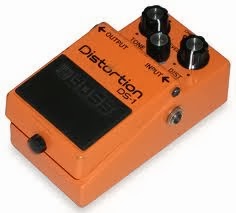
5. Boss DS-1
So I know what you're thinking. "But it does work!" To that I say, "Kinda." Yes, the pedal technically functions as designed. It does cause your guitar signal to distort. However, in it's stock form, it doesn't create a musical effect. The word, "fizzy" comes to mind when playing through this box. There is a lot of support for this pedal, but, in my experience, the only thing that this pedal does is make me sad.
4. Behringer NR-300 Noise Reducer
Behringer is known for making high quality musical products. Cheap. Cheap is what I meant to put there. Behringer is everyone's favorite Chinese importers. They have made knock-offs of other people's things and undercut said people. I've owned several pieces of gear from then from time to time. I've kicked all of it out of my set-up. The NR-300 Noise Reducer not only does a poor job at its primary function, but it ADDS NOISE. It does the opposite of noise reduction.
3. Joyo JF-12 Ultimate Fuzz
I wanted to like this pedal so bad. I thought it was a great combination of fuzz and octave. Fuzz is a very subjective effect. Its obviously an "over-the-top" type of effect. Octave is not very subtle either. I've played a few fuzzes. It seems like there are hundred of boutique type fuzz boxes. This is probably because a fuzz is a simple circuit. Just because it comes in a boutique box with cool graphics, it doesn't mean that they sound great. Just like not all obscure fuzz pedals make great sound, not all prolific. mass-produced units are sure bets either. The Joyo fails to impress on either side of the coin. The fuzz is mediocre at best, and the octave isn't controllable at all and too often covered up. It doesn't do either one particularly well and together they are just noise. Too bad really, Its a great idea.
2. Ernie Ball Volume Pedals
The original volume pedal is an amazing pedal. It has the best feel of any volume pedal that I've used. The Jr editions just aren't the same. I have a big foot, so I like a big pedal. So I picked up one of these and I really dig it, but the ugly truth about this pedal is that they are noisy. The design of these pedals are super-simple. They use string for goodness sake. The pots always go bad. This is a know problem and you can fix it by replacing the entire guts of the pedal. Oh yeah, its expensive too (about $20 a pop). That's what the parts cost. Not handy with a soldering iron? Might as well start looking for a new pedal.
1. Digitech Whammy
So I have a strong dislike for all things digitech. I've used a range of their products and I've been disappointed by all of them. They promise big and under-deliver. The Whammy is a fun effect, no doubt, but the tracking on the whammy is rough to say the least. Its not so much a pitch shifter but an effect of its own type. But as a pitch shifter with real time manipulation, its a fail. Fidelity is a grey area with any effect this type. Something that changes a part of your signal as integral as pitch is going to alter your tone. However, when the effect is off it still "sucks tone". As one of the only effect of this type, it hard to replace this pedal when its need, but for about the same money you can get a Boss pitchshifter and expression pedal. In my onion that is money well spent.
So I know what you're thinking. "But it does work!" To that I say, "Kinda." Yes, the pedal technically functions as designed. It does cause your guitar signal to distort. However, in it's stock form, it doesn't create a musical effect. The word, "fizzy" comes to mind when playing through this box. There is a lot of support for this pedal, but, in my experience, the only thing that this pedal does is make me sad.
4. Behringer NR-300 Noise Reducer
Behringer is known for making high quality musical products. Cheap. Cheap is what I meant to put there. Behringer is everyone's favorite Chinese importers. They have made knock-offs of other people's things and undercut said people. I've owned several pieces of gear from then from time to time. I've kicked all of it out of my set-up. The NR-300 Noise Reducer not only does a poor job at its primary function, but it ADDS NOISE. It does the opposite of noise reduction.
3. Joyo JF-12 Ultimate Fuzz
I wanted to like this pedal so bad. I thought it was a great combination of fuzz and octave. Fuzz is a very subjective effect. Its obviously an "over-the-top" type of effect. Octave is not very subtle either. I've played a few fuzzes. It seems like there are hundred of boutique type fuzz boxes. This is probably because a fuzz is a simple circuit. Just because it comes in a boutique box with cool graphics, it doesn't mean that they sound great. Just like not all obscure fuzz pedals make great sound, not all prolific. mass-produced units are sure bets either. The Joyo fails to impress on either side of the coin. The fuzz is mediocre at best, and the octave isn't controllable at all and too often covered up. It doesn't do either one particularly well and together they are just noise. Too bad really, Its a great idea.
2. Ernie Ball Volume Pedals
The original volume pedal is an amazing pedal. It has the best feel of any volume pedal that I've used. The Jr editions just aren't the same. I have a big foot, so I like a big pedal. So I picked up one of these and I really dig it, but the ugly truth about this pedal is that they are noisy. The design of these pedals are super-simple. They use string for goodness sake. The pots always go bad. This is a know problem and you can fix it by replacing the entire guts of the pedal. Oh yeah, its expensive too (about $20 a pop). That's what the parts cost. Not handy with a soldering iron? Might as well start looking for a new pedal.
1. Digitech Whammy
So I have a strong dislike for all things digitech. I've used a range of their products and I've been disappointed by all of them. They promise big and under-deliver. The Whammy is a fun effect, no doubt, but the tracking on the whammy is rough to say the least. Its not so much a pitch shifter but an effect of its own type. But as a pitch shifter with real time manipulation, its a fail. Fidelity is a grey area with any effect this type. Something that changes a part of your signal as integral as pitch is going to alter your tone. However, when the effect is off it still "sucks tone". As one of the only effect of this type, it hard to replace this pedal when its need, but for about the same money you can get a Boss pitchshifter and expression pedal. In my onion that is money well spent.
Labels:
Behringer,
Boss,
Digitec,
Distortion,
effect pedals,
Ernie Ball,
Fuzz,
Joyo,
Noise reducer
Subscribe to:
Posts (Atom)


.jpg)