Recently, BOSS has given us the Nextone amps. They are heavily inspired/based on the Roland Blue Cube amps. If you can remember, there was a time before BOSS release the Katana amplifiers where Roland's (BOSS' parent company) biggest amp line was the Cube series. Many people played and loved the Cube amps. Some of the most praised amps in the line were the Blues Cube. The Blues Cube was designed as a direct competitor to the Fender 1x12 amps. Following in that line, the Nextone amps are a continuation of that idea. I think that the Nextone is better than the Blues Cube in nearly every way. However, is it worth it?
I've talked a lot about the BOSS Katana on here so I won't go in a lot of detail in this post. I, like many other people like the Katana amps. I own a Katana amp. It makes a great practice amp. It makes a good gigging amp. You can record direct and mic it with reasonable (or even impressive) results. I think the most impressive thing about the Katana amps is the price. BOSS may have not have realized how big of a success the Katana was going to be. The Katana was priced less than it is now when it was released, suggesting that it was undervalued at release. So the Katana if a huge value that can serve in a multitude of roles.
There are key points were the Nextone amps are similar to Katana. Obviously, BOSS wants to emulate the Katana's success. The most obvious similarities are the power limiting feature (which actually was featured of the Blues Cube before the Katana) and the way the back panel is set up. The Blues Cube had much less in the way of options. However, the back panel of the Nextone and Katana look almost identical. There are some major differences as well. The biggest may be the effects that are built in. Katana promised a huge list of effects that you could select from and control. The Nextone gives you some effects that you might find of small tube combos (reverb, trem, and even delay). Where the Nextone can really flex is power section emulation. This is a solid state amp, but you can select the type of tubes emulated the amp emulates. In practice, this voices the amp like two different American amp or two British amp.
Both of these amps sound good.
Both of these amps have good In/Outs.
The Katana has more effects.
The Nextone models/emulates 4 different Tube amps.
The Katana has 5 amp charactors/modes (which is different?!)
The Nextone has software support to customize your amp voicing.
But UGT! Which one should I buy? The obvious answer is to play both side by side and buy the one you like more. But let's say that you have to buy one or the other without playing either one. If the difference in price doesn't matter, then it mostly comes down to effect. If you have a pedal board then I'd lean toward the Nextone. However, if you need a amp that does effects as well, you might want to go with the Katana, but they are limited. Which one is better overall. Not surprisingly, the more expensive one is going to have a better speaker and cabinet.
Conclusion
BOSS is killing it with their amps. I am very impressed. At a very glance, these amp look very similar. There are some key differences that make the Nextone very impressive. I'd go so far to say that these amps are what the Katana Artist should have been. If the Nextone retained the effects section from the Katanna, it would be game over.
Showing posts with label Katana. Show all posts
Wednesday, November 21, 2018
Monday, November 19, 2018
Ugly Guitar Truth: Boss Nextone Amplifier
Boss has been known for creating some of the most iconic and memorable guitar products of all time. A few years ago the world was taken aback when BOSS gave us the Katana amplifier. The internet was abuzz with talk about an amplifier that gave you tonnes of useful features and BOSS-quality effects. The Katana was not the first, but what made it a darling was that it started for $200. For what many pay for their first "beginner" amp, you could have an amplifier that could get you through your first gigs or be a respectable studio tool. I personally love the line-in and headphone functions. Many of my larger amp and combos don't include this feature. So it's nice to have this on an amp that doesn't make me feel like a compromising tone-wise.
I like the Katana, but why am I take about the Katana on a post about the Nextone amp? Well, my first thought I had about the Nextone, was that it was just an update/addition to the Katana series. Since the introduction, BOSS has added many more Katana models. I can't speak to have the success they all have been, but the Nextone seemed to be at home next to the Katana amp. However, this is not the case.
We've Seen These Before
The Nextone amplifiers are the newest amps from BOSS, and you wouldn't be wrong to think that they share some DNA with the runaway success that was the Katana line of amps. However, these amps are more closely related to the Roland Blues Cube. With just a look, we can see the similarities on the control panel. The channel controls are set up exactly the same. You still have the Tone and Boost controls, Tube Logic and Power Control that we are used to seeing of the Blues Cube. Is this a reheated Blues Cube sold under the BOSS brand? Well, in a word, no.
Something New
While this might have started life as Blues Cube, BOSS has taken lessons from the Katana and applied them to this amp. We can see it most clearly in the effects. The effects are one of the most impressive features of the Katana (besides the solid foundation of good tones). While we don't have the impressive library of effect from the Katana we do have delay, reverb, and trem built in with similar controls to the Katana. The main claim to fame the Nextone is the selectable "Power Section". You can select from 6V6, 6L6, EL84, and EL34 which are just coded names for American and British-type amps. In addition to what we can see on the outside of the amp, BOSS has created an editing software tool to support the backend of the amplifier. This is supposed to give you in-depth control over the "Bias" and "Sag" just like a tube amp. You can also change the EQ across the entire amp and play with how your effects loop operates. The Nextone editing software will also let you change the Boost function into a compressor. So, that's kinda neat.
Conclusion
I never really liked the Blues Cube series. In theory the Blues Cube is a good choice, but I always felt that if you were going to spend Blues Jr. money, then you should probably buy a Blues Jr. (although if you picked up a used Blues Jr. and put the money you saved and bought some effects, then you'd be much better off). However, BOSS has put a lot more into the Nextone. There a lot of features packed into these amps. Sometimes that spell disaster, but BOSS has impressed me with this kind of thing before. "Nextone" is a trash name, however. There is no getting around that. It brings to mind brands like Nux and Hotone for some reason. Both of which I wouldn't want to be associated with my top-shelf combo amps. They are handsome, so hopefully, that's enough to offset a throwaway name. Will I buy one? Let's just say that I'm interested.
I like the Katana, but why am I take about the Katana on a post about the Nextone amp? Well, my first thought I had about the Nextone, was that it was just an update/addition to the Katana series. Since the introduction, BOSS has added many more Katana models. I can't speak to have the success they all have been, but the Nextone seemed to be at home next to the Katana amp. However, this is not the case.
We've Seen These Before
The Nextone amplifiers are the newest amps from BOSS, and you wouldn't be wrong to think that they share some DNA with the runaway success that was the Katana line of amps. However, these amps are more closely related to the Roland Blues Cube. With just a look, we can see the similarities on the control panel. The channel controls are set up exactly the same. You still have the Tone and Boost controls, Tube Logic and Power Control that we are used to seeing of the Blues Cube. Is this a reheated Blues Cube sold under the BOSS brand? Well, in a word, no.
Something New
While this might have started life as Blues Cube, BOSS has taken lessons from the Katana and applied them to this amp. We can see it most clearly in the effects. The effects are one of the most impressive features of the Katana (besides the solid foundation of good tones). While we don't have the impressive library of effect from the Katana we do have delay, reverb, and trem built in with similar controls to the Katana. The main claim to fame the Nextone is the selectable "Power Section". You can select from 6V6, 6L6, EL84, and EL34 which are just coded names for American and British-type amps. In addition to what we can see on the outside of the amp, BOSS has created an editing software tool to support the backend of the amplifier. This is supposed to give you in-depth control over the "Bias" and "Sag" just like a tube amp. You can also change the EQ across the entire amp and play with how your effects loop operates. The Nextone editing software will also let you change the Boost function into a compressor. So, that's kinda neat.
Conclusion
I never really liked the Blues Cube series. In theory the Blues Cube is a good choice, but I always felt that if you were going to spend Blues Jr. money, then you should probably buy a Blues Jr. (although if you picked up a used Blues Jr. and put the money you saved and bought some effects, then you'd be much better off). However, BOSS has put a lot more into the Nextone. There a lot of features packed into these amps. Sometimes that spell disaster, but BOSS has impressed me with this kind of thing before. "Nextone" is a trash name, however. There is no getting around that. It brings to mind brands like Nux and Hotone for some reason. Both of which I wouldn't want to be associated with my top-shelf combo amps. They are handsome, so hopefully, that's enough to offset a throwaway name. Will I buy one? Let's just say that I'm interested.
Labels:
Amplifier,
Blues Cube,
Boss,
Delay,
Effects,
Katana,
New Gear,
Nextone,
Reverb,
Roland,
Tube Logic,
Ugly Guitar Truth
Tuesday, January 30, 2018
Ugly Guitar Truth: Boss Katana Artist Amp
When the BOSS Katana was first announced, I wrote up my impressions of it. I liked the idea of it. It seemed like a well though out and executed design but it wasn't without it faults. I never did like the look of the amp. It was simple, but the overall look was a little bland. There was too much black on black. While I like the concept of the Kanji symbol for Katana being the amp's main design feature, it too was underwhelming and too close to familiar English letters. The price and features were too good though. BOSS had nearly every competitor beat hands down. So it's no surprise that BOSS has once again expanded their line of Katana amp with the 100 watt Artist model.
Still 100 Watts
If you are familiar with the BOSS Katana 100 Watt, then you are familiar with most of the features of the Artist. The five amp models are still there. The tone section still lets you control Lows, Mids, and Highs. You still have your Three FX: Boost/Mod, Delay FX, and Reverb. You still get Presence, and Master controls with 100/50/0.5 Watt settings. So if you were a fan of the Katana before, then you are still going to like the Artist, but is there enough to really call this an upgrade?
What's New
For starters you get a WazaCraft speaker in the Artist model. Waza is BOSS Premium line, but personally, I've never really thought that the Waza amps met the hype (or the price for that matter). The Waza was a feat for sure, but the Katana was were BOSS really hit the homerun. Having said that, is the Waza speaker an upgrade? After hearing a side by side comparison, the Artist does have the edge. However, that might be due to the cabinet construction. Another key feature is the more robust cabinet construction and the semi-open back cab. My money is on the shape and size of the cab having more to do in the change in sound than the speaker, but that's just my two cents. Other than that, the Artist gives you Cabinet Resonance and Line Out Air Feel functions.
Is It Worth It?
So, right now the Katana is priced at $600. The 2x12 100 watt Katana is priced at $500. You're getting one less speaker for 100 more dollars. While this seems like a bum deal at first, there is a fair amount of value for your money. The cabinet alone is a huge improvement. The Waza speaker may help as well. The Cabinet Resonance and Line Out Air Feel could help breathe a little life into you signal. The overall look of the amp is much improved in my opinion. Will I buy a Katana Artist? Personally? I'd love to see the head version, but I love what they done. BOSS has done an impressive job topping their already impressive line of Katana Amps.
Still 100 Watts
If you are familiar with the BOSS Katana 100 Watt, then you are familiar with most of the features of the Artist. The five amp models are still there. The tone section still lets you control Lows, Mids, and Highs. You still have your Three FX: Boost/Mod, Delay FX, and Reverb. You still get Presence, and Master controls with 100/50/0.5 Watt settings. So if you were a fan of the Katana before, then you are still going to like the Artist, but is there enough to really call this an upgrade?
What's New
For starters you get a WazaCraft speaker in the Artist model. Waza is BOSS Premium line, but personally, I've never really thought that the Waza amps met the hype (or the price for that matter). The Waza was a feat for sure, but the Katana was were BOSS really hit the homerun. Having said that, is the Waza speaker an upgrade? After hearing a side by side comparison, the Artist does have the edge. However, that might be due to the cabinet construction. Another key feature is the more robust cabinet construction and the semi-open back cab. My money is on the shape and size of the cab having more to do in the change in sound than the speaker, but that's just my two cents. Other than that, the Artist gives you Cabinet Resonance and Line Out Air Feel functions.
Is It Worth It?
So, right now the Katana is priced at $600. The 2x12 100 watt Katana is priced at $500. You're getting one less speaker for 100 more dollars. While this seems like a bum deal at first, there is a fair amount of value for your money. The cabinet alone is a huge improvement. The Waza speaker may help as well. The Cabinet Resonance and Line Out Air Feel could help breathe a little life into you signal. The overall look of the amp is much improved in my opinion. Will I buy a Katana Artist? Personally? I'd love to see the head version, but I love what they done. BOSS has done an impressive job topping their already impressive line of Katana Amps.
Tuesday, January 9, 2018
Ugly Guitar Truth: BOSS Katana Air
Just when you think that BOSS has covered every possible angle with their KATANA line, they go and do something like this. Last year we saw the introduction of the katana mini. Like me, you might have thought that BOSS was out of ideas for their wildly successful line of affordable amps. But like me, you would have been wrong.
Real Wireless
The BOSS Katana Air boasts features that are familiar but in an unprecedented way. They've already made a battery powered Katana. Line6 released their Spider amps with built-in wireless. The guys at BOSS decided to put it all together. Now we can play guitar with exactly zero wires. They even have set of effects built into the amp that you can control via Bluetooth.
Play All Day
The transmitter is built into the amp. This means it charges while it's docked in the amp. It even has a motion sensor so that it can go into low-power sleep mode when not in use. It wakes up automatically when you pick up your guitar. This helps preserve the 12 hours of playing time you get on a full charge.
Plenty Of Power
When at home, this amp can put out 30 watts. That is plenty of power is this super compact amp. When operating on battery power, this amp still kicks out 20 watts. This makes the Katana Air a serious jamming machine. Most battery-powered amps put out less than 10 watts. This amp doubles that and lets you plug in for 10 more.
Conclusion
All these features on top of the outstanding Katana platform make this a valuable addition the Katana line. While this won't replace a gigging amp, It might just be the one you grab on the way to a jam or become your go-to when practicing at home.
Real Wireless
The BOSS Katana Air boasts features that are familiar but in an unprecedented way. They've already made a battery powered Katana. Line6 released their Spider amps with built-in wireless. The guys at BOSS decided to put it all together. Now we can play guitar with exactly zero wires. They even have set of effects built into the amp that you can control via Bluetooth.
Play All Day
The transmitter is built into the amp. This means it charges while it's docked in the amp. It even has a motion sensor so that it can go into low-power sleep mode when not in use. It wakes up automatically when you pick up your guitar. This helps preserve the 12 hours of playing time you get on a full charge.
Plenty Of Power
When at home, this amp can put out 30 watts. That is plenty of power is this super compact amp. When operating on battery power, this amp still kicks out 20 watts. This makes the Katana Air a serious jamming machine. Most battery-powered amps put out less than 10 watts. This amp doubles that and lets you plug in for 10 more.
Conclusion
All these features on top of the outstanding Katana platform make this a valuable addition the Katana line. While this won't replace a gigging amp, It might just be the one you grab on the way to a jam or become your go-to when practicing at home.
Labels:
Air,
Amp,
Battery Powered,
Boss,
Katana,
Line6 spider,
NAMM 2018,
New Gear,
Portable Amp,
Ugly Guitar Truth,
Wireless
Monday, June 26, 2017
Ugly Guitar Truth: BOSS Katana Mini
On the heels of the announcement of the new 500 series pedals from BOSS, BOSS has also put forward a new Katana amp. In addition to the 50 watt combo, 100 watt combo and 100 watts head, BOSS will add a mini, 7 watt version to the line up. The Katana series has been praised since it's introduced. The mini version looks to be a desk top version with a 4 inch speaker. Is this a solid solution to those that are want for space or in need of low key practice gear? Let's look at the facts...
Support the blog by shopping on Amazon by using my link!
There should be an ad below:
It's Small
Less than 10 inches wide and under 3 pounds, this amp is aptly named. It is also priced at half of the next size in the line up. The amp is impressively small. Small amps are not know for known for having the best tone. However, this amp is housed in a specially designed ported cabinet with a custom designed 4 inch speaker. Other features that you wouldn't think to see is a three band EQ, three channels, and delay. The amp might be tiny, but the feature list is impressive for its size.
It Stands Out
I've previously written about the Vox Pathfinder 10 and how impressive it is for its size and price. I'm very interested in seeing how these two amp compare. Considering that the Vox has very limited features, the BOSS seems to have the very clear advantage. The amp modes make this tiny amp one of the most flexible compact amp in its price range. You'd have to triple the price to find an amp in its size and better feature set. Out of the gate the Mini make a strong case for anyone looking for an extremely portable amp.
It Has A Lot To Live Up To
The Katana line has been praised by many. Not only is it one of the best values on the market right now, but many have preferred the Katana over much pricier amps. While lacking some of the key features the Katana line have been noted for, you still get three amp modes. If these are related by more than just name, then the Katana Mini is offering a serious price at this price point.
Conclusion
Many, are critical of these smaller amps and their ability to be more than a novelty. I have been very skeptical of any combo featuring a speaker under 10 inches. However, the 6.5 inch speaker in the pathfinder 10 was surprisingly able to produce quality tones. These amp wont be able to fill a large room, but these amps are built for quick, portable jamming. Barring a major flaw, these amps are poised to bring the Katana value and acclaim to the mini, battery-powered, super-portable amp market.
Check out the hands on review of the Katana: Here!
Support the blog by shopping on Amazon by using my link!
There should be an ad below:
Friday, May 19, 2017
Hands On Review: Fender Mustang GT Modeling Amp
Recently I was able to sit down with not just one, but all three model of the Fender Mustang GT. There is a lot of information out there about these amps. Some rave about the features (and there are some innovated and ambitious features in these amps). Others complain about performance. The best way to navigate all the information out there is to spend enough time to get to know these new amps form Fender. That's exactly what I did. Here's what I've found:
Fender Does Fender Well
Fenders Modeling amps have always done their clean tone the best. This may be because they know their particular tone better than anyone, or maybe they just aren't that good at doing models of other amps... The Basic 65 and Bassman models are my favorite. Now, this is across all version of the amp. The clean tones are standout, but that is partly due to the fact that the dirty channels don't really hold up. Marshall type tones aren't hitting mark here. Vox tones don't come across convincing either. Although the worst offender here is the metal sounds. The preset isn't impressive, but changing the setting, at least in my experience, just made things worse. Muddy tones and tons of mush are found in the metal tones. This amps doesn't djent (not that I'm an expert here).
Tech Troubles
I was prepared to check out the app that accompanies this amp, and I did sort of. As I was getting everything set up, I connected my phone to the amp via bluetooth... for a few minute until I lost my connection. I did not reestablish the connection after that. It wasn't for lack of trying. It did force me to get to know the physical controls on the amp. Lets be honest, if you are at a live show, you aren't relying on bluetooth to do on the fly changes. The controls are cleaned up from the previous model. However, that's not always the most convenient when making fast changes in the middle of a set. The large wheel is pretty integral to making any changes. You have to make selections by rotating the knob and then pressing it. This is not always the easies thing to do. I'm sure you can get used to this, but I found my self scrolling past my intended selection and rotating the knob when trying to push it. I will say that the controls are rather easy to get the hang of, but quick and reliable changes aren't easiest thing to do with this set up.
Pecking Order
How does this amp compare to other amps. Well, put this next to other fender amps and you'll find it wanting. Next to a Blues Jr., this amp doesn't stand up well. Even more so with a Princeton. Typical with solid state amps, there seems to be a cap to how loud the amp gets. There is an organic volume level and when you pass that the amp just can't handle it. Instead of tube break-up, these amps react harshly to high volume applications. Comparing the GT next a BOSS Katana is where it really get interesting. These amp are very comparable in price, however they function is a different way. The Mustang and Katana both start in the mid $200 range, but they have different strengths. The Mustang has decent cleans and can mock many of its high dollar relative. The Katana is a little sterile on some clean settings. Other than that, the Katana takes the cake. The higher gain models of the Mustang do not have the convincing openness of the cleans. The Katana shines in the higher gain settings. The Katana also handles effect in the front of the amp better than the Mustang. Which brings up a another point... The effects in the Mustang are a little less than convincing. The list of overdrives is a little thin as well. Just a reminder, the Katana has access to 55 effects... The Mustang doesn't stand up very well to many other amps...
Conclusion
I really wanted to like these amps. Fender took their time coming to market with their latest modeling amps. It looked like Fender had everything wrapped up, but the most important part of the amp is performance. No matter the feature set, at the end of the day, you want the amp to sound good. The more features you add, the more opportunity you have to get it wrong. We want an amp that does everything, and it's tempting to think that "Now they've done it", but they haven't yet. Specifically, the Fender Mustang GT hasn't.
Support the blog by shopping on Amazon by using my link!
There should be an ad below:
Fender Does Fender Well
Fenders Modeling amps have always done their clean tone the best. This may be because they know their particular tone better than anyone, or maybe they just aren't that good at doing models of other amps... The Basic 65 and Bassman models are my favorite. Now, this is across all version of the amp. The clean tones are standout, but that is partly due to the fact that the dirty channels don't really hold up. Marshall type tones aren't hitting mark here. Vox tones don't come across convincing either. Although the worst offender here is the metal sounds. The preset isn't impressive, but changing the setting, at least in my experience, just made things worse. Muddy tones and tons of mush are found in the metal tones. This amps doesn't djent (not that I'm an expert here).
Tech Troubles
I was prepared to check out the app that accompanies this amp, and I did sort of. As I was getting everything set up, I connected my phone to the amp via bluetooth... for a few minute until I lost my connection. I did not reestablish the connection after that. It wasn't for lack of trying. It did force me to get to know the physical controls on the amp. Lets be honest, if you are at a live show, you aren't relying on bluetooth to do on the fly changes. The controls are cleaned up from the previous model. However, that's not always the most convenient when making fast changes in the middle of a set. The large wheel is pretty integral to making any changes. You have to make selections by rotating the knob and then pressing it. This is not always the easies thing to do. I'm sure you can get used to this, but I found my self scrolling past my intended selection and rotating the knob when trying to push it. I will say that the controls are rather easy to get the hang of, but quick and reliable changes aren't easiest thing to do with this set up.
Pecking Order
How does this amp compare to other amps. Well, put this next to other fender amps and you'll find it wanting. Next to a Blues Jr., this amp doesn't stand up well. Even more so with a Princeton. Typical with solid state amps, there seems to be a cap to how loud the amp gets. There is an organic volume level and when you pass that the amp just can't handle it. Instead of tube break-up, these amps react harshly to high volume applications. Comparing the GT next a BOSS Katana is where it really get interesting. These amp are very comparable in price, however they function is a different way. The Mustang and Katana both start in the mid $200 range, but they have different strengths. The Mustang has decent cleans and can mock many of its high dollar relative. The Katana is a little sterile on some clean settings. Other than that, the Katana takes the cake. The higher gain models of the Mustang do not have the convincing openness of the cleans. The Katana shines in the higher gain settings. The Katana also handles effect in the front of the amp better than the Mustang. Which brings up a another point... The effects in the Mustang are a little less than convincing. The list of overdrives is a little thin as well. Just a reminder, the Katana has access to 55 effects... The Mustang doesn't stand up very well to many other amps...
Conclusion
I really wanted to like these amps. Fender took their time coming to market with their latest modeling amps. It looked like Fender had everything wrapped up, but the most important part of the amp is performance. No matter the feature set, at the end of the day, you want the amp to sound good. The more features you add, the more opportunity you have to get it wrong. We want an amp that does everything, and it's tempting to think that "Now they've done it", but they haven't yet. Specifically, the Fender Mustang GT hasn't.
Support the blog by shopping on Amazon by using my link!
There should be an ad below:
Labels:
Amps,
Blues Jr.,
Clean Tones,
Fender,
Katana,
Marshall,
Modeling,
Mustang GT,
Princeton,
Vox
Thursday, May 18, 2017
The Ugly Truth About The Fender Mustang GT Amp
If you've been living under a rock for the last week or so, then you may not have heard that Fender has finally released there entry into the current gen of digital modeling amps. Of course, we have all become familiar with the Marshal CODE, BOSS Katana, and Line6 Spider V, but Fender has thrown its hat into the ring with the new Mustang GT. So what is the story here? Do we need to run out and buy the latest addition to the Mustang line? Let's aggregate all the information we know about the GT and try to understand whats new, whats good, and what needs to change.
(Before we go anything further and we are on the same page, this is a "reactions" post. A hands-on review is in the works)
There Is A Lot Right
Many if not most of the features that are present in other current-gen modeling amps are present here. Most notably is the connectivity. The Marshal CODE and Line6 SpiderV both let you connect and control the amp via mobile app. What Fender did right, besides their iconic cleans, was to allow the mobile device connect via Bluetooth and the amp to connect via Wifi to your network. Finally a fully wireless amp (well, except for the power cable). The design is nice and clean, which puts it above the SpiderV right out of the gate. Other improvement: high quality interface, 60 second looper, Celestion speakers, more power (200 watts). Fender has put a lot of thought into the this amp. It is the last one to market with their modeling amp, so they'd better have learned from mistakes made by the other guys. So, does that mean that Fender got everything right? Well...
They Got A Lot Wrong Too
As you can imagine, this amps are popular with cover bands and session artist. Those that need to play many styles in the same set, and portability is important. So these amp tick a lot of boxes. Also high up on the list is reliability. You'd think that would be in the bag, what with it being solid state and all, but users have reported issues with one of the key features: the bluetooth connection. First, the connection is lost when your phone goes to sleep, also, the app and amp have a few glitches to work out. Selections on the app have a slight chance to select the wrong option on the amp. Fortunately, there this is only a seldom annoyance, but reliability is paramount in every piece of a rig. Another misstep was to take away some functionality of the previous models. Everything is editable on the manual controls, but the on-the-fly on/off of effects is only available via the $100 footswitch that is only included on the flag ship $600 200 watt version. Not to mention, it is a four button switch with three different modes... I guess it need to do a lot since you aren't going to be running many effects into this amp.
Conclusion
I want to like this amp. I am, admittedly, a Fender fanboy. But I can't endorse this amp souly on the brand on the front of the amp. This amp delivers a multitude of options and effects. There are tons of presets and everything is customizability. There is a community build around the Mustang line that, no doubt, will provide endless possibilities for that looking to nail tones with little to no button mashing. There are some issue with this amp, just like there are with many others, The main feature of any amp though is what it sounds like. I've only really experience the presets and the fender cleans are legit. The dirtier (less-fender) the model, the weaker the sound. Will this be improved in the future? Can it be improved? I don't know. It is a solid, if not overdue, update to the Mustang line. Fans of the Mustang amps will enjoy the long awaited update to current spec. If you are on the fence about buying this amp, I'd suggest putting it next to the Marshal CODE and close your eyes. Pick the one that makes you feel the fuzziest.
Support the blog by shopping on Amazon by using my link!
There should be an ad below:
(Before we go anything further and we are on the same page, this is a "reactions" post. A hands-on review is in the works)
There Is A Lot Right
Many if not most of the features that are present in other current-gen modeling amps are present here. Most notably is the connectivity. The Marshal CODE and Line6 SpiderV both let you connect and control the amp via mobile app. What Fender did right, besides their iconic cleans, was to allow the mobile device connect via Bluetooth and the amp to connect via Wifi to your network. Finally a fully wireless amp (well, except for the power cable). The design is nice and clean, which puts it above the SpiderV right out of the gate. Other improvement: high quality interface, 60 second looper, Celestion speakers, more power (200 watts). Fender has put a lot of thought into the this amp. It is the last one to market with their modeling amp, so they'd better have learned from mistakes made by the other guys. So, does that mean that Fender got everything right? Well...
They Got A Lot Wrong Too
As you can imagine, this amps are popular with cover bands and session artist. Those that need to play many styles in the same set, and portability is important. So these amp tick a lot of boxes. Also high up on the list is reliability. You'd think that would be in the bag, what with it being solid state and all, but users have reported issues with one of the key features: the bluetooth connection. First, the connection is lost when your phone goes to sleep, also, the app and amp have a few glitches to work out. Selections on the app have a slight chance to select the wrong option on the amp. Fortunately, there this is only a seldom annoyance, but reliability is paramount in every piece of a rig. Another misstep was to take away some functionality of the previous models. Everything is editable on the manual controls, but the on-the-fly on/off of effects is only available via the $100 footswitch that is only included on the flag ship $600 200 watt version. Not to mention, it is a four button switch with three different modes... I guess it need to do a lot since you aren't going to be running many effects into this amp.
Conclusion
I want to like this amp. I am, admittedly, a Fender fanboy. But I can't endorse this amp souly on the brand on the front of the amp. This amp delivers a multitude of options and effects. There are tons of presets and everything is customizability. There is a community build around the Mustang line that, no doubt, will provide endless possibilities for that looking to nail tones with little to no button mashing. There are some issue with this amp, just like there are with many others, The main feature of any amp though is what it sounds like. I've only really experience the presets and the fender cleans are legit. The dirtier (less-fender) the model, the weaker the sound. Will this be improved in the future? Can it be improved? I don't know. It is a solid, if not overdue, update to the Mustang line. Fans of the Mustang amps will enjoy the long awaited update to current spec. If you are on the fence about buying this amp, I'd suggest putting it next to the Marshal CODE and close your eyes. Pick the one that makes you feel the fuzziest.
Support the blog by shopping on Amazon by using my link!
There should be an ad below:
Labels:
Blackstar,
Bluetooth,
Boss,
Combo Amp,
Fender,
ID Core,
Katana,
Line6,
modeling amp,
Mustang GT,
Solid State,
Spider V,
Wifi
Wednesday, May 17, 2017
Hands-On-Review: Boss Katana Amplifier
The Boss Katana amplifier has been a thing of interest for many guitarist since it's announcement at the end of 2016. The ever growing threat of solid-state technology catching up with our beloved tubes is once again made evident by Boss' latest offering. Would I consider trading in my tube combos for a Katana? No. But, with the feature set and price range of these little combos, many people are asking themselves if this amp is the right choice. I'll tell you what I think...
Punching Above It's Weight
Those of us accustom to 1X12 tube combos will notice that the Katana is a petite package. I found myself questioning whether or not it actually had a 12 inch speaker. It is also light-weight. I have seen the specs for the amp and told myself that I know what to expect, but the size and weight are actually surprising. So, naturally when you approach an amp like this you have certain expectations. Small, light-weight amps sound small and light-weight (thin). Perhaps this is a psychological tactic by Boss to precondition you, so that when you actually do play through this amp it sounds big and heavy. Because this amp sounds big and not light-weight. The cab and speaker reverberate harmoniously by providing bass and presence in equal measure.
Well Balanced
I've spoke about the initial shock of playing trough the amp, and how the low and high end are lovingly coupled in a homogeneous blend of frequencies. That is balanced indeed. However, the vast array of knobs would seem to tip the scales of form and function in an unfavorable direction. Again, at first glance, our impression is not congruent with our experience. Anyone who has fiddled with knobs on an amplifier can sit down with the Katana and produces varying tones of blissful harmony. With a neutral EQ and bypassed FX you can dial up four different Amp Types. The problem that has plagued many amp like this one has been the fact that they either have settings that all sound the same or so different that they couldn't possibly come from the same amplifier. This would make changing channels in a live setting unpleasant at least. But Boss has Balanced the amp types so that they sound related but not redundant. Probably the most impressive part of this amp, and that's before we talk about the effects.
The Effects
Undoubtedly the most anticipated aspect of this amp is the effects. obviously Boss wants to promote the 55 available effects, but the fine-print to that is that you can only store 15 and the fine print to that is that you can only use 3 at a time. To be fair, this is not limited in a way that makes the effects trivial, but you are bound to use a PC to do any great deal of editing to the stock effects. Given the recent focus on android and iOS connectivity, this seem like an oversight. This actually seems like area that Marshall got right with the CODE series. The CODE series features mobile connectivity and a on-board editing menu screen. The Katana would do well with one of those options. Instead, it has none. Not that this takes away with the impressive sounds that the amp is capable of. Plus, serious users have a great editing tool in the Tone Studio software. Having said that, this is Boss and the effect that were available during the review were solid. Boss really did their homework and provided quality effects that 100% usable.
Conclusion
I still really like these amps. They have a lot going for them. Would I use this as my everyday/gigging amp? No. It just can't replace a tube combo and pedal board. But, for the bedroom player or recording artist on a budget, this amp can really fit the bill. The amp really need a PC to be all that it can be. I've had gear with similar functionality and I doubt that I ever used it. All in all, this is an impressive unit. It shines most where you don't expect it. The effects are usable, but might be a little cumbersome to edit in depth. Boss nailed so tone of feature on this one, but at the same time, I'd like to see some improvements.
Punching Above It's Weight
Those of us accustom to 1X12 tube combos will notice that the Katana is a petite package. I found myself questioning whether or not it actually had a 12 inch speaker. It is also light-weight. I have seen the specs for the amp and told myself that I know what to expect, but the size and weight are actually surprising. So, naturally when you approach an amp like this you have certain expectations. Small, light-weight amps sound small and light-weight (thin). Perhaps this is a psychological tactic by Boss to precondition you, so that when you actually do play through this amp it sounds big and heavy. Because this amp sounds big and not light-weight. The cab and speaker reverberate harmoniously by providing bass and presence in equal measure.
Well Balanced
I've spoke about the initial shock of playing trough the amp, and how the low and high end are lovingly coupled in a homogeneous blend of frequencies. That is balanced indeed. However, the vast array of knobs would seem to tip the scales of form and function in an unfavorable direction. Again, at first glance, our impression is not congruent with our experience. Anyone who has fiddled with knobs on an amplifier can sit down with the Katana and produces varying tones of blissful harmony. With a neutral EQ and bypassed FX you can dial up four different Amp Types. The problem that has plagued many amp like this one has been the fact that they either have settings that all sound the same or so different that they couldn't possibly come from the same amplifier. This would make changing channels in a live setting unpleasant at least. But Boss has Balanced the amp types so that they sound related but not redundant. Probably the most impressive part of this amp, and that's before we talk about the effects.
The Effects
Undoubtedly the most anticipated aspect of this amp is the effects. obviously Boss wants to promote the 55 available effects, but the fine-print to that is that you can only store 15 and the fine print to that is that you can only use 3 at a time. To be fair, this is not limited in a way that makes the effects trivial, but you are bound to use a PC to do any great deal of editing to the stock effects. Given the recent focus on android and iOS connectivity, this seem like an oversight. This actually seems like area that Marshall got right with the CODE series. The CODE series features mobile connectivity and a on-board editing menu screen. The Katana would do well with one of those options. Instead, it has none. Not that this takes away with the impressive sounds that the amp is capable of. Plus, serious users have a great editing tool in the Tone Studio software. Having said that, this is Boss and the effect that were available during the review were solid. Boss really did their homework and provided quality effects that 100% usable.
Conclusion
I still really like these amps. They have a lot going for them. Would I use this as my everyday/gigging amp? No. It just can't replace a tube combo and pedal board. But, for the bedroom player or recording artist on a budget, this amp can really fit the bill. The amp really need a PC to be all that it can be. I've had gear with similar functionality and I doubt that I ever used it. All in all, this is an impressive unit. It shines most where you don't expect it. The effects are usable, but might be a little cumbersome to edit in depth. Boss nailed so tone of feature on this one, but at the same time, I'd like to see some improvements.
Labels:
Amp,
Boss,
Digital Modeling,
Hands On Review,
Katana,
Modeling,
New Gear,
Solid State
Monday, January 9, 2017
Ugly Guitar Truth: Marsall Code vs Boss Katana
Recently I was able to check out two of the most promising budget/modeling combo amps released in 2016. The BOSS Katana (100 watt combo) and the Marshall CODE (50 watt combo). Both of these amps have been backordered and hard to come by via the online stores practically ever since their respective releases. (The Marshall CODE, as of this writing, is still backordered) So when I was able to sit down and meet these amps in person, I was very excited. I had been cautiously excited about these two from the moment I saw there specs. I was eager to find out if they would exceed my expectations, or succumb to the fate of most other modeling combos. Let's find out.
The Marshall CODE
I was very surprised by the size of it. It was so tiny. I had to reassure myself that I was actually playing the 50 version and not the 25 watt 1x10. I was, and boy could I tell. It was loud! I had a fear that it would sound boxy, it didn't. The small frame is very misleading in the best way possible. The next thing I noticed was the controls. I should say, the lock there of. I've seen plenty of pictures and I knew the specs, but nothing really prepared me for the simplicity of the layout. I recalled using a Marshall AVT 150 head with it's 24 knobs. I absolutely loved this about the CODE. It is very easy to tweak all the things that matter and there isn't any messing around with menus unless you absolutely have to. Although, if you do want to fiddle with presets, you (kind of) have to download the app. These amps do suffer from what all modeling amps suffer from, endless menus. From just a little poking around I was lost and then greeted with ear-blistering feedback. I must have pushed the wrong button. There are 8 of them, and each one made me feel dumber than the last. But that's why Mashall made these amp Bluetooth ready. Now we have a pretty little app to navigate instead of fidgeting
with all those buttons.
But this was a verses review...
I know this thing is super long and thank you for reading this far, but let me know if you guys like the whole "verses" thing or if you like your review to be more standalone. The situation kinda presented its self in a head to head way, so that's what I wrote. Anywho... Thanks!
The Marshall CODE
I was very surprised by the size of it. It was so tiny. I had to reassure myself that I was actually playing the 50 version and not the 25 watt 1x10. I was, and boy could I tell. It was loud! I had a fear that it would sound boxy, it didn't. The small frame is very misleading in the best way possible. The next thing I noticed was the controls. I should say, the lock there of. I've seen plenty of pictures and I knew the specs, but nothing really prepared me for the simplicity of the layout. I recalled using a Marshall AVT 150 head with it's 24 knobs. I absolutely loved this about the CODE. It is very easy to tweak all the things that matter and there isn't any messing around with menus unless you absolutely have to. Although, if you do want to fiddle with presets, you (kind of) have to download the app. These amps do suffer from what all modeling amps suffer from, endless menus. From just a little poking around I was lost and then greeted with ear-blistering feedback. I must have pushed the wrong button. There are 8 of them, and each one made me feel dumber than the last. But that's why Mashall made these amp Bluetooth ready. Now we have a pretty little app to navigate instead of fidgeting
with all those buttons.
So I was somewhat limited to the preset to my review, and I am aware that the "presets always suck", but then there's the Marshall CODE. The preset are actually pretty good. They also span a good range. They aren't just: Metal, Nu-Metal, Grind Core, Heavy Metal, Metal-Metal.. and so on. Everything from cleans to crunch, and yes, even metal where offered up and surprisingly believable. Understand I come from the dark ages where modeling amps just gave you a range of eww to yuck. You desperately tried to clean up to tone enough to keep it from becoming mushy and falling out of the mix. But this amp would have no problem with that. It has plenty of presence, and it holds its bottom end quite well. The single most impressive thing, to me anyway, is the freaking cab simulator. I might as well hang up my gear review career (bahaha career... anyways) because I never saw the day I'd actually like a cab sim, but this one works. It's not just different colored blanket over the speaker. I don't know what wizard they have at Marshall casting these spells, but these thing made this tiny little amp sound like it came from my Marshall 1960 cab. Huge caveat: the amp most diffidently has an optimal listen position. Please don't think that you can fill a room with this amp like you could with a 4x12, but listening from the right spot, you absolute get the feeling that you are playing through more than one speaker. Guys, I kid you not, after I played this amp I didn't know who I was any more. I had a full existential crisis. It got weird. Things that I believed were falling down all around me. Who was I? Why was I there? And then I remembered that I was guitarist and I was here to rock! On to the Katana
The BOSS Katana
Still a little shaken from playing the Marshall CODE I started on the BOSS Katana. For a hundred watts, this amp is on the small side. It would win in a bar fight against the Marshall 50 watt CODE, but it'd be beat up pretty good. (assuming the Mashall 100 watt 2x12 CODE doesn't show up... that guy... ptsh) The Katana rocks a 12" speaker and cute little kickstand. Even on the .5 watt mode this amp was plenty loud for the room. However, I didn't want to listen to an amp whisper at me, so I turned it up to the 50 watt setting and adjusted everything to my liking. Including the power mode selector, the Katana had a dozen knobs. My heart sank. I loved being presented with the Marshall's simple-six, but BOSS was smart and organized them in way that even made sense to me. In addition, I found the BOSS, predictably, more flexible (by hand) than the Marshall. changing things like effects on the fly were much simpler with the BOSS. However, the real magic in the amp is in the flexibility and maneuverability of the Tone Studio editor. It's basically like unlocking the cheat codes to a video game. There is so much more if you really want to crack into it.
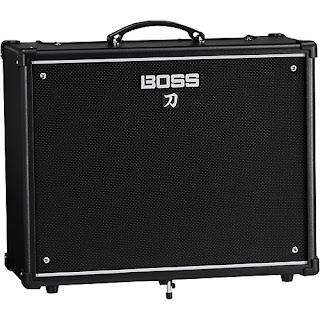
The greatest strength of this amp is the Amp Type selector. There are only four modes (excluding the acoustic mode) but every one of them is usable. In fact, actually rather stellar. Each one sounds natural and clear. Unlike other amps that just heap mud on top of your tone as you travel gainy to gainier amp settings (looking at you line6). BOSS has done a very smart job of making each type distinct and nuanced. The Lead setting isn't Crunch but louder, The Brown setting isn't lead but... brown-er? Anyways, each setting is lovely. You can hear the years of experience in this amp. The Clean and Crunch setting borrow form Roland's Blues Cube, and the Brown setting is the little brother of the WAZA Craft amps. Not having any experience with the included software, I can't speak to its usability, however it looks like you have the flexibility to nail a huge range of tones. These are lovely little amps that seriously rocks. However, they do lack the mobile app interface. Something I, until recently, assumed they had (woops). Besides that huge, glaring misstep, this amp is a homerun. I was much more excited than I had any right to be for this amplifier, and I was not disappointed.
Conclusion
I'd almost have to pro/con this one out. Marshall absolutely killed everything. BOSS put together something that was everything I didn't know I wanted. Marshall has a deeper set of parameters. The BOSS does everything very well, and has some features that the Marshall doesn't (line in/out). That is kind of unheard of in amp in this range. I think BOSS thought that people are still going to want to run effects into their amp and having that option helps a ton. That way you don't run all your outboard effect through that digital modification. That's smart. Marshall is basically a do it all box that could possible have software updates making it virtually limitless... kind of scary... in a good way.
So I played these amps back to back. I had no idea which was better when I was done. I didn't know which one I'd choose when I started writing this (full disclosure: I was leaning BOSS). But after having to write about the Marshall and really process all that information again, it is really close. Real talk, it would depend on the situation and your preference. For me? I'm going with the Marshall.
Why?
- Super Flexible
- Amazing Amp Sims
- App integration w/Bluetooth
- 5-At-Once Effects
I know this thing is super long and thank you for reading this far, but let me know if you guys like the whole "verses" thing or if you like your review to be more standalone. The situation kinda presented its self in a head to head way, so that's what I wrote. Anywho... Thanks!
Labels:
100 watt,
50 watt,
Best amp,
Boss,
CODE,
Combo Amps,
Digital Modeling,
Gear Review,
Katana,
Marshall,
New Amps,
review
Wednesday, December 21, 2016
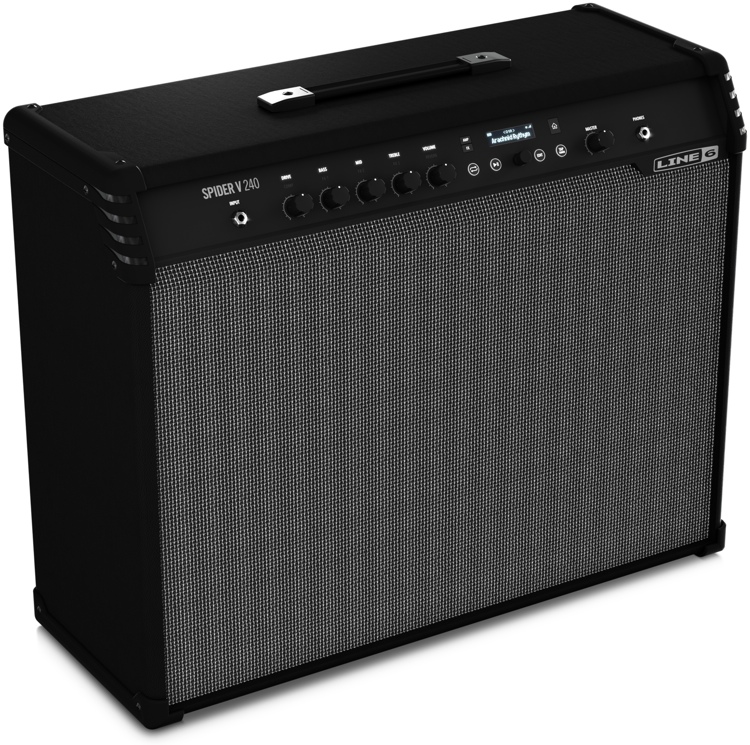
Ugly Truth: Line6 Spider V Amps
Alright so here's the thing, there is a palpable hate toward this entire range of amplifiers. Nearly every guitar player has played through one of these amps, or at least have heard one played. The Spider line has taken more hits than Louisville-Slugger, and has served as the whipping post for anyone putting digital modeling amps on blast. Line6 has doubled down on the Spider name. They have released the fifth generation of the Spider despite any of the negative feedback. Perhaps they've listened to the criticism and produced a better product. It is clear that the stigma still lingers over the Spider name. Do these amp deserve this kind of hate? Well, here is truth:
They Are Well Equipped
Yeah, even compared to the other offerings in this range, the Line6 Spider V is pricey. Coming in at the higher end of the watt/dollar range, these amp command a hefty sum for what seems like a checkered legacy. That's before you start looking at the optional foot control pedal. (that will set you back another $250) and wireless adapters. It's hard see why the Sider V has to be head and shoulders above in price, when they are competing directly with unit that costs (in some cases) hundreds less. Marshal, Black Star, Boss and Vox all have recently updated their line of make-all-the-sounds boxes and appear to be an attractive value in comparison. And while we're talking about being attractive...
They're Ugly
Yeah, they look like cosmetics were not even considered. I'm not sure if they were going for a modern look, but they failed. I'm not the biggest fan of new gear trying to cop a vintage vibe, but it appears that the Spider V is just phoning it in. It is minimalism and sleek-ish, but it's not winning any beauty contest. Objectively, function trumps form in most cases, but when deciding what amp will set the stage (literally) for your overall vibe aesthetics have to be considered.
Conclusion
While I will concede that this amp often get blamed for a multitude of undeserved sins, some of the blame is well earned. Many guitarist start their musical journey with one of the Spider amps. The popularity of these amp is undeniable. When starting out, these amps promise an feature-laden do-it-all machine. However, after acquiring experience many user discover areas where these amps suffer. The truth is, that these amps are fantastic for a beginner looking to experience a multitude of sounds without have to invest thousands into a collection of gear that would ultimately go underutilized. Just like every other product out there, these amps have a undying following as well as detractors. While features and connectivity are growing and becoming more user friendly, these amps will probably never ascend to their aspired heights. What we need to do is to realize that there is no magic bullet, and if there were, it would extremely expensive. These amp have a place, but they are probably not the only amp you'll ever need. More specifically, the Spider V is not even my top choice of modeling amplifier. If you are looking for a amp with a solid reputation, check out the Vox Valvetronix line. If you want something more innovative and inexpensive, look at the BOSS Katana. The Spider line IMHO is a chronic underperformer.
Support the blog by shopping on Amazon by using my link!
There should be an ad below:
They Are Well Equipped
The features on the Line6 Spider V amps are actually one of the most interesting things about them. Sure, there are a lot of different sounds on board, as there are with all the amps in this range. The addition of control via mobile device is robust and intuitive. It feels like there was a lot of time spent on interface of the app. Probably the biggest feature that gets overlooked on these amps is its ability to function as an acoustic amp. Equipped with a tweeter, this combo can do more than model electric amps and effects. This alone makes it a little more than meets the eye. In addition, there is actually an integrated wireless receiver with their Relay Go System (In the bigger units). This makes them wireless ready right out of the box. Also, these amp are compatible with the FBV control pedal. Making them very easy customize and switch between settings. The third gen FBV control pedal actually barrows from the Helix motif, color coding the each footswitch according to the effect that it t triggers. Again this is only available on the larger units. And they (the Relay Go and FBV) aren't "features" as much as they are options, as in optional, as in they don't come with it, but you can buy them... making this sizable purchase into a more sizable purchase... causing the whole thing to become rather...
...Expensive
They're Ugly
Yeah, they look like cosmetics were not even considered. I'm not sure if they were going for a modern look, but they failed. I'm not the biggest fan of new gear trying to cop a vintage vibe, but it appears that the Spider V is just phoning it in. It is minimalism and sleek-ish, but it's not winning any beauty contest. Objectively, function trumps form in most cases, but when deciding what amp will set the stage (literally) for your overall vibe aesthetics have to be considered.
Conclusion
While I will concede that this amp often get blamed for a multitude of undeserved sins, some of the blame is well earned. Many guitarist start their musical journey with one of the Spider amps. The popularity of these amp is undeniable. When starting out, these amps promise an feature-laden do-it-all machine. However, after acquiring experience many user discover areas where these amps suffer. The truth is, that these amps are fantastic for a beginner looking to experience a multitude of sounds without have to invest thousands into a collection of gear that would ultimately go underutilized. Just like every other product out there, these amps have a undying following as well as detractors. While features and connectivity are growing and becoming more user friendly, these amps will probably never ascend to their aspired heights. What we need to do is to realize that there is no magic bullet, and if there were, it would extremely expensive. These amp have a place, but they are probably not the only amp you'll ever need. More specifically, the Spider V is not even my top choice of modeling amplifier. If you are looking for a amp with a solid reputation, check out the Vox Valvetronix line. If you want something more innovative and inexpensive, look at the BOSS Katana. The Spider line IMHO is a chronic underperformer.
Support the blog by shopping on Amazon by using my link!
There should be an ad below:
Labels:
Boss,
Digital Mseling,
Footswitch,
Katana,
Line6,
Modeling,
Spider V,
tone,
Ugly Truth,
valvetronix,
Vox,
Wireless
Thursday, October 13, 2016
Ugly Truth About The BOSS Katana Amps
The latest amp to hit the solid-state, modeling, DSP market is the BOSS Katana series. This series is a completely new line of amps. It also is has the distinction of wearing the BOSS badge instead of Roland or WAZA. Many see this as a step in the right direction for BOSS, as they have the recognition among guitar players and not Roland. However, many have come to appreciate the Roland Cube series of amps. Roland Jazz Chorus amps have a long and proud history unto themselves. BOSS have struck out with a distinct offering that may have borrowed from the their heritage, but absolutely breaks new ground for the effects company that many love to hate. There are good and bad things about this amp, but what about the ugly?
There Are The Looks
Once you get past the black on black aesthetic, the dated BOSS logo, and the scrabble tile with a cursive "r" (or maybe a fancy "d"?)on it, well, there isn't much left is there. (edit: I am very aware that the symbol means "sword". It was mentioned in the promotional material and just about everywhere else. I didn't see the need in repeating it here.) The Blues cube took cues from Fender with it's 1X12 combo, but if you take the badges off and go by looks, it'd be difficult to tell these apart from the standard cube series. These amps do look a fair bit better than the cube amps, but there is nothing particularly striking about the design of these amps. Nothing says, "I'm a sexy, tone-machine". It has about as much appeal as a stage monitor.
They Are A Little Late To The Game
When you look at the list of feature on the Katana, it does seem a little similar to others that are already on the market. The Vox AV series and the Fender Mustang line both do similar functions, and do them rather well. So, is this a case of, "Too Little, Too Late"? It very well may be. A lot of the fans of these amps are also current users of the other two mentioned. Not to mention that users (or past users) of the Line6 Spider series or the Marshall CODE amps might be a little skeptical of the modeling scene. Are these amps worthy of the praise of the Fender and Vox offerings or do these fall to the dark side? Well, I'll tell you what they aren't...
They Aren't The Blues Cube
Those interested in a SS amp to do the work of your favorite 1X12 are probably familiar with the Roland Blues Cube. These amps come close to the sounds of their tube driven kin, but there will always be those the "hear" the difference. SS amps are supposed to be rugged and affordable. The Katana series are affordable. Although their ruggedness is yet to be tested, their price points make them attractive.This calls in question their fidelity to the faithful adaptation of tube-tone that the Blues Cube claims. While I am among those that would love to see an amp with the talents of the Blues Cube at a $300 price point, I doubt that Roland/Boss would undercut their own sales,
Conclusion
This isn't the point to where we can all trade in our tubes for transistors. However, these amps have some interesting features and have won the endearment of many that have had a chance to try them out. What is very interesting is that they have included access to the BOSS effects catalog via the "Effects" section. You are able to run three effect at a time. This is standard feature on all the amp in the line. They self-attenuates, so that you can play at any volume without changing your levels. If anything, these amps are well thought out, which can explain why they are a little late out of the gate. Among the cool feature, there are some slightly strange ones (like the tiny kickstand and tiny speaker hidden the 100 watt head). Considering the starting price for the 50 watt combo is $200, it might be worth serious concideration.
Continued Reading:
-Hands-on Review
-Katana 50 Watt Combo Vs Marshall Code
-Update: Katana Mini
-Update: Katana Air Portable Wireless Amp
Labels:
Affordable,
Beginner amp,
Boss,
Effects Loop,
Effects. BOSS Effects,
Fender,
Katana,
Line out,
Master,
Midi,
Modeling,
Mustang,
New Gear,
New Models,
Presence,
Solid State,
Tube,
Tube Amp,
Vox,
Waza
Subscribe to:
Posts (Atom)