Showing posts with label NAMM. Show all posts

Tuesday, January 2, 2018

Ugly Guitar Truth: Ibanez NTS Nu Tube Screamer

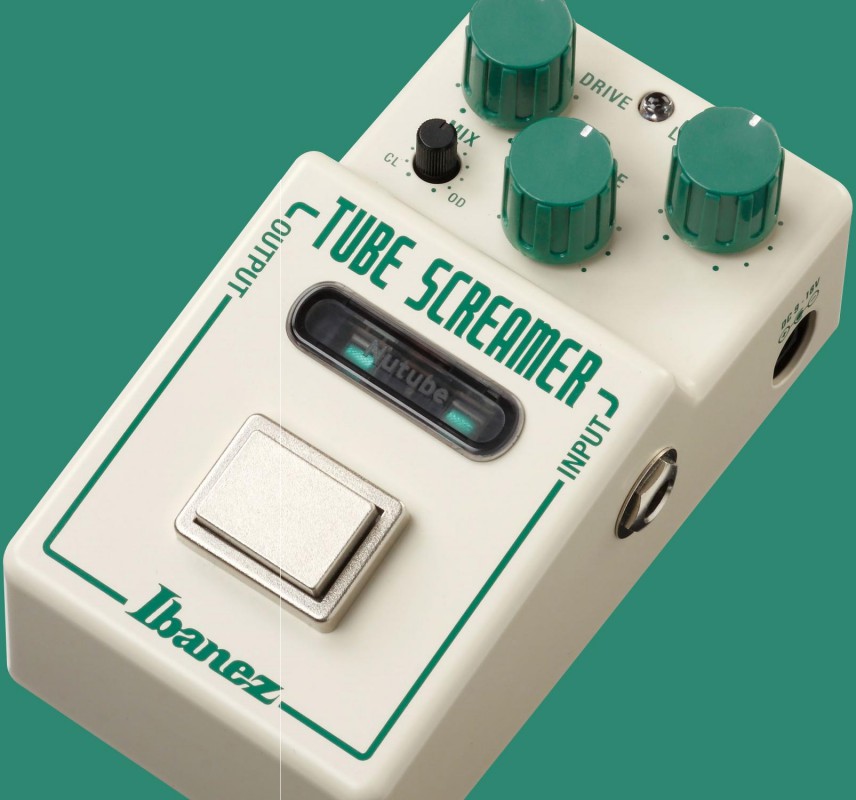
I almost didn't believe it. I almost had to make sure that today wasn't April first and not January first because I saw something that absolutely did not make sense. Ibanez has leaked some information about a new pedal.The NTS or Nu Tube Screamer has been making the rounds. At first glance, it seems like a new color pallet for a vintage TS pedal, but new tech has made its way inside an old circuit.

It's Pretty

The first time I saw this pedal I thought it looked sharp. I dig the white and green. I like the colors so much I missed the addition of a new knob, gaping window, and odd power supply placement. For such classic design, the aesthetic was enough to pull me away from these glaring changes.

Mixing It Up

I'll admit. I love a Mix knob. I want every pedal I own to have a mix knob. I think it's a control thing. I don't like committing to one sound. I don't want a pedal to completely take over the sound of my guitar. With a Mix knob, I tell the pedal how much it can have. This is the reason I don't get along with most distortion pedals. It also might be the reason why I chase "transparent" overdrives.

NuTubes

I love the idea of compact vacuum tubes. I want to see more pedals and amps use them. I hope that technology is as impressive as I keep hearing that it is. So far Vox's line of super compact heads is the only implementation of these NuTubes that I know of. I've heard good things about those. Although I have yet to use a tube base overdrive, I look forward to doing so. I'd love to see how the TC Electronic Tube Pilot and Ibanez NTS stack up.

Conclusion

I'm excited. How could I not be? This is the first "New Tube Screamer" in over a decade. I've actually seen a site sell this pedal for about 240 BSP making it something like 300 USD. So, in short, it is a pedal a hundred dollar more than the price of a 50-watt head using the same tubes. I guess we'll have to wait and see when Ibanez rolls out the hard launch closer to NAMM.

Sunday, August 13, 2017

Ugly Guitar Truth: EHX Dual Expression Pedal

So, as much I look forward to new products from Electro Harmonix, Expression pedals are not extremely exciting. EHX did release several rocker pedals a couple years back. The "Next Step" line of rocker pedals looked futuristic and new, but that's always a gamble with guitarists. The fact that you couldn't attach it to your pedal board and unfamiliar functionality kinda doomed them. However, the new Expression Pedal is back to basics and that is the best news we could hope for.

It's Plastic

Yes, this pedal is basically the Wailer Wah, but in expression pedal form. It has great features, for an expression pedal. You can reverse the polarity and set a minimum value via trim pot. It works with a wide range of pedals and has a conventional construction. Constructed out of glass-reinforced nylon (plastic), the pedal is light weight and hopefully affordable.

Expression Impressions

I like that EHX is providing choices. They've taken risks with unproven ideas, but they've also provided a good option to those who prefer conventional pedals. It Seems like they are covering all bases. The Expression Pedal is much more affordable than the "Next Step" Expression pedal. Just moments ago, EHX posted the list price of $49.30, which is roughly half the price as their previous expression. However, It's hard not to compare this pedal with the MOOG expression...

Deja Vu

Plastic construction and identical feature set, make this pedal a near clone of the Moog EP3 Expression pedal. Not that EHX is a new-comer to cloning pedals. However, not everything is a direct clone of the Moog. First off, the EHX pedal looks like it is larger than the Moog. I don't have exact dimensions of the EHX pedal, but by simply looking at the promotional photos, you can tell that the EHX looks much like a typically Dunlop Wah shape (if not size). The Moog is sized between a full sized and the mini sized pedals that we've seen released lately. With the larger size, you have a slightly larger price tag. The Moog sells right at $40. So, less than $10 difference for a near identical pedal.

Conclusion

I like this pedal, if only for the fact that it is a departure from those weird rocker pedals that they put out previously. It comes with a 6' TRS cable (just like the moog). It doesn't work with everything, probably. I know that the Moog expression doesn't play with Line6 very well. Also, the Moog seems to use an audio, rather than linear, pot. This means that moving the pedal half way won't necessarily give you a 50% value. This lends its self to wah-type applications, but it will still work with effects like pitch bending and other non-wah types. If you liked the Moog but wished it was a little bigger, this might be your thing.

So, as much I look forward to new products from Electro Harmonix, Expression pedals are not extremely exciting. EHX did release several rocker pedals a couple years back. The "Next Step" line of rocker pedals looked futuristic and new, but that's always a gamble with guitarists. The fact that you couldn't attach it to your pedal board and unfamiliar functionality kinda doomed them. However, the new Expression Pedal is back to basics and that's the best news we could hope for.

It's Plastic

Yes, this pedal is basically the Wailer Wah, but in expression pedal form. It has great features, for an expression pedal. You can reverse the polarity and set a minimum value via trim pot. It works with a wide range of pedals and has conventional construction. Constructed out of glass-reinforced nylon (plastic), the pedal is light weight and hopefully affordable.

Expression Impressions

I like that EHX is providing choices. They've taken risks with unproven ideas, but they've also provided a good option to those who prefer conventional pedals. It Seems like they are covering all bases. The Expression Pedal is much more affordable than the "Next Step" Expression pedal. Just moments ago, EHX posted the list price of $49.30. Which is roughly half the price as their previous expression. However, It's hard not to compare this pedal with the MOOG expression...

Deja Vu

Plastic construction and identical feature set, make this pedal a near clone of the Moog EP3 Expression pedal. Not that EHX is a new-comer to cloning pedals. However, not everything is a direct clone of the Moog. First off, the EHX pedal looks like it is larger than the Moog. I don't have exact dimensions of the EHX pedal, but by simply looking at the promotional photos, you can tell that the EHX looks much like a typically Dunlop Wah shape (if not size). The Moog is sized between a full sized and the mini sized pedals that we've seen released lately. With the larger size, you have a slightly larger price tag. The Moog sells right at $40. So, less than $10 difference for a near identical pedal.

Conclusion

I like this pedal, if only for the fact that it is a departure from those weird rocker pedals that they put out previously. It comes with a 6' TRS cable (just like the moog). It doesn't work with everything, probably. I know that the Moog expression doesn't play with Line6 very well. Also, the Moog seems to use an audio, rather than linear, pot. This mean that moving the pedal half way won't necessarily give you a 50% value. This lends its self to wah-type applications, but it will still work with effects like pitch bending and other non-wah types. If you liked the Moog but wished it was a little bigger, this might be your thing.


Support the blog by shopping on Amazon by using my link!


There should be an ad below:


Friday, July 14, 2017

Ugly Guitar Truth: BOSS WAZA Craft 75-Watt Head

The Katana amps have made a huge wave in the solid state amp market. So much so, that it is easy to forget that the Katana amps share a blood line with the WAZA craft amps. The WAZA was the very first amps under the BOSS name. Roland has been producing amps for decades, but only in recent years have they put the BOSS logo on the front. Now, with the popularity and notoriety of the Katana, the WAZA line has expanded to include a 75-watt head. Is this finally the WAZA for the masses? Let's see...

Something Old, Something New

There is a feature list a mile long on these amplifiers. No matter what the amp can do, it has to sound good first and foremost. The WAZA was authentically voiced after the heavy rock sounds of the 70s and 80s. These amps also have a separate independent B channel that selects a"Brown Sound" Tone Capsule. Both the A and B settings have 4 channels: Clean, Crunch, Lead1, Lead2. Included with vintage tones are modern features such as Dual FX Loops, Midi controls, USB and Line outputs with cabinet simulated outputs.

Affordability?

The good news is that the WAZA 75-watt head costs $750 less than the 150-watt version. However, that means it still costs $1,500. Paired with the 2X12 cab, the combo will run you $2,500. That's Marshall stack money. Obviously, these amps are meant for the touring professional. If you were hoping that this would be a cheap option to the full bore 150-watt version, then you might be a little disappointed. This isn't exactly bridging the gap between the affordable Katana line and the premium WAZA, but it's good to see that they are still supporting and developing their high-end amps.

Conclusion

Is it time to run out and buy the WAZA Amp.  No, it is not. Unless you are a touring professional that can justify a high-cost rig, this option isn't very approachable. More approachable than the 150-watt version, but when we are talking about starting at $2500, then why not get the high-powered version. These are impressive amps that hopefully translate into great affordable products like the Katana.


Support the blog by shopping on Amazon by using my link!


There should be an ad below:


Thursday, July 13, 2017

Ugly Guitar Truth: Chasebliss Tonal Recall Red Knob Mod Delay

Those familiar with Chasebliss know the amount of engineering that they put into each one of their products. No product more recognizable of their than the Tonal Recall. An absolutely stunning display of quality, features, and control, the Tonal Recall has made a name for its self on its hard-earned merit. Just before Summer NAMM Chasebliss announces that they've produced a second version of this pedal with some very special features. Let's check it out...

The Tonal Package

It's hard to improve on such a beloved pedal, but Chasebliss have done just that. They've increased the delay time to 1100ms while still using the MN3005 that gave the first version its character. It now carries more repeats before its signature breakup. Its runaway hold control has been improved to sound more natural. The overall tonal range has been expanded to be able to sound a bit brighter. Quite simply, the people over at Chasebliss have made their amazing delay even better.

Still The One

Although they have made many changes, the Tonal Recall is very much the same pedal. There are a dizzying array of options available in this pedal. Deceptively simple look at a glance, the Tonal Recall lets you control nearly every aspect of your delay sound. These controls are also controllable via expression pedal as well. Rest assured that this is still the pedal that everyone knows and loves.

Conclusion

No doubt that the fans of the original will love the Red Knob Mod just as well. It is hard to believe that they've created a way to make this absurdly great delay even better. The only thing that you could criticize is the price tag. Not to say that the price isn't worth it, (I'm pretty sure that had to put actual magic in there) but when you start looking at $500 delays you find a lot of great options. Chasebliss has declared war of the big box delays with this one.


Support the blog by shopping on Amazon by using my link!


There should be an ad below:


Ugly Guitar Truth: DigiTech SDRUM Strummable Drums Pedal

NAMM is currently afoot and it is again time for new gear to be debuted. This is a very exciting time for us who enjoy discovering new gear and musical equipment. The thing I look forward to the most is the new pedals at NAMM. I'm a bit of a traditionalist when it comes to guitars, but I always look new and different ideas when it comes to pedals. That what DigiTech has done with the SDRUM. It is a drum machine that takes input from a guitar to create a groove. Much like the pads on a midi controller, you use your guitar strings to play a rhythm and that rhythm becomes the bass or snare beat. Let's take a closer look at this pedal.

A New Kind Of Groove

Continuing to capitalize on the success of the Trio, Digitech has developed a new tool for the solo artist. Taking the lessons learned from their first outing into the "Band in a Box" market, Digitech has given us another tool with even great potential. While the Trio was innovative, it lacked the flexibility that many serious artists needed. DigiTech has been active in the Live Looping scene for a decade or more. The JamMan is a recognized and respected tool by many solo looping artists. While the Trio might be a great practice tool, the SDRUM brings the ability to create any rhythm with nothing more than the pedal and a guitar.

All About The Bass?

The one notable exclusion the SDRUM possess is the bass line. The Trio is named so because it adds drums and bass to a guitar loop. The SDRUM only does drum loops. Let's not get to hung up on that fact. To think that this is an update or replacement for the Trio is a little foolhardy. While the Trio offers to fill in the holes in your ensemble, the SDRUM allows you to be more expressive and in control of your music. Having said that, the solution for a bassline already exists. An octave and looper pedal allows you to create your own bassline in much the same way the SDRUM creates drums.

Teamwork

The SDRUM has another trick up its sleeve. It integrates with the JamMan pedals. If you've ever tried to sync two looping pedals, then you know why this is a major feature. A fraction of a second can become a distracting lag over the course of a 3-minute song. This appears to be a well thought out approach to creating drums of the fly.

Conclusion

I'm impressed with what I've seen from this pedal. It seems to be a straightforward solution for artists that need a flexible tool. Its intuitive design makes it simple yet still elegant. However, this is still a unitasker. It does one job. Also, you will not be seeing this pedal in the bargain bin at your local music shop. At $200, this is a serious tool meant for the working/avid songwriter. This pedal won't be seen on every pedalboard. It is, however, an excellent execution of product design.


Support the blog by shopping on Amazon by using my link!


There should be an ad below:


Ugly Guitar Truth: EHX Expression Pedal

So, as much I look forward to new products from Electro Harmonix, Expression pedals are not extremely exciting. EHX did release several rocker pedals a couple years back. The "Next Step" line of rocker pedals looked futuristic and new, but that's always a gamble with guitarist. The fact that you couldn't attach it to your pedal board and unfamiliar functionality kinda doomed them. However, the new Expression Pedal is back to basics and that's about the best news we could hope for.

It's Plastic

Yes, this pedal is basically the Wailer Wah, but in expression pedal form. It has great features, for an expression pedal. You can reverse the polarity and set a minimum value via trim pot. It works with a wide range of pedals and has conventional construction. Constructed out of glass-reinforced nylon (plastic), the pedal is light weight and hopefully affordable.

Expression Impressions

I like that EHX is providing choices. They've taken risks with unproven ideas, but they've also provided a good option to those who prefer conventional pedals. It Seems like they are covering all bases. The Expression Pedal is much more affordable than the "Next Step" Expression pedal. Just moments ago, EHX posted the list price of $49.30. Which is roughly half the price as their previous expression. However, It's hard not to compare this pedal with the MOOG expression...

Deja Vu

Plastic construction and identical feature set, make this pedal a near clone of the Moog EP3 Expression pedal. Not that EHX is a new-comer to cloning pedals. However, not everything is a direct clone of the Moog. First off, the EHX pedal looks like it is larger than the Moog. I don't have exact dimensions of the EHX pedal, but by simply looking at the promotional photos, you can tell that the EHX looks much like a typically Dunlop Wah shape (if not size). The Moog is sized between a full sized and the mini sized pedals that we've seen released lately. With the larger size, you have a slightly larger price tag. The Moog sells right at $40. So, less than $10 difference for a near identical pedal.

Conclusion

I like this pedal, if only for the fact that it is a departure from those weird rocker pedals that they put out previously. It comes with a 6' TRS cable (just like the moog). It doesn't work with everything, probably. I know that the Moog expression doesn't play with Line6 very well. Also, the Moog seems to use an audio, rather than linear, pot. This mean that moving the pedal half way won't necessarily give you a 50% value. This lends its self to wah-type applications, but it will still work with effects like pitch bending and other non-wah types. If you liked the Moog but wished it was a little bigger, this might be your thing.


Support the blog by shopping on Amazon by using my link!


There should be an ad below:


Wednesday, July 12, 2017

Ugly Guitar Truth: BOSS 40th Anniversary Box Set

BOSS pedals just announced that they are reissuing some of their first pedal they have ever produced. The SP-1 Spectrum, OD-1 Over Drive, and PH-1 Phaser are being produced in a hand-made, small batch manufactured in Japan. Vintage pedal collectors and enthusiasts of vintage effects know the importance of such pedals. Before now, to find and acquire one of these pedal out in the wild would mean throwing down big money. The Spectrum pedal can fetch around $500 on the open market. So is this a treasure to be had or a gimmick to be avoided. Let check it out...


It's A Gamble


There is a phenomenon in the guitar world especially guitar pedals. When a item is discontinued it either fades to obscurity, or rises to near-legendary status. The later happened with the Klon and King of Tone, and the former has happened to many non-nameless pedals. However, rereleasing vintage pedals isn't money in the bank necessarily. The Tuber Screamer is a great case in point. The TS-808 in currently available in a rereleased form, but it bares such a strong resemblance to the TS-9 and is heavily clone and copied that the effect is readily available in countless iterations. So the strongest motivation to by an 808 or this box set is nostalgia.

Money Grab

We have to mention the price of the set. $900 for the three pedals. Yes it comes in a really nice display box. but at today's market value, these pedals would only set you back about $700. The real gem here is the Spectrum. It is a single band parametric EQ. That means you can choose to boost or cut one frequency. You can pick up a brand new Empress Para EQ pedal that blows this out of the water for half the price of the vintage pedal. The OD-1 and PH-1 are both obsolete and replaceable by pedals that no more than what their vintage counterparts fetch. Is this an attempt to capitalize on the vintage pedal market by BOSS? Ehh, well...


Because They Can

If BOSS put out these pedals as a part of their regular run with inflated prices, then I wouldn't hesitate to dismiss this as a cheap money grab. However, they are only made 1,500 of these sets. That probably less than one per each guitar shop in the US let alone the world. This a milestone for BOSS. The set was crafted by hand in Japan in small numbers. BOSS has sold millions of pedals. They don't need to jack up the prices of 1,500 units. Everything about this set is focused towards a serious collector. The price an limited run are to insure exclusivity. I'm sure there are those willing to pay that price for three pedals that will remain in a box.


Conclusion

When I first heard about these pedals, I thought that they were going to be like the WAZA line. But this is something all together different. These are a special collectors item. Pedal Nostalgia has been a thing for a while now, and BOSS is giving the market something that it has wanted for a while now. I'm not going to buy this set. I don't have that kind of money to throw at pedal I don't intend to use. However, if they rerelease the Slow Gear that might be a different story...


Support the blog by shopping on Amazon by using my link!


There should be an ad below:


Monday, July 3, 2017

Ugly Guitar Truth: TC Electronic Hall Of Fame 2 Reverb

Several new reverb and delay unit have been released lately. Far from the least of which is the TC Electronic Hall Of Fame 2 reverb. The sequel to the rather iconic Hall Of Fame reverb, the HOF 2 bares a strong likeness to its predecessor. The controls, toggle, and stereo in/out are all still there. The majority of the reverb modes are the same as well. So are there enough differences between 1 and 2 to make a current own run out and buy number 2? Let's take a look...

Real Time Control

As with the Flashback 2, the Hall Of Fame 2 comes with the Mash function. This basically lets you take control of a single parameter by pressing the pedal's foot switch. This unique function turns your on/off button into an expression pedal. Not only that, but in the Tone Print settings, you can set the Mash function to any parameter that you want. This level of real time control is totally unprecedented in a single-sized, compact pedal. Personally, I am more excited to see this function in a reverb than in a delay.

Shimmer

Finally, TC has caught the Hall Of Fame up with the massively popular trend of Shimmer. This effect has become widely popular and is included in nearly all digital delay and reverb pedals in the last few years. It was a major selling point with the RV-6 and the MXR reverb. TC Electronic has implemented the same octave algorithm from the Sub N Up pedal. To say the the Sub N Up is a good octave pedal is a little bit of an understatement. If the thought and care that went into the Sub N Up also went into the shimmer setting on the Hall Of Fame 2, then rest assure it is a impressive effect

More Custom Options

In addition to the other changes, TC Electronic have made room for two additional Tone Print settings. This has come at the cost of the Tile, Ambient, and Gate settings, but those are still available under the Tone Print editor so we aren't really losing them. In combination with the Mash function, these Tone Print setting become extremely valuable. Tone Print offers a deep and rich editor that allows you to control much more than what the four knobs on the face of the pedal can do.

Conclusion

TC has put out an incredible pedal. The features alone are tempting. Combine that with the pedigree of the Hall Of Fame, dependability of TC Electronic's reputation, and powerful Tone Print editor and you have a killer pedal. The only bit of criticism I can muster would be for the Mash button. This function uses a new piece of hardware. How will this stand up to years of use? We don't know yet. I don't expect this to fail, but it may be a weak link. It also poses a problem for the tinker that like to fiddle with their pedal's bits. Neither of these would persuade me to discourage someone from checking out this innovative  pedal.


Support the blog by shopping on Amazon by using my link!


There should be an ad below:


Monday, June 26, 2017

Ugly Guitar Truth: BOSS Katana Mini

On the heels of the announcement of the new 500 series pedals from BOSS, BOSS has also put forward a new Katana amp. In addition to the 50 watt combo, 100 watt combo and 100 watts head, BOSS will add a mini, 7 watt version to the line up. The Katana series has been praised since it's introduced. The mini version looks to be a desk top version with a 4 inch speaker. Is this a solid solution to those that are want for space or in need of low key practice gear? Let's look at the facts...

It's Small
Less than 10 inches wide and under 3 pounds, this amp is aptly named. It is also priced at half of the next size in the line up. The amp is impressively small. Small amps are not know for known for having the best tone. However, this amp is housed in a specially designed ported cabinet with a custom designed 4 inch speaker. Other features that you wouldn't think to see is a three band EQ, three channels, and delay. The amp might be tiny, but the feature list is impressive for its size.

It Stands Out
I've previously written about the Vox Pathfinder 10 and how impressive it is for its size and price. I'm very interested in seeing how these two amp compare. Considering that the Vox has very limited features, the BOSS seems to have the very clear advantage. The amp modes make this tiny amp one of the most flexible compact amp in its price range. You'd have to triple the price to find an amp in its size and better feature set. Out of the gate the Mini make a strong case for anyone looking for an extremely portable amp.

It Has A Lot To Live Up To
The Katana line has been praised by many. Not only is it one of the best values on the market right now, but many have preferred the Katana over much pricier amps. While lacking some of the key features the Katana line have been noted for, you still get three amp modes. If these are related by more than just name, then the Katana Mini is offering a serious price at this price point. 

Conclusion
Many, are critical of these smaller amps and their ability to be more than a novelty. I have been very skeptical of any combo featuring a speaker under 10 inches. However, the 6.5 inch speaker in the pathfinder 10 was surprisingly able to produce quality tones. These amp wont be able to fill a large room, but these amps are built for quick, portable jamming. Barring a major flaw, these amps are poised to bring the Katana value and acclaim to the mini, battery-powered, super-portable amp market.

Check out the hands on review of the Katana: Here!


Support the blog by shopping on Amazon by using my link!


There should be an ad below:


Saturday, June 24, 2017

Ugly Guitar Truth: BOSS RV-500 Reverb

What many have considered a long awaited debut, BOSS has announced their first additions to the 500 series pedals. The RV-500 Reverb has been anticipated since the release of the original 500 pedal, the DD-500 Delay. While the DD-500 was a welcome update to the DD-20, the RV-500 (along with the MD-500) has now established a line of pedals that are poised to compete with Strymon and Eventide. With 32-bit processing, and 96 kHz sampling rate, the hardware under the hood is virtually matchless. 12 modes and 21 reverb types that are all highly customizable leaves little to be desired. The feature stack on this is impressive, so whats the ugly truth...

It's actually Not That Ugly
Visiting local music stores is a little bit of a hobby of mine.When I see a well stocked effects pedal display case, it is akin to visiting an art gallery. There are hints of style and theme (or lack there of) and you can tell the difference between pedal manufactures like artists' motifs. BOSS, for the most part, stopped stylistically somewhere in the 80's when they introduced their compact pedal line and the familiar shape of most BOSS pedal that we know today. The 500 series however complete redesigns the look of their pedals. The inspiration of the redesign clearly comes from some of their competition. The three button layout, knob layout, and even the stamped aluminum enclosure all seem rather similar to other high-end, powerful effect units. Did BOSS copy other effects? Well, that word does have a lot of stigma attached to it in the effects market, but yes they totally did.

It's Not A Big Sky Clone
Obviously, some of the exterior element of the pedal have been "borrowed", but this pedal is not trying to be a Strymon Big Sky or a Eventide Space. What it is trying to do is complete crush those exact pedals and any others that may stand to rival it. When Line 6 released the DL4 delay in 1999. BOSS took their time and came out with the DD-20. Like the 500 series. the DD-20 was on the front end of a whole line of pedals that would follow the same twin pedal format. I actually debated those two delay pedals back when they were two of the most powerful delays on the market. My decision then was the DD-20. The BOSS pedal beat the Line 6 in features and performance. It also cost less. It did take nearly four years after the DL4 to come to market, but when it did, it came to win. 

Too Soon?
If you remember when the DD-500 came out, it debuted at the same time as the RV-6. Needing a reverb pedal, I bought a RV-6. It has been my primary reverb ever since. While there was a sizable chunk of time between RV-5 and RV-6, it has barely two years between the RV-6 and RV-500. While two years is the standard dwell time between modern consumers and smartphones, many guitarists don't typically replace their pedals every other year. (I've been using my DD-20 for nearly 10 years.) However, there is probably little cross over is those that would buy the RV-6 and the RV-500 despite their apparent similarities. Instead of a update to their compact pedal, The RV-500 serves to entice the players considering other high-end, powerful units. 

Conclusion

I won't lie, I was very excited about the announcement of this pedal. This is probably the most exciting pedal announcement in the last 18 months. It seems that BOSS has been on a roll. The DD-500 was a huge step forward for them, the Katana amps are being praised over higher price competition, and now we get a powerful Reverb at a fraction of the cost of comparable units. It is hard to imagine that the RV-500 reverb will be anything other than great success.


Support the blog by shopping on Amazon by using my link!


There should be an ad below:


Thursday, January 26, 2017

Ugly Guitar Truth: DigiTech FREQOUT


When I first saw this pedal I really didn't know what it was. I saw the large letters that spoke to me somehow. "Freak Out" is the not only the name of the pedal, but also what I did when I realized what this did. It is a Feedback Creator. Strangely, Digitech forgot that BOSS has already made a pedal that did this. Not only that, but they also forgot that no one actually bought that pedal. So why have they chosen to make a new pedal that has already failed? Well, the truth is something we should see about...


It Isn't A BOSS Feedbacker


My knee-jerk reaction was that this pedal was simply a second attempt at an old concept. However, as the booth-guy at NAMM this winter explained, this pedal actually does something that hasn't been done before. This pedal is able to produce natural feedback at any volume. I'm not sure what the BOSS pedal did (if not that) but we will assume it was unnatural for the sake of argument. This pedal has an indicator to tell you how much feedback you have. (also not sure why you need this. your ears should do the same function rather well...) You also have adjustable Range and Type. I'm sure they do something important, but I can't tell you. DigiTech's official website doesn't mention what they do at all either, so I guess we'll have to try one and see...


Conclusion


I like feedback in some applications. I think that this pedal has a lot to offer in the 'make noises that don't sound like guitar' category. I even like the look of it. Digitech is putting out pedals that seem to expand on the sounds that their line of pedal can make. This is actually rather refreshing. Some pedal brands seem to find endless way to make the same drive pedals, but only slightly different. And then continue to make slightly different pedal till the end of time. This seems like a fresh approach and I like what I've seem of this pedal so far. Is it for me? Hard to say. It might be something to keep my eye on though.

Wednesday, January 18, 2017

Ugly Guitar Truth: EHX Blurst Moddulated Filter

EHX has once again put a new and rather innovative product to market. They call it the Blurst and describe it as a Moddulated Filter. While that sounds like it makes sense, I don't recall anyone really talking about the limitations or features of their prized modulated filter. It seems like a oddity or niche type of effect. I decided to take a closer look at what this pedal does and see if there is any reason to get excited about this pedal.


You Don't Need(?) It

Yeah, this thing makes some weird noises. These noises are not what you typically think of when you imagine guitar noises. But that could be fun, right? Sure. There isn't a lot of information or demonstration out there right now. But, from what we can hear on the EHX demo video, it sounds like a synth filter. However, the interesting part of this filter is that it is time based rather that controlled by your guitar input. You can choose your wave form, tempo, and mix. I feel like there is a lot of versatility with this pedal, but the video only gives us a glimps at what it can do.


Its Strengths Are Its Subtleties

If you watch the demo then you hear a whole lot of 'bwwaaaahhhh' types sounds. To be honest, I don't see much use for these noises. I understand that there are types of players that can make some great sounds with filters, but typically don't use them or just use them in a very limited capacity. However, at the end of EHX's demo, they stick the Blurst in the effects loop of a Deluxe Memory Man and it's actually pretty epic. Plus, I have to give honorable mention to the sounds in the video made with help of EHX's 8-Step Program (stepping expression controller) which give you a step filter/seek wah/FM4 type sound. These two pedal can create lots of combinations, but seems like a lot hardware to create an effect done by a single pedal (just my 2 cents).


Conclusion

Look, I want to like this pedal. It looks... interesting. It has lots of knobs and buttons. It makes weird sounds, but maybe I'm just thinking to much like a guitar player. I want to be able to riff and jam, and this things seems like a noise maker. So let me completely contradict myself. The couple of sounds that I did like, were actually pretty cool. Plus the one thing that make this pedal different is what really makes this pedal. The tap feature allows you to sync up with the tempo of the music being played. I'm not the biggest fan of filters, but I'm not aware of many that let you do this. Can you make to sounds in the demo with other pedals? probably, but is a rather versatile pedal with expressive features.


Support the blog by shopping on Amazon by using my link!


There should be an ad below:


Monday, July 4, 2016

Pretty Guitars From Ibanez At Summer NAMM 2016

Looking at Ibanez at Summer NAMM we see some nice looking offerings. Starting with a offset body shape with a P-90 in the neck. Amongst the other guitars in Ibanez's showing, this one stands out in a big way. The large cream P-90 serves as contrast to the flat black body. Matching cream pickup ring and binding together with a maple neck and board make this thing classy. Get all that under 7 bills and it starts to look very attractive.


 The next guitar that caught my eye was one from the Talman series. Here is a offset single-ish cut blonde. Like it or hate it, the Talman series is a mashup of Strat and Tele pieces that almost make you think you're looking at something familiar. This one is a signature model that comes in over $1,700. That's a lot considering the only other thing I can think of sporting Talman of the headstock was some very underwhelming acoustics.
 Next is something A little more fitting. It's a standard Talman Tele style in Sea Foam Green. If you are a tele fan with a thing for the weird, then this might be your thing. I like these guitars, but I've yet to play one. The fact that listed for what a Fender Standard Telecaster sales for has got me a little confused. When I was introduced to Ibanez they were just shaking off their "cheap" stigma and picking up some metal-cred. To me, this is a step backward. This isn't metal, but not affordable enough to sway me away from a Fender.


Support the blog by shopping on Amazon by using my link!


There should be an ad below:


Friday, July 1, 2016

Jackson Unveils Some Pretty Guitars At NAMM

Summer NAMM is upon us and we are getting our first looks of some interesting guitars. There are many special finishes and strange shapes at the Jackson booth this year, but some of the tamer guitar have caught my eye. While the wild shapes and pointy edges might make you stand out, there are some here that might contend for a spot in my guitar stable.


 Not as edgy as some of the other offering from Jackson, the F-Bird (a little on the nose there) takes cues from an icon shape and add some interest control configurations and floating tremolo. In an elegant white and gold motif, this guitar stands out without being a safety hazard.


Here's a guitar that can't make its mind up. It looks an awful lot like the Fender Pawn Shop series that someone has make some seriously question mistakes with. It seems to have three single coils and a floating tremolo. Seen here hanging in front of a very appropriate 80's background. This Custom Soloist is too ugly not to like. Like a pug. Let's just hope it doesn't share the repertory issue as well.


Perhaps my favorite in the lineup. The TL-7 is a seven string single cut-away 't-style' guitar. I have a weakness for Telecaster and this on is pretty. Seven string guitars aren't something I usually go for, but this one is so curvy and sleek, I'd learn to love playing a 7. Beside it is pretty LP style Single Cut with a gold top. Jackson was careful not to tread to close to ESP territory with this one. Instead they went with a more traditional shape and I happy they did. It's something I'd be proud to play.


Support the blog by shopping on Amazon by using my link!


There should be an ad below:


Tuesday, June 28, 2016

Ugly Truth: Digitech Nautila Chorus/Flanger

Digitech has announced a new pedal in the expanding line of compact effects. The Nautila is a chorus and flanger. One at a time that is. Their are You add 8 chorus voices or 4 flange voice and blend the waveforms to your hearts content. Stereo I/O and foot-controllable speed feature are packed into this slim package. Not only that, but this pedal leaves nothing to be desired as far as looks either. Like most of the pedals in this like, it has a 'boutique' vibe and solid feel.


This pedal has impressive features for such a compact pedal. Boasting "never before heard Tidal Swirls", this pedal seems to pretty proud of its self. With controls for Mix, Drift, Voice, Emphasis, Speed and Depth, it is anything buy simple. There is a clear nautical theme with this pedal. This leads me to believe that they had wet, oceanic sounds in mind when designing it. If that sounds exiting to you, then you might want to give this pedal a try. However, with all the combination capable of this pedal, you might want to give it some considerable time.


Support the blog by shopping on Amazon by using my link!


There should be an ad below:


Monday, June 27, 2016

Ugly Truth: Evolution Guitars; Modular Guitars


There have been a lot of people that seek to improve the guitar. Many attempts have been embraced by small groups of people. Some like the 'silent' guitars that are composed of just the bare essentials to qualify as a guitar. Then you have headless guitars like the Steinberg. These designs have their fans, but they don't have the following that traditional guitar have. So Where does Evolution guitar fall? Will they be embraced by the masses, or will they find the niche and nothing more. Let's look at what we know.


The video shows us several examples of their guitar. The guitars appear to be your regular fair. Most if not all of these guitars look to be chambered, and for the most part, equipped with humbuckers. So their biggest innovating feature is the faceplate system. The neck and the body stay put and the faceplate can be swapped out. This allows you to change pickups, wiring, finish just as fast as you can unscrew and rescrew the 15 or so exposed pieces hardware. The face plates are made from laminate, so you can fuss about how "solid wood is better", but lets be honest, when your guitar is held together by a bunch of screws it's not going to make much of a difference.

I think these guitar look cool. I actually like the idea. But the final nail in the coffin is the pricing. Small guitar builder usually have larger prices. Unless they take manufacturing over seas, then you looking around a grand to get set up and a few hundred to swap faceplates. I'm a firm believer that your pickups are the largest contribution to the way your guitar sounds. I also think how your guitar is put together has a lot to do with it as well. While I think what these guys are doing is neat, I also think it's rather novel. Cool Idea guys.

Thursday, June 23, 2016

Artwood Vintage Guitars From Ibanez At Summer NAMM 2016

 For the first time in my memory, Ibanez has product distressed folk sizes acoustics. I'm not sure how I feel about a oversea company making 'aged' folk instruments. But when I look at these guitars, I want to play them. They might have everything you'd want, but I am digging the finishes.
 The Line up is pretty solid with a '000', '0' and dreadnaught. The prices on these are sub 800 making it appealing to the serious cowboy acoustic playing. No electronic that I know of, and Ibanez doesn't have the greatest reputation with acoustics, so I wouldn't expect these selling like hotcakes. I'll keep an eye out when they show up on the used market in a couple years though...


Support the blog by shopping on Amazon by using my link!


There should be an ad below:


Tuesday, June 21, 2016

Pretty Basses From Ibanez At Summer NAMM 2016

Ibanez has done a great job at making a instrument that uses tried and true feature with unique looks and finishes that standout next to their more mainstream counter parts. What stood out to me was not their use of a P/J configuration or the offset body. It wasn't the coral color and stylish appointments that peaked my interest. It was that you wouldn't look at this instrument and assume it was under 3 bills.
 The next Bass that caught my eye was this hollow body with a distressed vintage finish. It's just pretty. Can I say that I'd play a bass like this? Probably not. But I would have one in my studio to show off.


Support the blog by shopping on Amazon by using my link!


There should be an ad below:


Monday, June 20, 2016

Ugly Truth About TC Electronic Sub N Up

TC Electronic has come out with a new pedal right before NAMM. The crazy pedal gurus at TC have developed an octave pedal that might replace all other octaves. Why might this effect replace whatever octave your are currently using? Because it can probably do whatever it is that you are doing with yours. How can I make such a blanket statement as that? Because, TC Electronic has equipped this pedal with their Toneprint tech. This makes it one of the most versatile octaves on the market. What's more is that it is affordable. $129 for the last Octave pedal you'll ever need to buy (probably).


So Here's The Ugly Truth


The ugliest thing about this pedal is the color scheme and design. In a cage full of pedals, this one sticks out like a sore thumb. Most pedals are slick and color coded. This one is a little bit of an eye sore. The only other thing that could be said is how this pedal functions. The analog purist with not enjoy the tech under the hood, but anyone who plays an octave knows that they hate chords. Playing through a three-knob Boss Octave is almost like fighting a bear. Overload it and you get nasty noise. If you are looking for that, then you know what you need, but there is nothing I want out of a Octave that I can't get from the pedal.


Even without hooking up this pedal to a computer to unleash the full power of this Toneprinting-beast, then you still have a superior sound octave. You may want to consider a paint job though...


Support the blog by shopping on Amazon by using my link!


There should be an ad below:


Sunday, June 19, 2016

Update On The Way Huge Camel Toe MKII


A sight that Way Huge fans have been waiting for: In the picture above is what seems like the first from a production run of the Way Huge Camel Toe MKII. Way Huge has been teasing us with pictures of the pedal for months. This is the same pedal that 'goes for' $5000 on eBay. Will it be a wide release or a small run? Will it debut at Summer NAMM in a few days? Not much has been said about the pedal's reissue, but there are plenty that are excited to get their hands on it despite the knowledge that it is basically two pedals (Green Rhino and Red Llama). I'm excited to try one out and see if the rabid Camel Toe fans are right with all the hype.


Support the blog by shopping on Amazon by using my link!


There should be an ad below: