Showing posts with label Looper. Show all posts

Thursday, July 13, 2017

Ugly Guitar Truth: DigiTech SDRUM Strummable Drums Pedal

NAMM is currently afoot and it is again time for new gear to be debuted. This is a very exciting time for us who enjoy discovering new gear and musical equipment. The thing I look forward to the most is the new pedals at NAMM. I'm a bit of a traditionalist when it comes to guitars, but I always look new and different ideas when it comes to pedals. That what DigiTech has done with the SDRUM. It is a drum machine that takes input from a guitar to create a groove. Much like the pads on a midi controller, you use your guitar strings to play a rhythm and that rhythm becomes the bass or snare beat. Let's take a closer look at this pedal.

A New Kind Of Groove

Continuing to capitalize on the success of the Trio, Digitech has developed a new tool for the solo artist. Taking the lessons learned from their first outing into the "Band in a Box" market, Digitech has given us another tool with even great potential. While the Trio was innovative, it lacked the flexibility that many serious artists needed. DigiTech has been active in the Live Looping scene for a decade or more. The JamMan is a recognized and respected tool by many solo looping artists. While the Trio might be a great practice tool, the SDRUM brings the ability to create any rhythm with nothing more than the pedal and a guitar.

All About The Bass?

The one notable exclusion the SDRUM possess is the bass line. The Trio is named so because it adds drums and bass to a guitar loop. The SDRUM only does drum loops. Let's not get to hung up on that fact. To think that this is an update or replacement for the Trio is a little foolhardy. While the Trio offers to fill in the holes in your ensemble, the SDRUM allows you to be more expressive and in control of your music. Having said that, the solution for a bassline already exists. An octave and looper pedal allows you to create your own bassline in much the same way the SDRUM creates drums.

Teamwork

The SDRUM has another trick up its sleeve. It integrates with the JamMan pedals. If you've ever tried to sync two looping pedals, then you know why this is a major feature. A fraction of a second can become a distracting lag over the course of a 3-minute song. This appears to be a well thought out approach to creating drums of the fly.

Conclusion

I'm impressed with what I've seen from this pedal. It seems to be a straightforward solution for artists that need a flexible tool. Its intuitive design makes it simple yet still elegant. However, this is still a unitasker. It does one job. Also, you will not be seeing this pedal in the bargain bin at your local music shop. At $200, this is a serious tool meant for the working/avid songwriter. This pedal won't be seen on every pedalboard. It is, however, an excellent execution of product design.


Support the blog by shopping on Amazon by using my link!


There should be an ad below:


Friday, June 30, 2017

Ugly Guitar Truth: TC Electronic Flashback 2 Delay And Looper

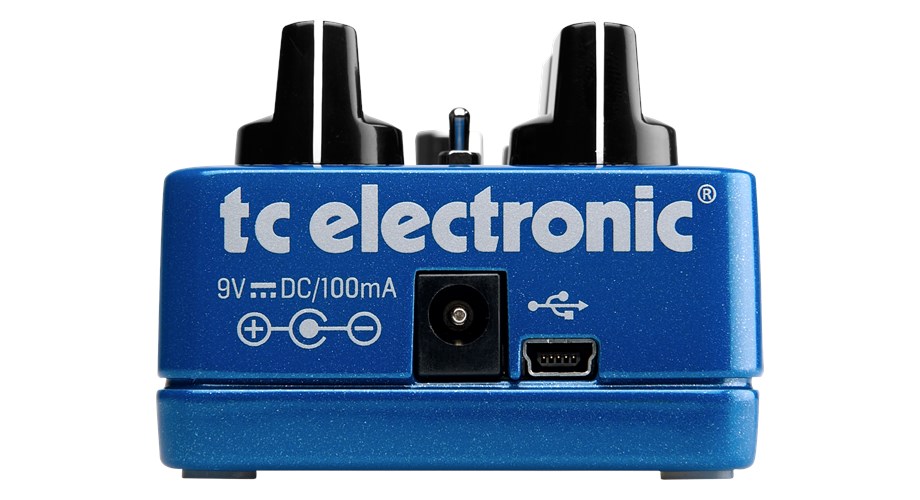
TC Electronic has been hard at work lately. You'd be hard up to name a pedal producer that has put out more new product than TC Electronic. Just a few months ago, they release a entire line of 'value' pedals. Now, they are issuing an update to the Flashback Delay. The Flashback 2 makes some changes to the acclaimed original. So, whats changed? Lets take a look...

Double Down

If you are familiar with the TC line of effects, then you are probably familiar with their "Tone Print" editor. This allows you to edit functions that may not be available manually. Not only that, but you can save your custom setting on the "Tone Print" setting. The Flashback 2 has taken away some of the settings to make room for two more custom, Tone Print setting on the mode selector switch. What you wont see on the front of the Flashback 2 is LoFi, Ping Pong, and Slapback. These features are probably still available via the Tone Print editor, but not available manually.

Tapping That

I neat feature that in included in the Flashback 2 is the ability to set the tap tempo with your guitar. After triggering the pedal to 'listen' to your guitar, the pedal with sync itself to the rhythm of you right hand. For those that have trouble setting a steady rhythm with your foot, this could be your answer. It also allow for you to set the rhythm on the fly without an addition tap switch pedal, so its a space saver as well. You can use a normal tap tempo pedal, but to do that you need to use one side of the stereo input, so it can only be used in mono. You may ask, "Why not just use to switch on the Flashback to set tap tempo like a regular delay?" Well, the foot switch on this pedal has other things to do...

Smashing

New to the Flashback 2 is the Mash function. This basically turns your foot switch into an expression pedal. Listening to demonstrations of the function, it's clear that the effects you can create with this feature very interesting. Being able to summon self osculation sound in real time while you can continue playing is very impressive considering you can do all this with a single compact pedal. What might be even more interesting is that you can combined the Mash function with the shimmer effect to be the envy of all you shoegazing friends.

Conclusion

This update brings a well loved delay up to date with the addition of shimmer. While the Mash function is innovative, its usability may be limited. BOSS have done similar functions with the Space Echo and Giga-delay, but the option to customize the function of Mash is at least novel. I believe that TC Electronic has done an excellent job at updating one of their best pedals.  

Thursday, February 9, 2017

Ugly Guitar Truth: EHX Canyon Delay/Looper

This little pedal flew completely under my radar. I paid attention to all the NAMM 2017 debuts but somehow didn't even get a hint of this pedal. Tell me if I'm wrong, but did you see anything about this pedal before now? Regardless, here it is, and we have to talk about it. Thankfully this pedal should drop on the 13th of February (2017) so there isn't much waiting for this one. As for price, well, there seems to be a little confliction as to what can be found online. Musicians Friends had posted a price tag of 158 USD, but EHX has been caught tweet a cost of 139 USD street price. So with the information that we have, Is this pedal a yay, or a nay. It's mighty morphing Ugly Truth Time...


It's Small...


Alright, small can be a good thing. Lots of good things come in small packages, but delays that occupy tiny spaces are usually lacking in the feature department. I mean, look at the Strymon and Eventide well-endowed delay boxes. Those are feature packed and massive. So this little box couldn't have that much to offer... Except it kind of does. 11 modes give you more than a BOSS DD-20. It can loop for a full minute and you get 2 "secret knobs when you hold the Tap/Divide button. This has to be one of the most feature laden delays in the size box. No, it isn't stereo. But you can control the rate and depth of the modulations. Correct me if I'm wrong, but that's a new trick for a compact delay.


Don't EHX Have A Lot Of Other Delays?


Yes. Yes, they do. The Memory Man/Boy/Toy line is extensive. And they do have some cross over as far as price. There is even a DMM (Deluxe Memory Man) setting on this pedal. However, this is a digital pedal. Kind of different for EHX, but I guess they were just waiting until they really had something that they liked before they put one out. Analog Delay users are going to analog, digital are gonna digital, that's just what happens. What has a lot of people looking at this pedal is the long list of modes and the affordable price. It could also be the neat tricks that this pedal is capable of that has people interest as well.. hmm, guess there is a few thing to like about it...


Wasn't There Another 3 Second Delay Released Recently?


Yes. I even wrote my thought on the DOD Rubberneck here. I like the DOD delay a lot. It has a lot of cool things going for it. It also has a $250 Street price, so fair is fair. The DOD pedal has features that this pedal can't touch. The titular feature, Rubbernecking, is pretty unique to that pedal. It also has a built in tap feature. Admittedly, the DOD looks cooler. But If I had to go with one delay on my board and also had to choose between these two pedals, then I would be picking the Canyon. The Rubberneck is a pedal that I'd be proud to own, but if I had to choose one, then I'd pick the one that can Loop, Reverse, Shim, Octave and Verb.

Conclusion


I like this pedal. I like this pedal a lot. You could probably tell that already. This pedal would be a great addition to a pedal board that wasn't already fitted with a delay. I'd even pick this one over the BOSS DD7 and the smaller Flashback delay. If you are looking to upgrade your delay but don't want to get one of the larger "do everything" units or if you looking to save a buck, then this pedal would be something to look at seriously. Should you drop everything and get this pedal for its wonderfully healing properties? Of course. But try to remember that this people isn't as powerful as one those others that have all the blinking lights and MIDI and extra holes... Oh, it has a dumb name too...


Support the blog by shopping on Amazon by using my link!


There should be an ad below:


Tuesday, December 29, 2015

Ugly Truth About Mission Engineering Expression Pedal

A few months ago I picked up a Line6 M5 stomp box modeler. I have been openly critical about multi effects units here on this blog, but the M5 has impressed me. The entire M serious is impressive, but the M5 fits into your already established pedal board. I bought mine because I wanted a Slow Gear, Whammy, and Seek Wah. I didn't have a thousand dollars so I looked for a alternative. The M5 comes up all aces. There are a ton of bonuses. But this isn't a review of the M5, this is.

The main problem with this pedal is that there are so many things that are only unlocked when you add an expression pedal. This leads you on a journey in and of its self. Line6 offers an expression pedal. It is $50 and made of plastic. There are several places on the internet that document the unreliability of this pedal. I avoided this pedal and sought an alternative. The first expression pedal that I bought was a Boss FV-50. It was large and metal and an utter failure. It was on a list of compatible pedal that I found on Line6's support forum. I might have gotten my hands on a dud, so I returned. A little while later I was able to find a used Mission Engineering EP1-L6. For half the price of a new one and less than the Boss 'no go', I found my replacement.


It Works

So, Line6 typically doesn't function with most expression pedals. Basically, an expression pedal is just a pot wired between two jack. But there a tiny little fairies that have to bless each pedal that enables it to work with a particular type of pedal... or something like that. It actually has to do with the value of the pot and how it's wired up. It's simple, but also a little more complected than it seems. This pedal takes all the thinking out it. It even has the Line6 logo on it. It's a metal case with the right guts. So that seem pretty solid. What could be wrong with it?

It's Expensive

Like I previously said, It is a metal case, a pot and jacks. The parts make up $25 of cost, so that's about a 500% markup. True, Line6 probably makes their expression pedal for pennies, but for much less you can buy an actual Wah pedal that includes everything and an actual effect. I won't bash a business for making money, but when it comes to my dollars, I need a little more bang per buck. That's why I only bought this pedal when I found it used.

It's Roamy

The nice thing about Wah pedals is that they are spacious on the inside. Why is this a good thing? Well here is an idea. Imagine you are using you expression pedal to control a wah sound on your M5. How would you turn the effect on? By tapping the on/off button on the M5. But that's not how a wah works. You put the toe down and press, right? Why can't we do that with our expression pedal? The enclosure is already drilled for an input, output and switch. So wire in a looping circuit and you can engage your M5 when you stomp on it like a wah.

Conclusion

I can't really recommend buying this pedal outright. You could probably build one for way less... But this pedal works very well and is super solid. If you can can find it used, then it become much more reasonable. If you like to tinker, then you have a lot of options as for what to do with all that space. You can put a buffer or boost in there, or just a looper and status LED like I plan to...